MONROVIA– Green Cities Incorporated (GCI), in partnership with Action Against Hunger (AAH) and the Say No to Hunger Farmers’ Cooperative, has launched a three-year agricultural initiative aimed at helping smallholder farmers adopt sustainable farming practices, improve household nutrition, increase crop productivity and create new livelihood opportunities through the use of organic agricultural inputs.
By Jaheim T. [email protected]
The initiative, known as the Nutrition and Organic Uptake for Resilient Inclusive Sustainable Harvest for Family Farms (NOURISH Family Farms) project, is expected to directly benefit 600 smallholder farmers, including 360 women and 240 men, while indirectly reaching approximately 842,000 people in Nimba and Montserrado counties through improved agricultural production and nutrition outcomes worth around €375,000.
The project is co-funded within the framework of the Economic Community of West African States (ECOWAS) by the Agence Française de Développement (AFD) and the European Union and is scheduled to run through 2028.
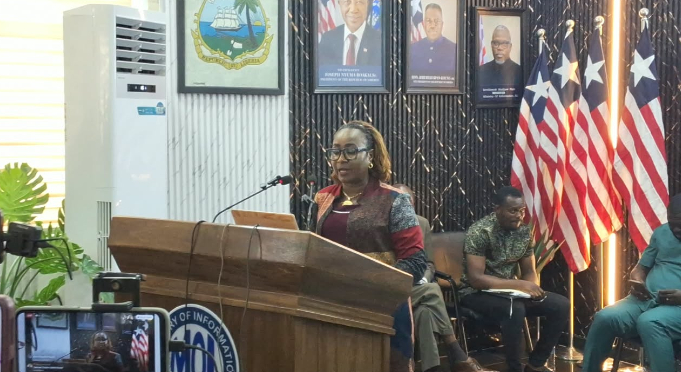
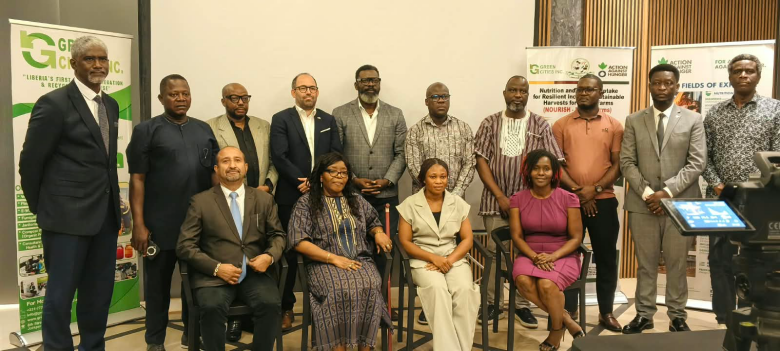
The project which was launched during a National Inception Meeting bringing together government officials, development partners, local authorities, municipal representatives, farmers’ organizations and other stakeholders involved in agriculture, food security and environmental management.
According to project organizers, NOURISH Family Farms seeks to increase the adoption of organic biofertilizers and biopesticides among smallholder farmers to improve soil fertility, reduce crop losses and decrease dependence on synthetic agricultural inputs. The initiative also aims to strengthen resilience among farming communities facing climate-related and economic challenges.
Providing an overview of the project, Green Cities Program and Business Development Manager Dalitso Kuphanga said the initiative is designed to support sustainable agricultural production while improving dietary diversity and nutrition at the household level.
Kuphanga said farmers participating in the project will be encouraged to diversify crop production and adopt agroecological practices that contribute to healthier soils, improved yields and greater environmental sustainability.
He noted that the project is expected to improve agro-biodiversity, farm productivity, household incomes and access to nutritious foods by promoting environmentally responsible farming practices and strengthening local food systems.
“Agriculture in Liberia remains the backbone of the economy,” Kuphanga said. “The sector faces major challenges, especially declining soil fertility, lack of irrigation, weak extension systems, poor waste management, climate variability and limited access to quality agricultural inputs.”
He explained that many farmers continue to rely on unsustainable farming methods that contribute to environmental degradation and lower agricultural productivity.
“Climate change has further intensified these challenges. We have cases of flooding, drought, and at the same time pressure on agricultural systems,” he said.
According to Kuphanga, the main goal of the project is to help family farms become more resilient and productive through the adoption of certified organic inputs and improved farming practices.
At the launch, Green Cities Incorporated Board Chairperson and Deputy Minister of Budget and Development Planning Tanneh Brunson said the project reflects the need for integrated approaches to addressing some of Liberia’s most pressing development challenges.
“Waste management, declining soil fertility, food insecurity, unemployment and environmental degradation should not be addressed in isolation,” Brunson said.
She explained that the project will advance agroecological farming practices while expanding access to organic biofertilizers and biopesticides and supporting the production of nutrient-rich foods in targeted communities.
Brunson emphasized that farmers must remain at the center of the initiative throughout implementation, noting that long-term success will depend on the willingness and ability of farmers to adopt the knowledge, technologies and agricultural inputs promoted by the project.
“Our objective is to ensure that the knowledge, technologies and organic agricultural inputs promoted through this project translate into healthier soils, increased production, improved household nutrition and stronger farmer incomes,” she said.
She further highlighted the collaborative nature of the initiative, noting that NOURISH is being implemented by Green Cities Inc. in partnership with Action Against Hunger and the Say No to Hunger Farmers’ Cooperative, with support from the ECOWAS Commission, the European Union and the Agence Française de Développement.
Brunson also pledged Green Cities’ commitment to transparency, accountability and effective project oversight, stressing the importance of responsible implementation and results-driven programming.
Green Cities General Manager Marie Kpoto called on implementing partners and stakeholders to remain committed to their responsibilities and ensure that the project’s benefits continue beyond the implementation period.
She said sustainability should remain a key focus, particularly as communities work to strengthen local agricultural systems and improve livelihoods through environmentally friendly solutions.
Speaking on behalf of Agriculture Minister Dr. J. Alexander Nuetah, Ambassador for Performing and Visual Arts Rose Kingston said the launch comes at a critical time for Liberia, where family farmers remain the backbone of agricultural production and are central to efforts aimed at improving food and nutrition security.
In her remarks delivered on his behalf, Nuetah , she said agricultural transformation must extend beyond increasing production and should focus on developing farming systems that are resilient, commercially viable and environmentally sustainable.
“As we transform agriculture, we must focus beyond increasing production,” the minister said.
He urged the implementing consortium to place farmers at the center of implementation, not merely as recipients of assistance but as partners in identifying problems, testing innovations and adopting practical agricultural solutions.
The project includes several production and environmental targets. Organizers plan to increase organic waste utilization from approximately 52 metric tons to 264 metric tons over the course of implementation.
The initiative also aims to produce approximately 225 metric tons of biofertilizer and 3,600 liters of biopesticides annually, helping reduce waste while supporting sustainable agricultural production.
For Action Against Hunger-Liberia, the project represents an opportunity to address food security and nutrition challenges through a coordinated and integrated approach.
Country Director Sukhdev Sharma said the initiative recognizes that increased agricultural productivity alone does not automatically lead to improved nutrition and household well-being.
“What makes NOURISH particularly relevant is its recognition that these challenges are interconnected and therefore require integrated solutions,” Sharma said.
He stressed that food security efforts must focus not only on food availability but also on ensuring access to diverse and nutritious diets, particularly for women and children.
“Food security alone is not enough,” Sharma said. “Our shared objective must be to ensure that families, and particularly women and children, have access to diverse and nutritious diets that support healthy growth and development.”
The launch brought together representatives from the Monrovia City Corporation, Paynesville City Corporation, the Environmental Protection Agency, the Liberia Standards Authority, ECOWAS partners, farmer cooperatives, development organizations and other government institutions.
Organizers said the initiative is expected to strengthen the connection between organic waste management, sustainable agriculture, improved farm productivity and household nutrition while supporting smallholder farmers in adapting to environmental and economic pressures.
Support Independent Journalism
Your support helps FrontPage Africa continue delivering independent, credible, and impactful journalism. Every contribution strengthens our ability to investigate, inform, and hold power accountable while keeping quality journalism accessible to our readers.
Support our journalism or subscribe to receive the latest FrontPage Africa stories and updates.