- Women have not played a major visible role in recent efforts for postwar justice despite being key targets of much of the violence of the war years. A new project aims to change that by strengthening women’s groups and bringing more women, including young women, into peacebuilding and justice discussions.
- Women leaders say they have been discouraged from coming forward to play a more central role in the process by harassment and attacks.
- Leaders of the US$3 million project headed by say women should not be seen only as victims of the civil wars. They should also lead investigations, prosecutions, reparations and other parts of the justice, reconciliation and commemoration process.
By Anthony Stephens, senior justice correspondent with New Narratives
More than two decades after Liberian women helped played a decisive role in bringing the country’s civil wars to an end, they have been far less visible in the renewed push to reckon with the wars’ atrocities committed during them.
No woman was shortlisted to lead the Office of the Establishment of the War and Economic Crimes Court of Liberia, and many of the major groups shaping the process are headed by men. Women are involved — including in senior positions and through women-led organizations — but they have been less prominent in some of the key leadership and decision-making spaces.
Women leaders have told FrontPage Africa/New Narratives that they have been reluctant to speak up on the postwar justice process because of attacks and belittling that they have been subjected to in the past.
A new US$3 million initiative is seeking to boost women’s involvement. The project, called the “Gender Promotion Initiative 2.0,” rolled out last week by the Liberian government, the United Nations, Kvinna till Kvinna and other partners, aims to strengthen women’s organizations and bring more women, including young women, into peacebuilding and justice discussions. The three-year project will be implemented in Montserrado, Lofa, Nimba, Grand Gedeh and Grand Cape Mount. The United Nations says more than 40 percent of its resources will go directly to women’s rights organizations.
Mabel M.K. Kear, programme manager at Kvinna till Kvinna, called the initiative “a critical promise that the sacrifices of women and communities will lead to transformation,” adding that reconciliation should be genuine and “peace will be sustained through justice.”
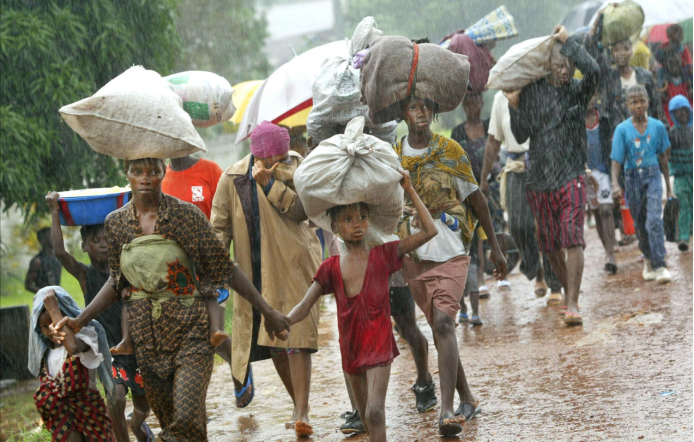
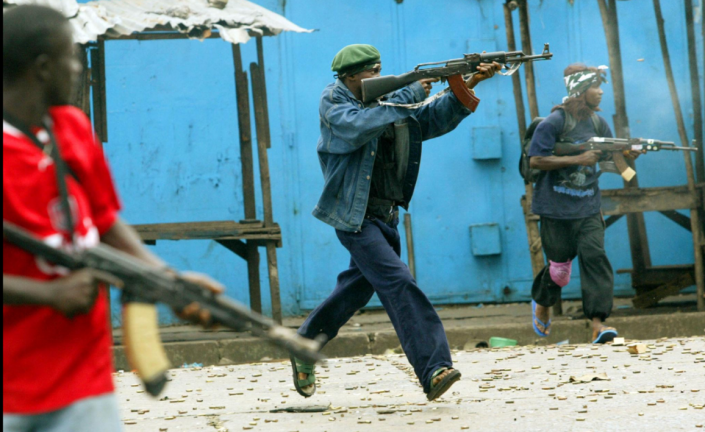
More than 250,000 people were killed during Liberia’s 14 years of civil conflict, according to the United Nations. A 2016 United Nations human rights report said 1.5 million people were displaced inside Liberia or sought refuge in other countries. The report cited a 2005 estimate that 75 percent of Liberian women and girls were subjected to wartime rape.
Liberia’s 2009 Truth and Reconciliation Commission concluded that “women were singled out for abuse simply on account of their gender.” It also found that forced displacement “took a particularly heavy toll on women,” many of whom became heads of their families after losing their spouses.
But women were also central to in ending the fighting. Christian and Muslim women joined forces through the Women of Liberia Mass Action for Peace, staging protests, prayer meetings and other nonviolent actions and taking their demands for peace to negotiations in Accra, Ghana. It was there that they staged a daring threat to undress. This was a cultural signal that the men could not ignore. They swiftly brought the negotiations to a successful conclusion. Leymah Gbowee, as one of the group’s leaders, was later awarded the Nobel Peace Prize for their actions.
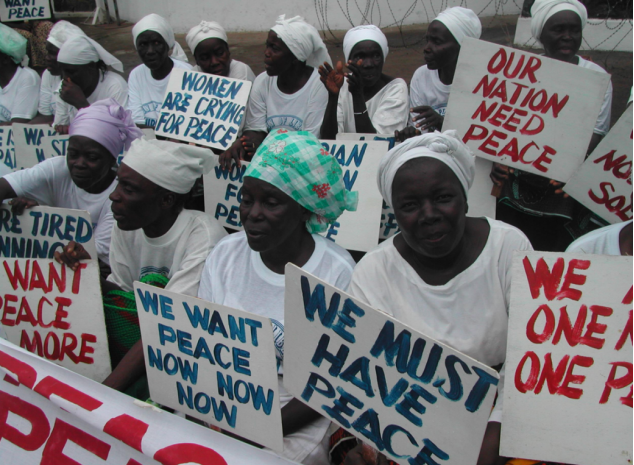
Asatu Bah Kenneth, was one of those leaders fighting for the end of the war in 2003. Today she is the most senior woman working in the court process as the director of the Office of War and Economic Crimes Anti-Corruption Division. Kenneth also founded and led the Liberia Muslim Women for Peace, which joined the Women of Liberia Mass Action for Peace, whose sustained nonviolent campaign helped pressure Liberia’s warring parties toward peace in 2003.
Women-led groups, including the Female Lawyers Association of Liberia and the Women’s NGO Secretariat of Liberia, are also involved in the current justice process.
That history returned to the international stage this week. The Liberian government held a high-level event on women, peace and security at United Nations headquarters in New York on the margins of the 81st United Nations General Assembly, celebrating women’s historic role in the country’s peace process while calling for greater leadership by women and girls. The event, organized by the Ministry of Gender, Children and Social Protection, was held under the theme “From Pioneers to Global Leaders: Liberia’s Journey in Women, Peace and Security.”
President Joseph Boakai used the event to link that legacy to women’s participation in justice today. Launching Liberia’s third National Action Plan on Women, Peace and Security, he identified participation and access to justice among its priorities and reaffirmed his commitment to establishing the War and Economic Crimes Court. Boakai used the event to highlight women’s role in national decision-making.
“In Liberia, men make the big decisions, the women make the small decisions, but the women decide which decisions are big and which decisions are small,” Boakai said.
Nobel Peace laureate Leymah Gbowee, who helped lead the Women of Liberia Mass Action for Peace, used the same event to recall how women organized and pushed for peace despite initially being excluded from important spaces.
“Contrary to popular belief that we were a bunch of women who had no strategic direction, we had a direction,” Gbowee said.
The renewed focus on women’s participation comes at a pivotal stage in the effort to establish the court. Boakai submitted legislation to establish the War and Economic Crimes Court and a National Anti-Corruption Court to the Legislature in May. Weeks earlier, he had renewed the mandate of the Office for the Establishment of a War and Economic Crimes Court of Liberia.
The Legislature is considering competing proposals from the Liberian National Bar Association, a civil society coalition led by the Independent National Commission on Human Rights, as well as Senate President Pro Tempore Nyonblee Karnga-Lawrence and Senator Joseph Jallah.
For supporters of the new gender initiative, the challenge is ensuring that women have a greater role as those decisions are made.
Christine N. Umutoni, the United Nations resident coordinator in Liberia, said the initiative should build on a voice Liberian women have already established rather than treat their participation as something new.
“Liberian women helped end the conflict,” Umutoni said. “So it is not now that we are building the voice.”
The challenge, she said, is ensuring that women’s experiences are reflected throughout the justice process. She warned that “a gender-blind approach would leave serious violations insufficiently addressed and risk weakening public confidence in justice institutions.”
This story was a collaboration with New Narratives as part of the Investigating Liberia project. Funding was provided by the U.N. Office of the High Commissioner for Human Rights and the European Union. The funders had no say in the story’s content.
Support Independent Journalism
Your support helps FrontPage Africa continue delivering independent, credible, and impactful journalism. Every contribution strengthens our ability to investigate, inform, and hold power accountable while keeping quality journalism accessible to our readers.
Support our journalism or subscribe to receive the latest FrontPage Africa stories and updates.