Monrovia — Calls for an independent investigation into Liberia’s escalating illicit drug crisis intensified Wednesday as leading experts warned that ongoing investigations could suffer a serious credibility deficit if state institutions and individuals allegedly connected to the drug network are perceived to be investigating themselves.
By Gerald C. Koinyeneh, [email protected]
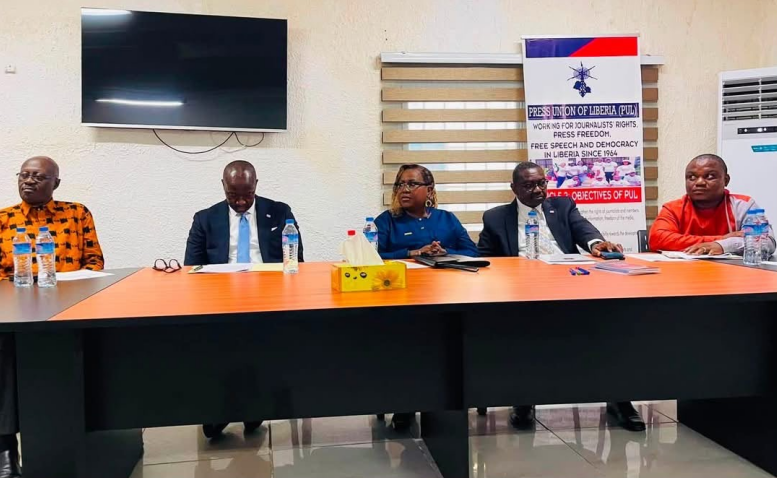
The call came during the relaunch of the Edward Wilmot Blyden Intellectual Discourse of the Press Union of Liberia (PUL), where veteran journalist Aaron Kollie, Center for Transparency and Accountability in Liberia (CENTAL) Executive Director Anderson Miamen, and Gbarpolu County Senator Amara Konneh urged the government to establish an independent panel to investigate the country’s multimillion-dollar drug-trafficking crisis.
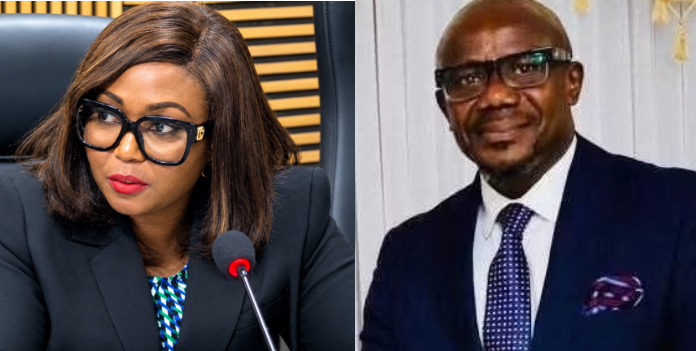
Their position, however, was met with a measured disagreement from Justice Minister and Attorney General Cllr. Oswald Tweh, who said the government does not oppose an independent panel but insisted that the ongoing investigations and prosecutions must continue.
Justice Minister: ‘We Can’t Abandon the Investigation’
Minister Tweh defended the government’s handling of the investigation, pointing to the involvement of international law-enforcement partners, including the United States Drug Enforcement Administration (DEA), Homeland Security and the Federal Bureau of Investigation (FBI).
He said the international partners have had access to evidence and investigative leads and have expressed confidence in Liberia’s ongoing processes.
“Independent investigation, yes, that might come later. But right now, we don’t see it,” Tweh said. “Everything was open to our partners — all the evidence, all the leads — and they applauded us.”
The Justice Minister said the government’s response must go beyond arrests and prosecutions to identifying and correcting institutional weaknesses that allow illicit drugs to enter or move through Liberia.
“If narcotics can move through a chain of handling, screening or transportation, then that chain must be examined and strengthened,” Tweh said.
He argued that authorities must investigate possible facilitation and corruption, strengthen screening and intelligence capabilities, improve coordination among law-enforcement agencies and ensure that criminal networks are dismantled rather than temporarily disrupted.
“Strong institutions are not institutions that claim perfection,” he said. “Strong institutions are institutions that can detect failure, correct it, investigate wrongdoing and continue to improve.”
Konneh: ‘Selective Justice Kills Trust’
Senator Amara Konneh called for an approach that he said would produce a “win-win” outcome for the country, arguing that public confidence depends on the equal application of justice.
“I want to focus on win-win. I really want our country to win. I want everybody to win,” Konneh said.
He warned that selective enforcement could undermine confidence in the justice system.
“Selective justice kills trust. Full, equal justice for everyone builds trust,” he said.
Konneh urged the government to prosecute cases swiftly, proposing a 90-day target for bringing cases to trial where legally and practically possible.
He also called for additional resources to help the Justice Ministry handle what he described as an exceptional national case.
“If you were to, through the President’s request, [seek] special financing to help you prosecute this case quickly, you will have the full support of the Legislature,” he said.
Konneh also focused on the need to restore public confidence in Liberia’s security institutions.
“A swift public trial clears innocent officers and permanently removes compromised ones,” he said. “It tells the honest police officers the system will protect you.”
He urged authorities to make investigators more credible than those they are investigating.
“Make the investigators more credible than the suspect,” Konneh said.
Bar Association Calls for Stronger Institutions
Cllr. Juah Lawson, President of the Liberia National Bar Association, said Liberia’s response to drug trafficking must be firm, coordinated, evidence-based, sustained and grounded in the law.
She called for the Liberia Drug Enforcement Agency, Liberia National Police, Ministry of Justice, Financial Intelligence Agency, Customs and Immigration authorities, as well as the Judiciary, to be adequately resourced and professionally staffed.
She also emphasized institutional independence and coordination.
“Drug trafficking thrives where institutions are weak, investigations are compromised, borders are porous, evidence disappears, prosecution fail, and criminal networks are able to purchase influence,” Lawson said.
She argued that strengthening Liberia’s anti-narcotics response requires more than arrests, saying the institutions responsible for investigating and prosecuting drug crimes must themselves be capable of resisting corruption and political interference.
CENTAL Wants LDEA Recruitment Reformed
Anderson Miamen of CENTAL said Liberia must move beyond providing security institutions with vehicles and other logistical support and undertake deeper institutional reforms.
He called for additional resources, technology and logistics for security agencies while urging greater transparency and public participation in institutional reforms.
“The process has to open up,” Miamen said.
He called for reforms to the law establishing the Liberia Drug Enforcement Agency, particularly provisions governing the recruitment and selection of personnel.
Miamen said recruitment into the agency should be transparent, inclusive and participatory, with independent oversight similar to approaches used for other integrity-focused institutions.
He argued that strengthening the drug enforcement agency must include vetting personnel to ensure that individuals entrusted with fighting narcotics trafficking are themselves properly screened.
Journalist Calls for Rehabilitation Center
Veteran journalist Aaron Kollie warned that Liberia’s fight against illicit drugs must address the social consequences of addiction, particularly among young people.
“You can construct all the roads, all the market buildings, and all the political projects,” Kollie said. “If you do not address the fundamental problem and the root cause of the drugs problem affecting the foundation of our country, the young people, it will all be meaningless.”
Kollie called for serious consideration of the construction or rehabilitation of a national drug rehabilitation center.
He also urged the government to properly resource the LDEA and other institutions involved in the fight against drugs while strengthening the vetting of personnel.
He said security officials must be adequately supported and incentivized to prevent corruption and protect Liberia’s national and international reputation.
PUL Relaunches Blyden Intellectual Forum
The discussions formed part of the formal relaunch of the Edward Wilmot Blyden Intellectual Discourse, the flagship intellectual forum of the Press Union of Liberia.
The forum was relaunched by former PUL President Gabriel Williams, who called for a collective national response to Liberia’s growing illicit drug problem.
PUL President Julius Kanubah commended the panelists for what he described as expert and factual contributions to the national debate.
Kanubah said the discussion would help deepen public understanding while advancing transparency, accountability and institutional reform in Liberia’s campaign against illicit drugs.
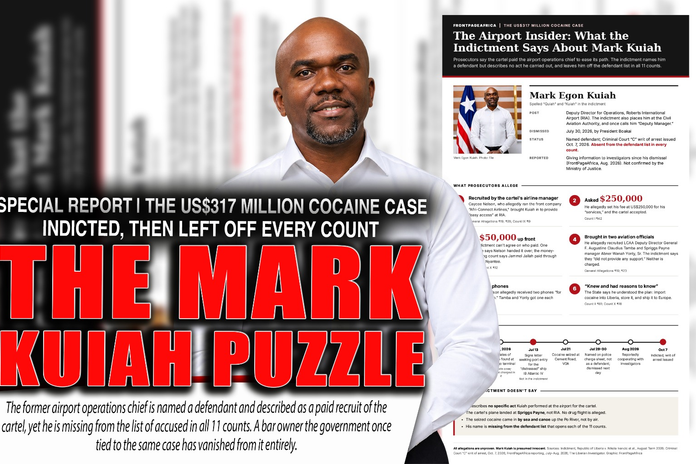
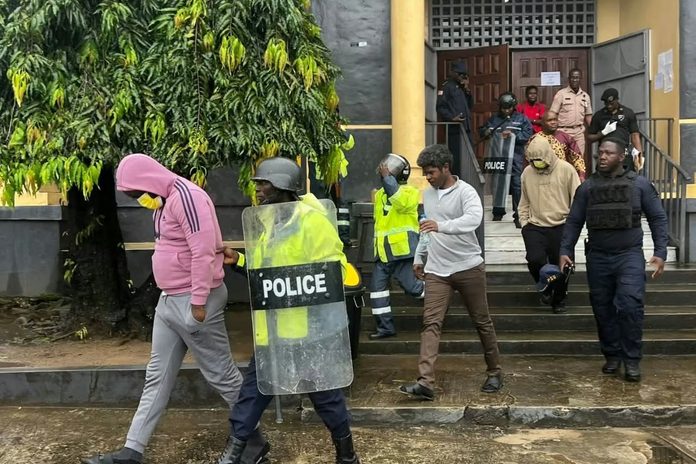
The debate comes amid heightened public scrutiny of Liberia’s handling of major cocaine seizures, arrests of prominent individuals and allegations of possible links between drug trafficking networks and elements within or around state institutions.
While government officials maintain that the ongoing investigations are being conducted professionally with the support of international partners, calls for an independent mechanism to examine the broader drug-trafficking crisis are gaining momentum.
The central question emerging from Wednesday’s forum is whether Liberia can simultaneously pursue criminal prosecutions and establish an independent process capable of examining the institutional failures, corruption allegations and possible official complicity that may have allowed the drug trade to flourish.
Support Independent Journalism
Your support helps FrontPage Africa continue delivering independent, credible, and impactful journalism. Every contribution strengthens our ability to investigate, inform, and hold power accountable while keeping quality journalism accessible to our readers.
Support our journalism or subscribe to receive the latest FrontPage Africa stories and updates.