MONROVIA – Sister Aid Liberia has renewed its call for stronger investment in women’s political leadership, setting an ambitious target of achieving at least 50 percent women’s representation in Liberia’s Legislature by 2029.
By Patience M. Jones, [email protected]
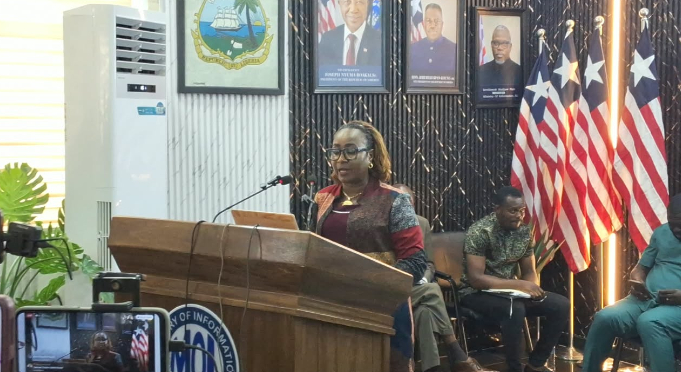
The call was made by Miatta Garmai Darwolor, Founder and Executive Director of Sister Aid Liberia, during a three-day Political Leadership and Aspirant Readiness Training held in Monrovia for women aspiring to contest elections and take up leadership positions in Liberia.
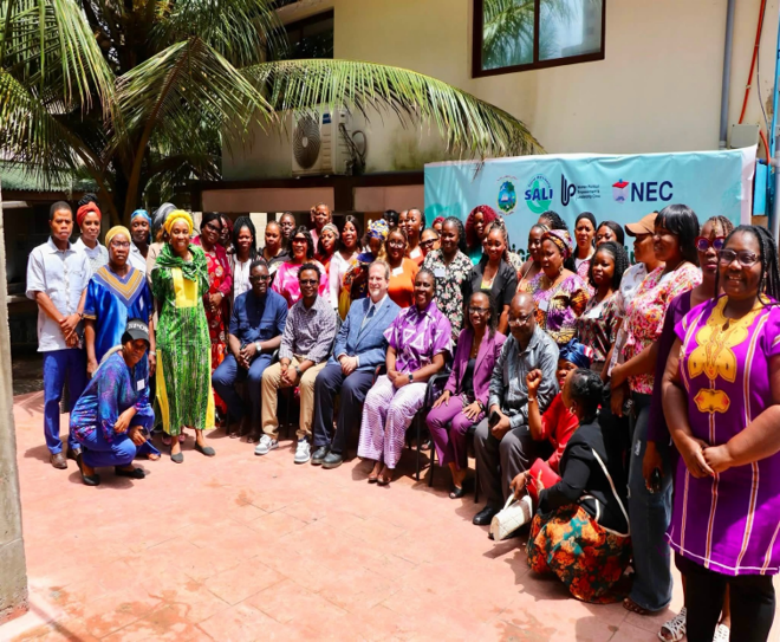
The training, implemented by Sister Aid Liberia with support from UN Women Liberia, the Government of Ireland, the European Union, Sweden, and the Netherlands Institute for Multiparty Democracy (NIMD) and in collaboration with the Collaboration of Political Parties Women in Liberia (COPPWIL) and the Women NGO Secretariat of Liberia (WONGOSOL), brought together 42 women political aspirants from Montserrado, Margibi and Grand Bassa counties.
According to Darwolor, the initiative is part of an early preparation strategy aimed at equipping women with the knowledge, skills and confidence needed to effectively participate in Liberia’s political and public life.
“This training in women’s political leadership and candidate readiness is an early preparation for women who are intending to contest in the coming elections or take part in active politics in Liberia, including occupying public and political party positions,” Darwolor said.
She explained that Sister Aid’s decision to conduct the training was informed by earlier research and a nationwide mapping exercise that identified women interested in political participation and highlighted the challenges they face.
Darwolor said the organization is not only interested in encouraging women to contest elections but also in ensuring that they are adequately prepared to navigate Liberia’s political environment.
She noted that the training addresses critical areas including transformative leadership, campaign planning, fundraising, political communication, electoral processes and strategies for overcoming barriers that continue to limit women’s participation.
Only 11 Women in 103 Legislative Seats
Darwolor expressed concern over the current level of women’s representation in Liberia’s Legislature, noting that women occupy only 11 of the 103 legislative seats.
She argued that the low representation of women has serious implications for equitable decision-making and resource distribution across the country.
“We want more women elected in positions of power, especially in the Legislature. We also want more women benefiting from the political investments,” she stated.
According to Darwolor, women must have a meaningful presence at decision-making tables if Liberia is to achieve equitable development.
“We can only have equitable distribution of resources when people are equally around the table when decisions are made,” she emphasized.
She, therefore, disclosed that Sister Aid’s long-term target is to see women attain at least 50 percent representation in the Legislature by 2029.
“For 2029, we target at least 50 percent women representation at the level of the Legislature,” Darwolor intoned.
Financial Barriers Remain a Major Concern
Darwolor acknowledged that financial barriers remain among the biggest obstacles confronting women who want to contest elections.
However, she clarified that Sister Aid does not finance political campaigns. Instead, the organization seeks to equip women with the technical knowledge needed to mobilize resources legally and effectively.
“At Sister Aid, we do not finance campaigns outside of our scope, but we support the women with the technical ability to be able to do that by themselves,” she explained.
She said the organization is also working with women’s auxiliary groups within political parties, including COPPWIL, to challenge the male-dominated structures that continue to limit women’s advancement in politics.
Women Urged to Own Their Political Journey
Darwolor urged the women participating in the training to see the opportunity as an investment in their own leadership development rather than a favor being done to them.
“The biggest message is to the women themselves. We want them to own this as their process,” she intimated.
“We at Sister Aid keep emphasizing that we are not doing them a favor. We are only doing our work—our work to support women and girls, and our work to build the capacities and leadership competencies of women.”
She encouraged the participants to use the knowledge gained from the training to strengthen their political ambitions and prepare themselves for future leadership opportunities.
UN Women: Leadership Begins Before Elections
Speaking during the opening of the training, UN Women Liberia Deputy Country Representative Yemi Falayajo stressed that women’s political participation is essential to strengthening Liberia’s democracy.
She said women continue to face limited access to political networks, resources, information, mentorship and leadership opportunities.
“Whether your aspirations are within elected office, local governance, public service, political parties, or community leadership, your participation matters,” Falayajo said.
“Leadership begins long before elections. It begins with preparation, learning, relationship-building, and a commitment to serving others.”
She said the training was designed to provide practical knowledge on transformative leadership, issue-based politics, electoral processes, political party and constituency engagement, public speaking, voter outreach, fundraising, gender quotas, and preventing and responding to violence against women in elections and politics.
UNDP Calls for Strategic Engagement
Also speaking at the opening, UNDP representative Robert Irish encouraged the women aspirants to engage directly with communities, traditional leaders, women’s groups, young people and marginalized populations.
He said research conducted following Liberia’s 2023 elections showed that successful women candidates often built strong relationships with local leaders and community groups.
Irish challenged women aspirants to clearly communicate why voters should support them and to use different communication channels, including radio, churches, community leaders and social media.
He emphasized that effective campaigning requires preparation, planning and strategic engagement with voters.
Aspirants Say Training Builds Confidence
Participants said the training provided practical lessons they intend to take back to their respective communities.
Williette Payyoudeh Cooper, a former electoral candidate and aspiring president of COPPWIL, said the training strengthened her understanding of fundraising, political messaging and campaign strategy.
She identified financial constraints, cultural barriers, cyberbullying and the timing of political meetings as some of the challenges confronting women in politics.
Another participant, Jackie M. Morris, a former contestant from Grand Bassa County, said the training had equipped her with additional knowledge to prepare for future elections.
Sandra Massa-Williams, a former contestant from Margibi County, also said she was returning to her community better prepared to engage voters and encourage women to support capable female candidates.
Building a Pipeline of Women Leaders
The three-day training is the first of six rounds expected to reach approximately 240 women aspirants across Liberia’s 15 counties.
The initiative builds on a nationwide mapping exercise of women political aspirants and a National Networking Forum held in May 2026.
For Darwolor, the goal goes beyond preparing individual candidates. It is about building a sustained pipeline of competent women who are ready to compete, lead and influence decisions at every level of Liberia’s political system.
With women currently holding only 11 of 103 legislative seats, Sister Aid believes the country cannot achieve meaningful political inclusion without deliberate efforts to remove the financial, cultural, structural and institutional barriers confronting women.
As the organization looks toward 2029, Darwolor’s message is clear: Liberia needs more women not only participating in politics, but sitting at the table where the country’s most important decisions are made.
Support Independent Journalism
Your support helps FrontPage Africa continue delivering independent, credible, and impactful journalism. Every contribution strengthens our ability to investigate, inform, and hold power accountable while keeping quality journalism accessible to our readers.
Support our journalism or subscribe to receive the latest FrontPage Africa stories and updates.