Witness Says Former Foreign Minister Halted Distribution After Media Reports, Formed Probe Committee That Found No Evidence Rice Was Sold on Liberian Market.
By Willie N. Tokpah
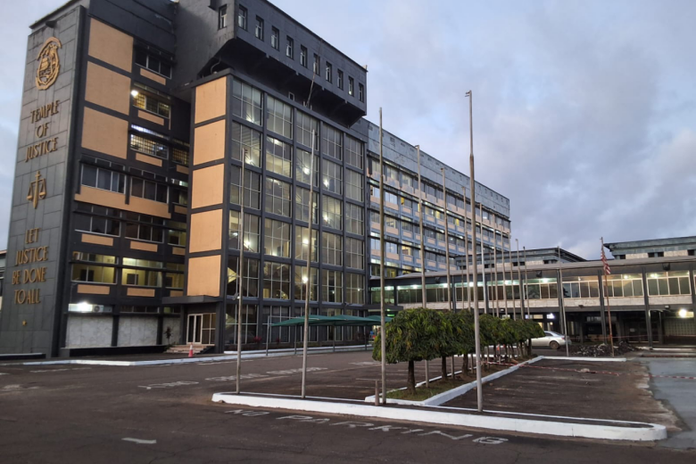
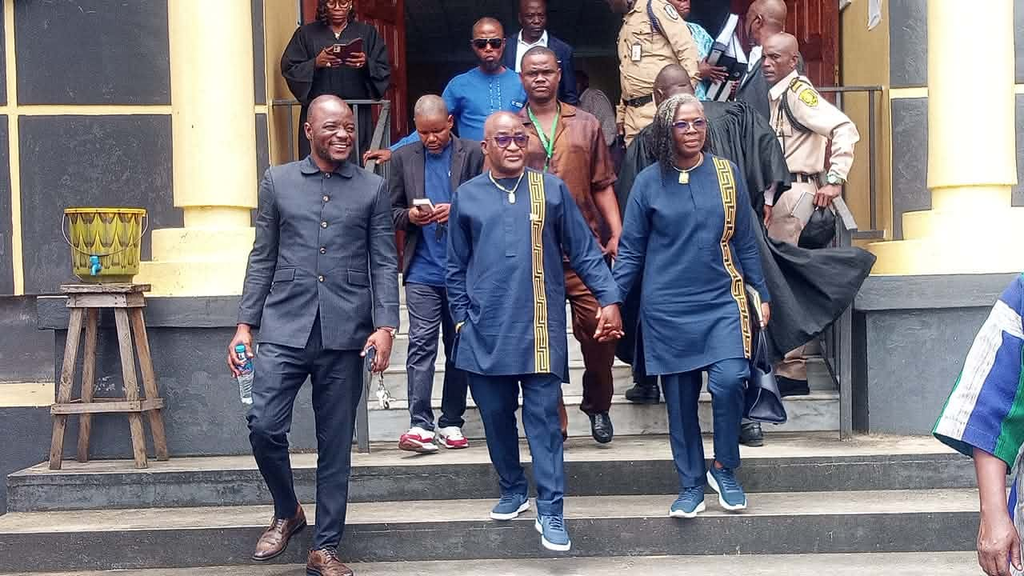
MONROVIA- Prosecution’s first witness in the controversial Saudi-donated rice trial has provided testimony that could become significant to the defense of former Foreign Minister Dee-Maxwell Saah Kemayah, acknowledging that the former minister moved to halt the distribution of the humanitarian commodity after reports that it was being sold, but that an investigative committee he established found no evidence that the rice had been sold on the Liberian market.
The testimony, delivered before Criminal Court “C,” has introduced a critical distinction into a case involving allegations over the custody, transfer and distribution of 29,412 bags of rice donated by Saudi Arabia for disaster victims.
While the prosecution maintains that Kemayah and other former government officials unlawfully interfered with the rice and contributed to its subsequent diversion, investigator John Kumeh of the Assets Recovery and Property Retrieval Taskforce, AREPT, did not testify that Kemayah personally sold the rice, removed it from a warehouse, received it for his personal benefit or participated in any sale.
Instead, Kumeh’s account placed Kemayah’s initial involvement at the point when reports emerged that the donated rice was allegedly appearing for sale on the Liberian market.
According to the witness, Kemayah responded by directing the National Disaster Management Agency, NDMA, to halt distribution and subsequently established an inter-ministerial committee to investigate the allegations.
The committee, according to Kumeh, included Robert Sammy, identified as a former special assistant to the Foreign Minister; former General Services Agency, GSA, Director Mary Broh; NDMA Director Henry O. William; and former Internal Affairs Minister Varney A. Sirleaf.
He noted that the committee reportedly held several meetings at the GSA compound and its investigation did not establish that the Saudi-donated rice had been sold on the Liberian market.
Kumeh’s testimony placed an important evidentiary gap at the center of the prosecution’s case against Kemayah, that the allegation that prompted his intervention was not established by the committee he caused to be formed.
Evidence Against Kemayah
The prosecution’s case is not that the former foreign minister personally sold the rice.
Rather, the evidence presented so far appears to focus on his institutional involvement in the decision-making process surrounding the commodity.
The prosecution additionally alleged that Kemayah interfered with NDMA’s statutory custody of the rice and that the subsequent transfer of the remaining stock from NDMA to the GSA was unauthorized.
Kumeh testified that, following the committee’s work, acting Foreign Minister Thelma Duncan-Sawyer instructed the GSA to remove the remaining rice from NDMA.
He said the GSA subsequently moved 13,895 bags from NDMA.
The witness further testified that the GSA already had 11,200 bags of Saudi-donated rice in its warehouse, a movement that brought approximately 25,095 bags into GSA custody.
During that transfer, according to the testimony, 41 bags could not be accounted for.
It is this chain of institutional decisions, rather than evidence of a direct sale by Kemayah, according to Kumeh, that appears to form an important part of the State’s case against the former minister.
A Question of Authority
The trial has also raised a fundamental legal question over the authority of the Foreign Ministry to intervene in the custody of disaster-relief commodities.
Kumeh testified that the 2016 legislation establishing the NDMA placed policymaking authority in a statutory board comprising representatives from several government institutions.
Those institutions included Internal Affairs, Health, Justice, Finance, Public Works, National Defense, Agriculture, Mines and Energy, the Environmental Protection Agency and the United Nations Country Team.
The Foreign Ministry, the witness testified, was not listed among the statutory members of the NDMA board.
The prosecution therefore argued that the Foreign Ministry lacked the authority to direct the movement of rice under NDMA’s control.
For the defense, however, the central issue may be whether Kemayah’s intervention constituted criminal interference or an administrative response to reports that humanitarian assistance was being diverted.
The distinction could prove significant, that a minister’s authority to investigate a reported problem is different from criminal participation in the subsequent misappropriation of the property being investigated.
Hence, it is now incumbent on the State to ultimately establish not merely that Kemayah became involved, but that his involvement satisfied the elements of the offenses charged against him.
Where the Rice Went
The testimony becomes more damaging to other defendants as the investigation moves beyond Kemayah’s initial intervention.
Kumeh testified that investigators encountered significant difficulties tracing portions of the rice after it came under GSA custody.
He maintained, that some quantities were allegedly distributed to institutions and individuals outside the stated purpose of assisting disaster victims.
The Group of 77 and the Monrovia Central Prison were among those mentioned during testimony. The prosecution also introduced allegations involving several officials who allegedly signed for substantial quantities of rice. Kumeh alleged that Augustine Kollie was to signed for 4,282 bags and reportedly claimed that the rice had been distributed to disaster-affected communities, but investigators later visited some of the communities identified in the distribution records and, according to the testimony, representatives there denied receiving the rice.
At the same time, Edward Konneh was similarly alleged to have signed for 5,095 bags. Kumeh explained that again, field investigators reportedly found discrepancies between the records and accounts from communities identified as beneficiaries.
Archievico Doe was accused of receiving 250 bags. The prosecution also alleged that 5,000 bags were pre-positioned at the NDMA regional warehouse in Gbarnga, although the regional coordinator reportedly denied receiving them.
Those allegations, if established through evidence and cross-examination, could point to serious failures in the accounting and distribution of humanitarian assistance.
However, they do not, by themselves, establish Kemayah’s personal involvement in those transactions.
That distinction could become increasingly important as the prosecution attempts to connect the former minister’s decisions to the alleged disappearance or diversion of rice after the committee investigation.
The Committee That Found No Market Sale
Perhaps the most consequential aspect of Kumeh’s testimony is what the investigative committee did not find. Kemayah reportedly became concerned after media reports suggested that Saudi-donated rice intended for disaster victims was being sold, he stopped the distribution and established a committee.
The committee met. But according to the prosecution’s own witness, the committee did not establish that the rice had been sold on the Liberian market.
Kumeh testimony does not necessarily exonerate Kemayah from the charges against him, nor does it resolve what happened to the rice afterward, but creates an evidentiary distinction that the defense is likely to emphasize, that the former minister’s intervention was triggered by an allegation that his own investigative mechanism subsequently failed to substantiate.
Meanwhile, the prosecution will now have to explain why the decision to halt distribution and investigate the allegation should be treated as criminal conduct, particularly where the evidence presented so far does not show that Kemayah personally profited from the rice.
From Investigation to Alleged Diversion
The prosecution’s case appears to be centered on what happened after the original distribution was halted.
The State alleged that the transfer from NDMA to GSA removed the commodity from the institution legally responsible for disaster management and placed it in circumstances where substantial quantities could no longer be adequately accounted for.
The defense, however, is likely to argue that the chronology matters. Kemayah did not, according to the testimony presented so far, initiate the controversy by taking rice for himself.
His involvement began after reports of alleged market sales,Hehe ordered the distribution halted. He then established a committee to investigate and that committee did not establish that the rice had been sold on the Liberian market.
The subsequent transfer was carried out through other officials and institutions.
The question for the court will therefore be whether the prosecution can bridge that gap and prove that Kemayah’s actions were not merely administrative decisions made in response to reported irregularities, but constituted criminal participation in the alleged offenses.
Legal and Evidentiary Test
The case now appears to be moving toward a broader examination of institutional responsibility. There is little dispute from the testimony that questions arose over the accounting and distribution of the Saudi-donated rice.
So far, the prosecution witness has described his intervention, his establishment of the committee and the subsequent transfer of rice from NDMA to GSA.
But the testimony presented to date has not linked Kemayah directly to the sale of the rice.
It has not placed him as a recipient of the commodity.
It has not shown that he personally removed rice from an NDMA warehous,e and it has not established that he personally benefited from the alleged diversion.
That does not end the prosecution’s case, but it places the burden squarely on the State to establish the connection between his administrative decisions and the criminal offenses charged.
A Trial Now Defined by the Missing Link
The Saudi rice case is increasingly becoming a test of the difference between administrative responsibility and criminal liability. The prosecution may establish that government institutions mishandled humanitarian commodities.
It may establish that quantities of rice were distributed without adequate documentation. It may establish that some beneficiaries identified in official records never received the rice. The court will now determine whether the evidence proves beyond the required legal standard that each defendant committed the offenses charged.
For Kemayah, the first prosecution witness has so far provided a narrative in which the former minister entered the controversy after reports of possible diversion, not one in which he is directly described as a seller or beneficiary of the rice.
Additionally, the witness testified that the committee established by Kemayah did not substantiate the very allegation that prompted the intervention.
That testimony is unlikely to end the prosecution’s case, and gives the defense an important evidentiary point to develop as additional witnesses appear and the State attempts to establish the full chain of custody and responsibility
For now, the prosecution’s first witness has established that the Saudi-donated rice was intended for disaster victims, that NDMA initially handled its distribution, that Kemayah halted the process after reports of alleged market sales, and that he established a committee to investigate those reports.
But the same witness testified that the committee did not establish that the rice had been sold on the Liberian market.
As the proceedings continue, the central issue for the court may therefore be less about whether problems occurred in the handling of the rice and more about who caused those problems, who had legal authority over the commodity at each stage, and whether the evidence establishes Kemayah’s personal criminal responsibility.
Criminal Court “C” is expected to resume the trial on Tuesday, August 25, 2026, when testimony is scheduled to continue.
Until the evidence is fully presented and tested through cross-examination, the allegations against Kemayah and the other defendants remain allegations. The ultimate determination of criminal responsibility rests with the court.
Support Independent Journalism
Your support helps FrontPage Africa continue delivering independent, credible, and impactful journalism. Every contribution strengthens our ability to investigate, inform, and hold power accountable while keeping quality journalism accessible to our readers.
Support our journalism or subscribe to receive the latest FrontPage Africa stories and updates.