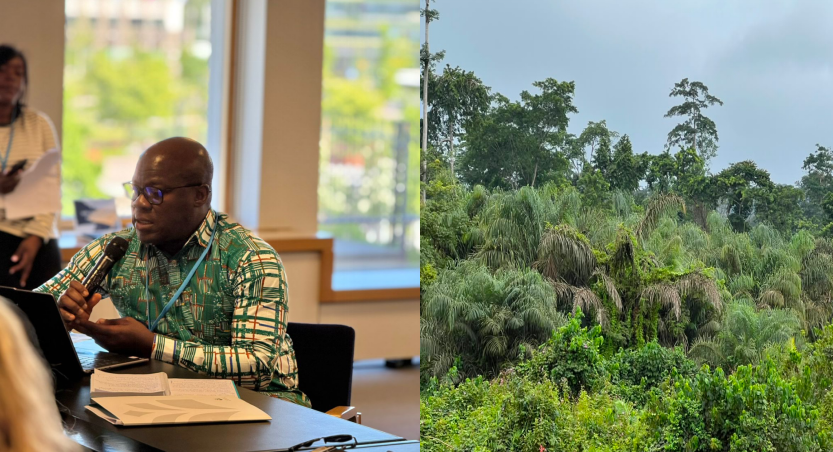
Liberia has long been recognized for its hospitality and its tradition of welcoming people from neighboring countries seeking peace, security, and economic opportunities. This openness reflects the values upon which our nation has been built. However, the significant increase in the number of Burkinabè nationals settling in different parts of Liberia in recent years has raised growing concerns about the country’s environmental sustainability, land governance, and social cohesion. The estimated number of Burkinabè in Grand Gedeh and adjacent counties now stands at approximately 85,000–100,000. These concerns require urgent, evidence-based attention from the National Government, local authorities, and development partners.
By: Arthur R.M. Becker | Environment, Climate Change and International Development Expert | Email: [email protected]
My concern is informed not only by national discussions but also by firsthand observations and insights. While recently travelling across Liberia as part of consultations for the Climate Mobility Deep Dive, from Nimba County through Grand Gedeh to Harper, Maryland County, and back to Monrovia, I had the opportunity to engage directly with local communities, traditional leaders, local authorities, and other stakeholders. These consultations brought to light deeply concerning accounts, particularly from residents of Grand Gedeh County, regarding the rapid increase in the Burkinabè population and its perceived impact on community land, forests, and natural resources. Many community members expressed fears over the expansion of agricultural activities into forested areas, increasing pressure on customary land, and the growing challenges of managing migration while protecting local livelihoods and environmental sustainability. While these accounts represent the perspectives of local stakeholders and require continued evidence-based assessment, they underscore the urgent need for the Government of Liberia to strengthen land governance, environmental monitoring, and migration management in affected counties.
One of the most pressing issues is the increasing pressure on Liberia’s forests and natural resources. Reports from several counties indicate that expanding settlements and agricultural activities have contributed to deforestation, land clearing, and encroachment into forested areas. Liberia possesses one of the largest remaining blocks of the Upper Guinean Forest, a globally important biodiversity hotspot that provides critical ecosystem services, supports livelihoods, and contributes significantly to climate change mitigation. Unregulated land clearing, regardless of who carries it out, threatens wildlife habitats, reduces carbon storage, accelerates soil degradation, and undermines Liberia’s national commitments under international environmental agreements. Stronger environmental enforcement and sustainable land-use planning are therefore essential.
Beyond environmental concerns, the growing demand for farmland has intensified pressure on customary land, creating disputes in some communities and increasing competition over natural resources. Where land transactions occur without proper consultation, documentation, or respect for Liberia’s legal framework, tensions between local communities and newcomers can emerge. At the same time, rapid population growth in rural areas can strain schools, health facilities, water sources, sanitation systems, and other public services that were originally designed to serve much smaller populations. These challenges are not unique to Liberia but require proactive governance to prevent future conflict and protect social cohesion.
The Government of Liberia should therefore strengthen immigration management, improve population data collection, and ensure that all foreign nationals residing in the country comply with national immigration and residency laws. Environmental agencies, forestry authorities, county administrations, and traditional leaders should work together to monitor land use, prevent illegal deforestation, and enforce environmental regulations fairly and consistently. Likewise, land allocation and agricultural expansion should be guided by Liberia’s Land Rights Act and environmental safeguards to protect both communities and ecosystems while promoting sustainable development.
Addressing these challenges does not require hostility toward any nationality or community. Liberia’s response must remain firmly rooted in the rule of law, respect for human dignity, and sound environmental governance. Responsible migration management, effective border controls, transparent land administration, and sustainable natural resource management can coexist with Liberia’s longstanding tradition of hospitality. Every individual living and working in Liberia should be expected to respect the country’s laws, protect its environment, and contribute positively to national development.
The time for decisive action is now. Protecting Liberia’s forests, safeguarding community land rights, and maintaining social harmony are matters of national interest that transcend politics. By strengthening environmental governance, improving migration management, enforcing existing laws, and investing in sustainable rural development, the Government can ensure that Liberia remains both welcoming and environmentally resilient for present and future generations. Through balanced, evidence-based policies that uphold the rule of law and respect for human dignity, Liberia can effectively manage emerging migration challenges while safeguarding its rich natural heritage and promoting long-term national stability.
Support Independent Journalism
Your support helps FrontPage Africa continue delivering independent, credible, and impactful journalism. Every contribution strengthens our ability to investigate, inform, and hold power accountable while keeping quality journalism accessible to our readers.
Support our journalism or subscribe to receive the latest FrontPage Africa stories and updates.