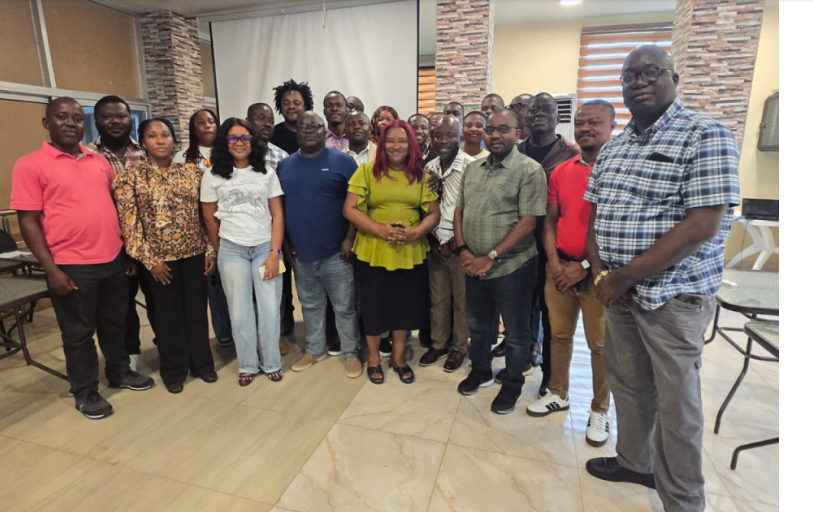
GANTA — The Liberia Medicines and Health Products Regulatory Authority (LMHRA) announced this week a set of urgent, evidence‑based measures to curb the circulation of adulterated sexual‑enhancement and herbal products after a three‑day working session in Ganta City, Nimba County.
Dr. Luke L. Bawo, Managing Director of Liberia Medicines and Health Products Regulatory Authority ( LMHRA), said the gathering of institution staffers and workers produced a draft operational plan for fiscal 2027 that will be submitted to the Ministry of Finance and Development Planning (MFDP)for approval and funding.
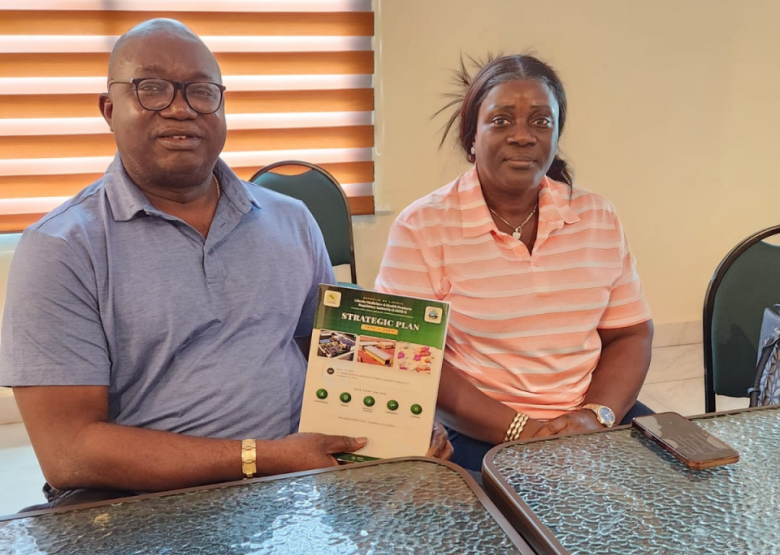
The operational plan builds on the authority’s recently launched five‑year strategic plan and places a strong emphasis on decentralizing LMHRA operations to all 15 counties.
“Decentralization will place pharmacy regulators and public‑health technicians in every county to inspect premises, enforce standards and strengthen pharmacovigilance,” Dr. Bawo said.
He added that county teams will be better positioned to detect, report and mitigate adverse drug events close to where consumers live.
Two flagship interventions in the draft plan are intended to stop substandard and potentially dangerous sexual‑enhancement products from reaching consumers.
The first is an electronic track‑and‑trace system: every product registered with LMHRA will carry a unique QR code linked to the authority’s database.
Dr. Bawo stated that products found on the market without a valid QR Code will be presumed unregistered and subject to confiscation and testing,
The system is designed to improve product traceability from importer or manufacturer to retailer and to enable rapid recalls when tests find unsafe ingredients.
The second intervention is the establishment of a dedicated pharmaceutical waste‑disposal facility.
Dr. Bawo pointed out that the facility to include a high‑capacity incinerator, decantation pit, bottle crusher and secure warehouses is scheduled to open before the end of October.
The site will provide a safe, documented way to destroy expired, counterfeit and confiscated medicines, she said, reducing the risk that banned products re‑enter informal markets or the environment.
Dr. Bawo addressed consumer concerns about popular local products such as “brown tap,” “Jokomo” and “Okosamba,” which are commonly marketed as herbal exual‑enhancement remedies.
Preliminary LMHRA testing suggests some manufacturers may be adulterating these products with undeclared active pharmaceutical ingredients, including sildenafil the active compound in Viagra.
“We are carrying out active testing and have sent samples to independent third‑party laboratories,” Dr. Bawo intimated.
“We will base any market withdrawal on scientific, evidence‑based findings. If we identify undeclared potency compounds, we will recommend their removal from the market and pursue enforcement actions against responsible parties.”
The LMHRA Chief warned that porous borders, informal cross‑border trade, and street‑level markets increase the risk of substandard products entering Liberia. To counter that, the operational plan proposes closer coordination with the Ministry of Health, Customs, immigration authorities and security agencies. Joint inspections, intelligence‑led seizures and tighter import controls are among the enforcement measures discussed.
On infrastructure, Dr. Bawo reported that construction of LMHRA’s national quality‑control laboratory remains on schedule for inauguration before year‑end.
She mentioned that once operational, the laboratory will conduct routine testing of imported and locally produced medicines to verify active ingredients, strength and purity.
The facility will reduce reliance on overseas labs and shorten turnaround times for safety results. The authority also spoke about public education.
LMHRA urged journalists, community leaders and health workers to amplify safety messages so consumers can avoid risky products and report adverse events.
The authority plans targeted outreach at markets, barber shops and places where herbal remedies are commonly sold, using posters, radio programming and community meetings to raise awareness about the dangers of adulterated medicines.
Community reaction in Ganta was cautious but positive. Local market vendors said many customers ask for “natural” remedies and noted that price and anonymity drive demand for cheap, unregulated options.
A public‑health technician in attendance described seeing adverse effects firsthand: headaches, sudden drops in blood pressure and in one reported case a man who required hospital care after using an unlabelled sexual‑enhancement product.
If approved and funded, the LMHRA’s Fiscal‑2027 Operational Plan would fund county regulator posts, the QR traceability rollout, testing campaigns, and the new disposal facility.
Dr. Bawo added that the authority will publish timelines and progress updates as funds are released.
Support Independent Journalism
Your support helps FrontPage Africa continue delivering independent, credible, and impactful journalism. Every contribution strengthens our ability to investigate, inform, and hold power accountable while keeping quality journalism accessible to our readers.
Support our journalism or subscribe to receive the latest FrontPage Africa stories and updates.