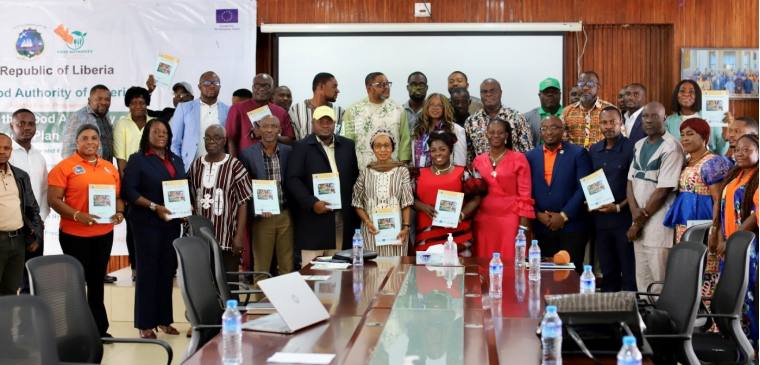
Monrovia –The Food Authority of Liberia (FAL) has officially launched its 2026-2030 Strategic Plan, marking a significant milestone in the country’s efforts to strengthen food safety, protect public health and build a safer, more resilient food system. The strategic plan was developed with support from the European Union-funded Liberian Food Safety Initiative (LiFSI), implemented by the United Nations Industrial Development Organization (UNIDO).
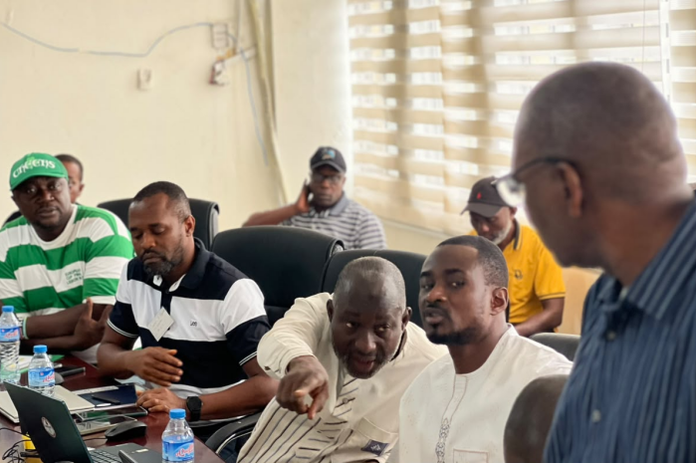
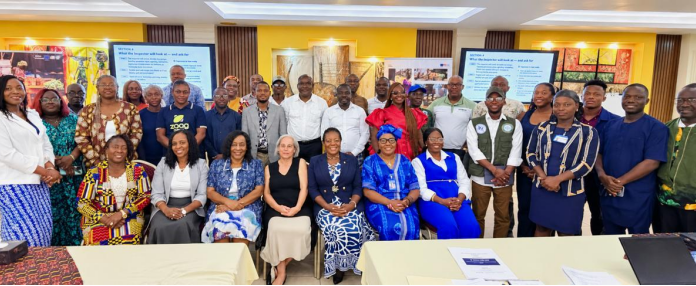
The launch ceremony, held on 14 August 2026 at the Ministry of Health, Tubman Boulevard, Congo Town, Paynesville City, brought together senior government officials, development partners, private sector representatives and other key stakeholders involved in Liberia’s food system.
Speaking at the ceremony, FAL Director General Hon. Precellia Cherue underscored the importance of food security and food safety to the well-being of all Liberians. She expressed appreciation to the Government of Liberia, development partners and stakeholders whose contributions supported the development of the Authority’s new strategic direction.
She emphasised the need for continued collaboration and coordinated action to ensure that Liberia has effective systems in place to protect consumers and strengthen food control across the country.
Also speaking at the ceremony, Ambassador-at-Large Ora Richards, representing His Excellency Joseph Nyuma Boakai, Sr., President of the Republic of Liberia, reaffirmed the President’s support for the Food Authority of Liberia and its mandate to safeguard food safety nationwide.
Ambassador Richards highlighted the far-reaching importance of the Authority’s work, noting that food safety affects every Liberian household. From agriculture and food production to markets and, ultimately, the food that reaches consumers’ homes, effective food control is essential to protecting public health and supporting Liberia’s development.
Strong Partnership for Liberia’s Food Systems
The ceremony brought together representatives from a wide range of government institutions and development partners, including the Superintendent of Montserrado County, the Ministry of Health, Ministry of Finance and Development Planning, National Public Health Institute of Liberia (NPHIL), Environmental Protection Agency (EPA), Ministry of Youth and Sports, National Commission on Higher Education, World Health Organization, private sector and farming organisations, and other international partners.
Representing the European Union Delegation in Liberia, Mr. Antonio Di Clemente highlighted the EU’s continued support for Liberia’s food systems through the P2P Programme, which represents a 22 million Euro contribution, of which €7 million is allocated to the Liberian Food Safety Initiative.
Mr. Di Clemente outlined the various projects and components supported through the programme and their contribution to strengthening Liberia’s food systems, improving productivity and supporting the country’s broader development objectives.
He emphasised the importance of continued collaboration between the European Union and the Government of Liberia to advance food systems, improve productivity, strengthen food safety and promote sustainable development. He also thanked the Government of Liberia for its continued partnership and reaffirmed the EU’s commitment to working alongside the government and other stakeholders.
On behalf of the partners, the Chief Technical Advisor of the EU-funded Liberian Food Safety Initiative, Mr. Isaac Donkor, welcomed the launch of the strategic plan and reaffirmed LiFSI’s commitment to continued collaboration with the Food Authority of Liberia.
He highlighted the strategic plan as an important step towards a more risk-based food inspection framework, strengthening Liberia’s approach to food control and enabling the country to better identify, assess, and manage food safety risks.
He further emphasised the importance of positioning Liberia as a stronger voice in food control at the regional and international levels. Greater participation in regional and global food safety discussions will provide opportunities for Liberia to share experiences, strengthen technical cooperation and contribute to the development of effective food safety policies and practices.
The Liberian Food Safety Initiative (LiFSI) is an EU-funded project implemented by UNIDO to support the strengthening of Liberia’s food safety system. Recent progress towards these goals includes support from LiFSI for the renovation of the Liberia Standards Authority’s headquarters and laboratories earlier this year.
A Milestone for Liberia’s Food Safety Future
The launch of the FAL 2026-2030 Strategic Plan represents an important milestone in Liberia’s ongoing efforts to strengthen food safety governance and build a more effective national food control system.
As Liberia works towards a safer and more resilient food system, the successful implementation of the EU-supported strategy will be critical to protecting public health, supporting producers and businesses, strengthening consumer confidence and ensuring that safe food is accessible to all Liberians.
DISCLAIMER
This report has been produced with funding from the European Union (EU). The content, conclusions, and recommendations presented in this report are those of the authors and do not necessarily reflect the views or opinions of the EU. The EU is not responsible for any use that may be made of the information contained herein. The authors assume full responsibility for the accuracy and completeness of the information provided, and any errors or omissions are solely their own.
This document has been produced without formal United Nations editing. The designations employed and the presentation of the material in this document do not imply the expression of any opinion whatsoever on the part of the Secretariat of the United Nations Industrial Development Organization (UNIDO) concerning the legal status of any country, territory, city or area or of its authorities, or concerning the delimitation of its frontiers or boundaries, or its economic system or degree of development. Designations such as “developed”, “industrialized” or “developing” are intended for statistical convenience and do not necessarily express a judgement about the stage reached by a particular country or area in the development process. Mention of firm names or commercial products does not constitute an endorsement by UNIDO.
Support Independent Journalism
Your support helps FrontPage Africa continue delivering independent, credible, and impactful journalism. Every contribution strengthens our ability to investigate, inform, and hold power accountable while keeping quality journalism accessible to our readers.
Support our journalism or subscribe to receive the latest FrontPage Africa stories and updates.