How more than three decades of banking and development finance are converging on a new mission for Liberia
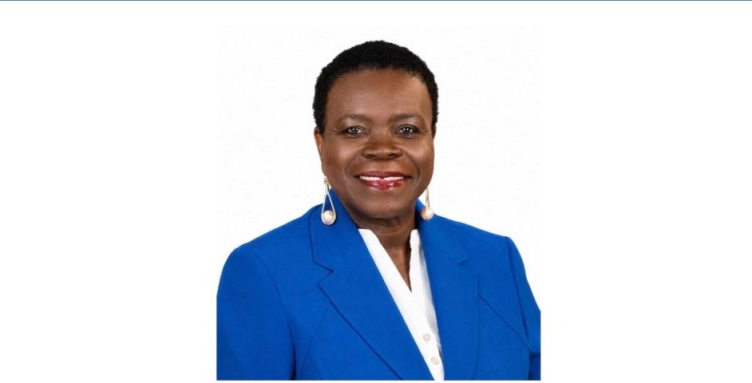
There is a particular kind of conviction that only comes from watching capital change a neighborhood: seeing a vacant lot become a row of homes, or a small storefront grow into a business that employs a dozen people. Watchen Harris Bruce has spent her career chasing that transformation, first inside the boardrooms of some of America’s largest banks, then inside the community lending institutions built to reach the people those banks too often overlooked. Now, as she steps away from her role atop one of Baltimore’s most respected community development lenders, she is preparing to bring that expertise home, to Liberia, the country of her heritage, where she believes her most consequential work may still be ahead of her.
A Career Built One Deal, One Community, at a Time
Bruce’s résumé reads like a map of American finance’s slow, uneven march toward inclusion. Over more than 35 years in banking, community development, and international finance, she has held senior roles at some of the industry’s most recognizable names: JPMorgan Chase, PNC Bank, Bank of America, Fleet Bank, and the Federal Home Loan Bank of Boston. At each stop, the throughline was the same: an insistence that capital should flow not just to where it is easiest to deploy, but to where it is needed most.
That conviction eventually pulled her toward development finance in a more direct way. She served as Chief of Party for two major USAID-funded initiatives in Liberia, the Investing for Business Expansion program and the Liberia Agribusiness & Renewable Energy Development Activity, work that put her at the center of efforts to expand economic growth and access to finance in a country still rebuilding from years of conflict. It was, in many ways, a preview of the chapter now unfolding.
Bruce also spent years as a management consultant with NeighborWorks America and, for more than a decade, reviewed grant applications for the U.S. Treasury’s CDFI Fund, the federal program that channels capital into community development financial institutions nationwide. Few people have seen as clearly, from as many angles, how capital either reaches struggling communities or quietly bypasses them.
It was as President & CEO of Baltimore Community Lending, a Treasury-certified CDFI, that Bruce’s philosophy found its fullest expression. Under her leadership, BCL deployed $211.6 million in real estate financing, helping create 4,360 affordable housing units across Baltimore’s underserved neighborhoods. The institution extended $7.41 million in small business loans to 104 Black-, women-, and immigrant-owned businesses, and more than 570 entrepreneurs received pro bono training and technical assistance to help their ventures survive and grow. In fiscal year 2023 alone, BCL lent $6.54 million to real estate developers across eight projects and $5.59 million to sixty-four small businesses, a pace of activity that reflected not just capital availability, but institutional discipline.
Perhaps the clearest expression of her vision arrived in June 2025, when Bruce led the grand opening of BCL’s new headquarters and the Frank B. Coakley Business Development & Resource Center, a $12.5 million facility built with state and federal support and celebrated by civic and legislative leaders, including U.S. Senators Ben Cardin and Chris Van Hollen. The center is the physical home of what BCL calls its Capital Plus model: one-on-one business coaching, technical assistance, legal and financial guidance, and succession planning, all offered under a single roof, so that access to money is never separated from the support needed to use it well.
The recognition has followed accordingly. In 2025, Bruce was named to the Baltimore Business Journal’s Power 10, honoring executives transforming organizations and communities through vision and principled leadership. She received the inaugural Inez Long Award at the Opportunity Finance Network’s Small Business Finance Forum, and she has been named among Maryland’s Most Admired CEOs and Baltimore’s 100 Top Women Leaders by The Daily Record. She sits on the boards of the African American Alliance of CDFI CEOs and the Consumer Financial Protection Bureau’s Consumer Advisory Board, among others, and holds a certificate from the Harvard Kennedy School’s NeighborWorks Achieving Excellence Program. Taken individually, each credential is impressive. Taken together, they describe someone who has spent a career learning, from the inside, how to build an institution capable of lasting.
A Homecoming, of Sorts
Retirement, for Bruce, is not the end of that work. It is a redirection of it. She plans to join an experienced team of Liberian professionals in establishing the Hope Community Credit Union of Liberia (HCCUL), a member-owned cooperative financial institution designed to mobilize both diaspora and domestic capital for productive investment across the country. For Bruce, it is less a departure than a continuation: the same principles that guided BCL’s lending in Baltimore, disciplined underwriting, community trust, and capital paired with real support, are the foundation HCCUL is being built on in Liberia.
The need is significant. An estimated 64 percent of Liberians lack access to formal financial services. Diaspora remittances into the country exceed $500 million a year, but that money flows almost entirely into consumption rather than savings or investment. More than 52,000 additional housing units will be needed by 2030 to meet urban demand, and roughly 40 percent of Liberian businesses cite access to finance as their single greatest obstacle to growth. HCCUL is being built to meet those gaps directly, expanding financial inclusion, financing entrepreneurs and smallholder farmers, opening a path to affordable housing finance, and creating dedicated support for women, who make up more than half of Liberia’s informal economy and face the steepest barriers to credit.
There is also the diaspora itself: hundreds of thousands of Liberians in the United States alone, many of whom send money home out of obligation and love but have had no institution built to help that money build something lasting. HCCUL’s ambition is to become that bridge: a Liberian-owned institution capable of turning remittances into savings, savings into loans, and loans into homes, farms, and businesses that outlast any single transfer.
Liberia’s opportunity, Bruce and her fellow founders believe, is not a hypothetical one. It is a country with real economic momentum, a resourceful and hardworking population, and a diaspora eager to invest in its future, if given a trustworthy institution through which to do it. The founding team is now working toward a soft launch of the credit union in December 2026, and toward mobilizing the strategic partners, philanthropic organizations, development partners, and mission-aligned investors who will help capitalize HCCUL for the long run. It is, they say, an invitation, not a fundraising pitch, but a call to help build something durable.
What Comes Next
Bruce’s career has already touched thousands of lives, translated into affordable homes built, small businesses financed, and entrepreneurs given a fighting chance. But those who know her well describe someone who has never treated any accomplishment as a finish line. As she turns her attention to Liberia, she carries with her three and a half decades of proof that patient, disciplined capital, paired with genuine belief in the people receiving it, can change the trajectory of a community. Whether that same formula can help reshape the financial future of an entire nation is the question her next chapter is now set to answer. If her record is any indication, it is a question worth watching closely.
Support Independent Journalism
Your support helps FrontPage Africa continue delivering independent, credible, and impactful journalism. Every contribution strengthens our ability to investigate, inform, and hold power accountable while keeping quality journalism accessible to our readers.
Support our journalism or subscribe to receive the latest FrontPage Africa stories and updates.