Monrovia – The Liberian Senate has passed amendments to the country’s Mineral and Mining Law, granting exclusive rights to natural-born Liberians to hold and operate Class B mining licenses amid growing concerns over foreign dominance of the small-scale mining sector and allegations that Liberians are being used as fronts for foreign operators.
By Obediah Johnson
The Senate unanimously voted during its regular session last week to amend provisions of the Mineral and Mining Law of 2000, specifically Part I, Chapter 2, Section 4.2(f), with additional references to Chapter 6, Section 16.2, and Chapter 22.1 of Title 23 of the Liberian Code of Laws Revised.
The decision followed debate on a report submitted by a joint committee comprising the Senate Committees on Lands, Mines and Energy, Judiciary, Human Rights, Claims and Petitions.
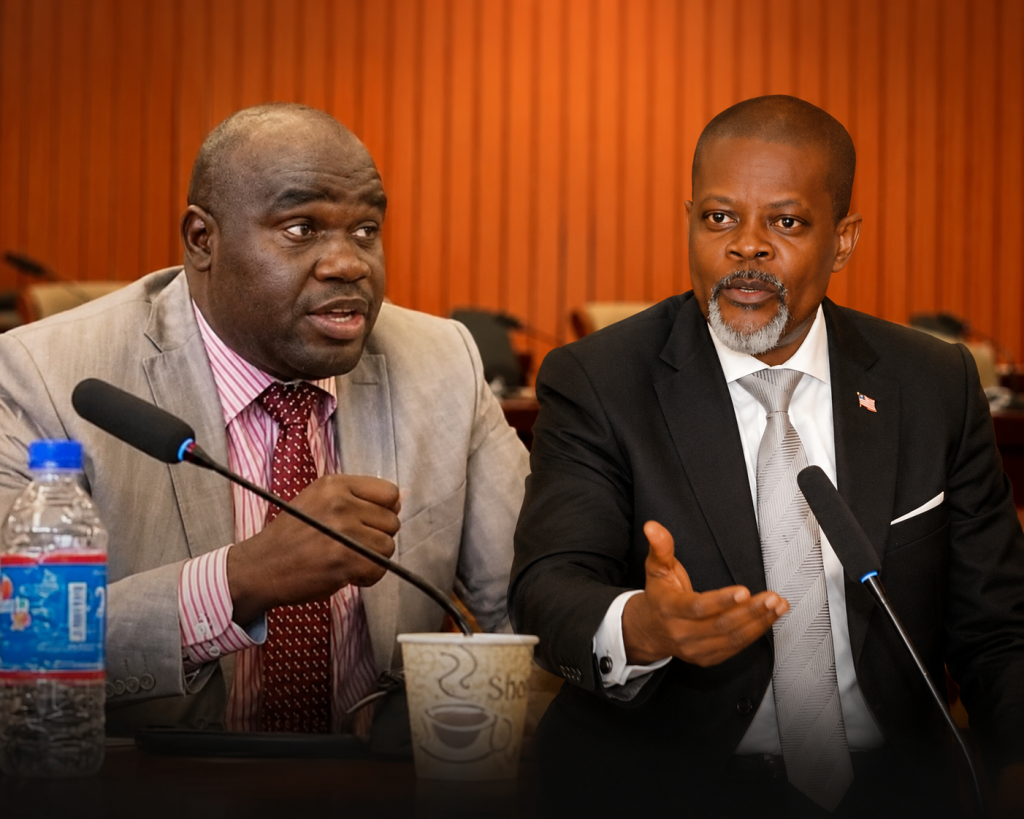
Presenting the committee’s findings, Chairman of the Senate Committee on Lands, Mines and Energy, Senator Simeon Taylor, said the amendment is intended to prevent foreign nationals from using Class B licenses to conduct large-scale mining operations with heavy machinery.
According to Senator Taylor, reserving Class B licenses exclusively for Liberians will help create employment opportunities and ensure greater accountability in the extraction of Liberia’s mineral resources.
“All over Liberia now, foreigners are taking machines into our forests and extracting our resources without proper tracking,” Taylor said. “If we amend this provision and reserve small-scale mining for Liberians, we will create more job opportunities for our people.”
He noted that the amendment would strengthen monitoring of mineral extraction activities and ensure that resources taken from Liberia’s soil are properly accounted for.
Taylor further disclosed that the revised law would empower the Ministry of Mines and Energy to authorize the use of explosives in mining operations, eliminating the need for miners to seek approval from the Executive Mansion.
He argued that foreign operators have long exploited Class B licenses by deploying heavy equipment, undermining Liberian miners and depriving the country of greater economic benefits.
Lawmakers Raise Alarm Over Fronting
Despite broad support for the amendment, several senators expressed concern that the measure could be undermined by the widespread practice of Liberians obtaining licenses on behalf of foreign investors.
Lofa County Senator Momo Cyrus warned that many Class B mining operations currently registered in the names of Liberians are, in reality, controlled by foreign nationals.
“Most Liberians are fronting, and if we do this amendment without addressing that issue, we may simply empower more fronting,” Senator Cyrus said. “Most of these companies are owned by foreigners, but Liberians are being used as fronts. We must investigate this practice.”
Cyrus proposed a framework requiring foreign participation through formal partnerships, suggesting a 40-60 percent ownership arrangement between Liberians and foreign investors.
Meanwhile, Grand Kru County Senator Numene Bartekwa called on the Ministry of Mines and Energy to ensure that mining equipment is used only within approved categories of mining operations.
He also advocated for an increase in the current three percent royalty paid by mining companies to the Liberian government.
Senators Admit Oversight Failures
Maryland County Senator Gbleh-bo Brown acknowledged that lawmakers have struggled to effectively curb illegal mining activities despite years of oversight efforts.
“Several times we have summoned ministers of Mines and Energy, but through our oversight responsibilities we have not been able to stop illicit mining,” Brown said. “Operators continue to misuse Class B licenses, expanding their activities and using heavy equipment beyond what the law allows.”
Brown argued that since oversight efforts have yielded limited results, lawmakers must now use their legislative authority to protect Liberian interests.
“Our minerals are leaving the country. We’ve tried oversight and it has not worked. Let us now use our lawmaking function to ensure Liberians benefit from these resources,” he said.
The Maryland lawmaker expressed hope that the amendment would encourage Liberians to seek financing and compete more effectively within the mining industry.
Partnerships Still Possible
Bong County Senator Prince Moye clarified that the amendment is not intended to exclude foreign investors entirely from the mining sector.
Instead, he said, Liberians holding Class B licenses would remain free to enter into legitimate partnerships that help them access machinery, financing, and technical expertise.
“This amendment gives Liberians sole authority to obtain Class B licenses while still allowing them to establish partnerships that can strengthen their operations,” Moye explained.
Dillon Calls for Stronger Enforcement
Montserrado County Senator Abraham Darius Dillon emphasized that the effectiveness of the amendment will ultimately depend on enforcement.
“There is a law for almost everything in this country,” Dillon said. “The problem is not always the absence of laws; the problem is that many laws are simply not implemented.”
Dillon argued that the Legislature often passes laws designed to improve the lives of Liberians but fails to hold executive agencies accountable for enforcement.
Citing the country’s Liberianization Policy, he questioned why foreign-owned businesses continue to operate in sectors legally reserved for Liberian citizens.
“The Legislature cannot enforce the Liberianization Law,” Dillon said. “But who is issuing import permits and allowing foreign businesses to operate in sectors reserved for Liberians? It is the Ministry of Commerce. Yet when we try to hold officials accountable, lawmakers themselves become divided.”
He urged his colleagues to set aside political differences and unite in ensuring that laws passed by the Legislature are implemented for the benefit of ordinary Liberians.
“The purpose of this amendment is simple—to empower Liberians and ensure they benefit from the country’s natural resources,” Dillon stated.
The amendment to the Mineral and Mining Law of 2000 was sponsored by Senators Simeon Taylor and Abraham Darius Dillon and now awaits further legislative action.
Support Independent Journalism
Your support helps FrontPage Africa continue delivering independent, credible, and impactful journalism. Every contribution strengthens our ability to investigate, inform, and hold power accountable while keeping quality journalism accessible to our readers.
Support our journalism or subscribe to receive the latest FrontPage Africa stories and updates.