Monrovia – Public discourses have been restless in backlashing the Executive Branch of the Liberian government through the Ministry of Finance and Development Planning for flying high with the proposed budget of the National Security Agency for the fiscal year 2026.
By Emmanuel Weedee-Conway
The NSA’s budget, once captured at US$14.8M in the FY2025 budget, ballooned to US$22.1M in for the pending FY2026, something critics had argued reflects misplaced government priorities while key social sectors remain underfunded.
Key among these critics include lawmakers and civil society members, notably Senator Amara Konneh of Gbarpolu County and Mr. Simeon Freeman, political leader of the opposition Movement for Progressive Change budget (MPC).
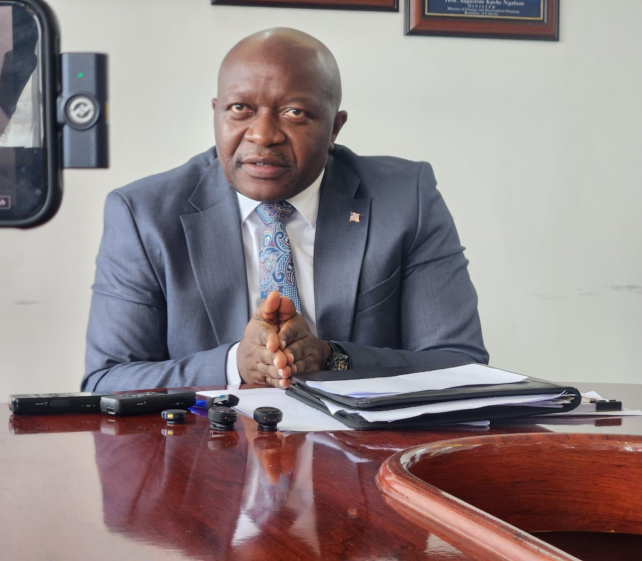
But Liberia’s Finance and Development Planning Minister, Mr. Augustine Kpehe Ngafuan, has broken silence in defense of this budgetary allocation.
Contrary to views that there was a “sinister” motive for the increment of the NSA budget, Ngafuan stated during a media interaction on Thursday that Liberia’s security sector remains underfunded relative to its operational demands and regional realities.
He argued that unlike other areas such education, health, and agriculture, which receive substantial donor support, security institutions – most particularly NSA rely almost entirely on the national budget, requiring sensitive, non-disclosable spending to maintain national safety.
“There are too many things that go into keeping the country safe; things we cannot put out in public. What I can say is we are not reckless in budgeting for security,” the Minister said.
He dismissed claims of excessive NSA financing, citing audit reports showing that in 2023 that the government at the time budgeted US$28M but ended up spending US$84 million.
Konneh Wants Scrutiny of Budget
Senator Amara Mohammed Konneh, who chairs the Senate Committee on Public Accounts and Audit, frowned on the increment of the budget when other key areas of priorities remain lowly funded.
Sen. Konneh, also a former Minister of Finance, said the health sector remains severely underfunded despite repeated commitments from the administration to expand medical services and improve health outcomes.
However, Ngafuan argues that the current draft allocation, which is around US$22 million, is “even below 2023 levels.”
He pointed out that spending increases are driven by operational realities, not political or clandestine agendas.
Domestic Debt Now Rivals the National Budget
Shifting to fiscal pressures, Min. Ngafuan revealed that Liberia’s domestic debt stock is now approaching US$1.1 billion and is expected to climb by an additional US$95M following recent General Services Agency (GSA) vetting.
The Minister emphasized that the largest creditors are the Central Bank of Liberia and commercial banks, warning that failure to service debts, nearly US$19M to commercial banks this year, would destabilize the economy.
In total, the Minister puts Liberia current total debt portfolio at US$2.7 billion, accrued from previous administrations to current.
Court judgments against the state further complicate matters.
He disclosed that the government faces over US$100M in court-mandated obligations, with lawyers “parading” the Ministry for payments.
Public Concerns Over Social Spending, Minimum Wage
Responding to question that social services remain underfunded, particularly disability programs, drug rehabilitation, and shelters for at-risk youth, the Minister acknowledged the constraints but argued that the country’s revenue base remains too small to meet the nearly US$2 billion requested by ministries and agencies during budget hearings with line ministries, agencies and public corporations.
He rejected claims that Liberia is overtaxing businesses, asserting that the country still has “one of the lowest tax regimes in the region” and a minimum wage higher than many ECOWAS peers.
“Hard Times” Are Already Easing Quietly
Also, in response to issues of economic hardship, Min. Ngafuan noted that although citizens may not feel it yet, reforms are beginning to ease economic hardships.
He cited improvements such as: regular and earlier salary payments, eliminating what he called the “delay tax” on civil servants, introduction of government buses for workers and public commuters, financing new schools, road rehabilitation, including the Monrovia-RIA corridor and a record year of domestic revenue collection, reaching levels unseen since Liberia’s founding.
The Minister furthered that progress is gradual because the administration inherited “structural impediments” like energy and infrastructure deficits; long recognized even by MCC assessments as binding constraints to growth.
Revenue Authority Performing, But Demands More Resources
On the Liberia Revenue Authority (LRA), which wants a 5% share of total revenue to boost collection, Min. Ngafuan explained that the institution has generally met targets and deserves more operational funding. Performance indicators will be tied to budget disbursements, he said.
Liberia Edges Closer To Another MCC Compact
The Minister also delivered good news to Liberians through the media by disclosing that the country’s bid for a second Millennium Challenge Corporation (MCC) Compact has taken a major step forward.
According to Minister Ngafuan, Liberia passed 12 out of 22 indicators, including all the “high-hurdles” categories such as Control of Corruption, Government Effectiveness, and Political and Personal Rights.
Passing at least 11 indicators is mandatory for consideration. Had Liberia failed, he emphasized, “case closed” and that the country would have been removed from consideration entirely.
“This pass was extremely critical. Some big countries in our region didn’t pass. Liberia did. That allows our file to be officially opened at the MCC Board meeting in December,” he asserted.
Hopeful Path Toward a Historic Second Compact
Liberia was deemed eligible for a second MCC Compact in December last year, but the process slowed following the change of administration in Washington and the suspension of several U.S. foreign assistance programs, including significant USAID funding.
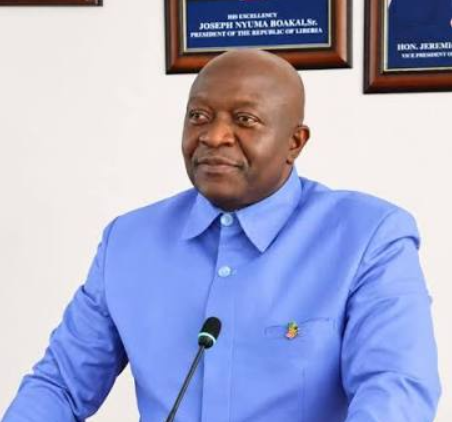
But Min. Ngafuan is confident Liberia’s advocacy led by President Joseph Nyuma Boakai, the Ministry of Foreign Affairs, and the Finance Ministry, helped keep the MCC track alive.
Several high-level engagements followed, including a January visit by former U.S. Ambassador Mark Toner and MCC Africa Regional Director Jason Small, as well as meetings during the October IMF/World Bank Annual Meetings. A final MCC assessment mission visited Monrovia in September, spending two weeks meeting government stakeholders.
“From where I sit, and based on all of our engagements, we are very hopeful,” he said.
How Much Will Liberia Receive? Too Early to Say
Minister Ngafuan cautioned that no compact amount has yet been determined, despite public speculation.
Once the MCC Board reaffirms Liberia’s eligibility in December, detailed technical discussions will follow to determine funding size and program focus.
“It could be above US$500 million. It could be below. But right now, we have zero. Even US$100 million in grant, not loan, is transformational. We already saw what the first compact did.”
The first MCC Compact, worth $257 million, rehabilitated the Mt. Coffee Hydropower Plant, which is now the backbone of Liberia’s electricity supply.
Energy and Infrastructure to Dominate MCC Priorities
During its recent assessment, the MCC again identified energy and infrastructure (including roads and ports) as Liberia’s highest constraints to growth – mirroring the government’s own ARREST Agenda priorities.
Alignment Strengthens Liberia’s Case For A Second Compact.
“These are areas with massive economic impact. When we prioritized roads and energy in the budget, some people questioned it. But the MCC has independently identified the same constraints.”
Budget Tied to Growth Constraints
The minister used the media engagement to link Liberia’s expanded US$1.211 billion draft FY26 budget to structural reforms needed for MCC credibility.
Notably, he revealed that these features include: 94% domestic revenue financing—a historic level of national self-reliance, heavy allocations to roads and energy, introduction of smart metering at LEC to reduce system losses, aggressive investments in revenue administration and debt repayment commitments exceeding US$230 million next year
Ngafuan points out that improved fiscal governance, responsible debt servicing, and a stable macroeconomic environment are essential not only for national development but also for strengthening Liberia’s credibility with partners like the MCC.
“We Are Well on Track”
While cautioning that only the MCC Board can make the final decision, Ngafuan said Liberia has done its part.
“We are not resting. The President, the Foreign Minister, my team—we continue to engage. We believe Liberia is well on track.”
If approved, Liberia would join an exclusive group of countries worldwide to receive a second compact.
Support Independent Journalism
Your support helps FrontPage Africa continue delivering independent, credible, and impactful journalism. Every contribution strengthens our ability to investigate, inform, and hold power accountable while keeping quality journalism accessible to our readers.
Support our journalism or subscribe to receive the latest FrontPage Africa stories and updates.