Monrovia – A highly anticipated Senate hearing aimed at clarifying the ownership and dividend issues related to Lone Star Cell MTN Mobile Money ended without definitive answers on Wednesday, after key stakeholders failed to disclose the names of companies or individuals holding a controversial 20% stake allegedly reserved for Liberians.
By Obediah Johnson, [email protected]
The public hearing, conducted by the Senate Committee on Posts and Telecommunications, followed President Joseph Boakai’s recent revelation during a cabinet meeting that 20% of the company’s shares were reportedly held in trust for the Liberian people.
President Boakai said he was informed by an investor in Accra, Ghana that the stake belonged to the government or citizens of Liberia.
In response, the Senate committee, chaired by River Gee County Senator Francis Dopoh, summoned representatives from the Liberia Telecommunications Authority (LTA), the Central Bank of Liberia (CBL), and MTN Mobile Money for a public inquiry.
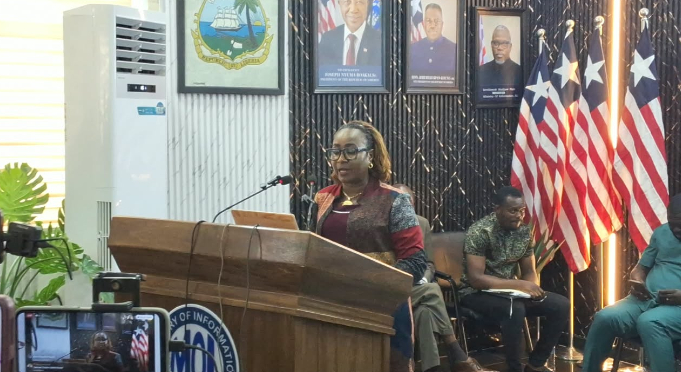
However, the session quickly stalled after all three entities declined to disclose full details, including the identities of shareholders. Stakeholders cited legal proceedings and requested that further discussions be held behind closed doors.
Speaking at the hearing, CBL Executive Governor Henry Saamoi said mobile money operations in Liberia are regulated under a 2014 regulation requiring operators to have independent management, distinct boards, and financial systems separate from GSM operations. The regulation also mandates a 20% shareholding be allocated to Liberians.
“The requirements under that regulation for mobile money operators is to ensure the independence of the mobile money operators,” Saamoi said. “We are working with the mobile money operators to make sure that they are compliant with these cardinal objectives of the CBL. Some of the requirements have been met and some have not been met. They (Lone Star Cell MTN) are not in full compliance.”
He added that due to the corporate and sensitive nature of the non-compliance issues, he preferred to continue the conversation in a committee room.
LTA Commissioner General Abdullah Kamara also spoke, noting that although mobile money is regulated by the CBL, the use of telecommunications resources places operators under the LTA’s jurisdiction.
“I don’t know whether it was deliberate but the MTN folks referred exclusively to CBL as the regulator indicating that they are not being regulated by us,” Kamara said. “But the regulation is clear—once you are using or computerizing telecommunications resources in Liberia by law, you fall under the jurisdiction of the LTA.”
Kamara explained that GSM numbers and short codes used for mobile money services are owned by the Government of Liberia and were being used by operators without prior permission.
“We leased those numbers to them so that they can assign to individuals,” he said. “We have seen that with mobile money for the past 10 years at least since mobile money been in existence; as a separate entity, they never got permission to use those numbers. Those numbers were just transferred to them.”
Kamara confirmed that LTA has been pushing for mobile money companies, including MTN and Orange, to complete regulatory submissions and pay the associated licensing fees. He described the 20% Liberian shareholding requirement as “a key component of the government’s regulation.”
MTN Mobile Money’s Legal Counsel, Prince Kruah, confirmed that the issue of Liberian shareholding is currently before the courts. However, he declined to name the shareholders or explain why management had failed to ensure clarity on the matter.
“Mobile money has been very compliant even though it might not be 100%, but we’ve tried as much as possible to be in compliance with the CBL regulation,” Kruah stated. “We are here as management and we cannot speak for shareholders; we don’t represent them.”
He also did not deny the inclusion of the shareholder names in company registration documents but again avoided disclosing them publicly.
“Inasmuch as we envisage participation of Liberians and foreign investors, we want to encourage a level playing field that all investors will have the same opportunity to be represented adequately,” he said.
Authorities from MTN Mobile Money were expected to bring shareholders to the hearing but failed to do so, citing their absence from the country. Their failure to appear has raised concerns that the 20% stake—intended for Liberians—may be controlled primarily by foreign nationals or politically connected individuals.
After more than two hours of inconclusive testimony and repeated appeals, the Senate committee granted the request for a closed-door session.
“I beg the indulgence of the committee—considering that these issues are corporate matters and in court, we would like to appear to the committee to at least take this matter to the committee room where we can further give those information that we have as management,” Kruah pleaded.
It remains uncertain whether the Senate Committee will engage directly with the shareholders or make public its findings after the closed-door session.
Support Independent Journalism
Your support helps FrontPage Africa continue delivering independent, credible, and impactful journalism. Every contribution strengthens our ability to investigate, inform, and hold power accountable while keeping quality journalism accessible to our readers.
Support our journalism or subscribe to receive the latest FrontPage Africa stories and updates.