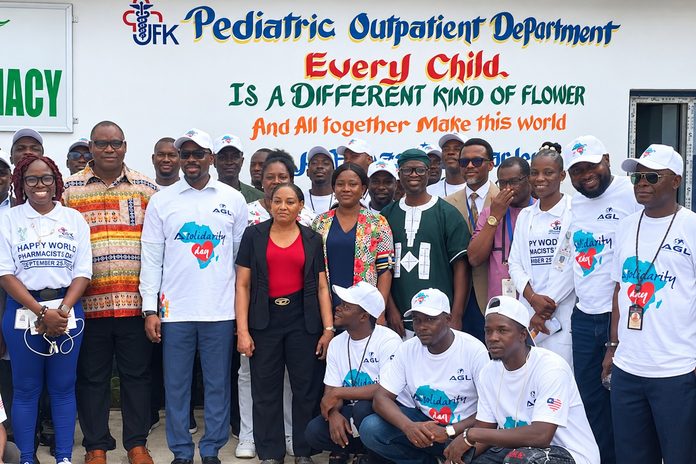
Paynesville – The Liberia Alcohol Policy Alliance, in partnership with the Ministry of Health, to “FORUT” through the West Africa Alcohol Policy Alliance (WAAPA) has concluded a day long National Alcohol Policy and Strategy Promotion National Conference.
The event was held at the Minister of Health Conference Room in Congo Town on Monday December 16, 2024, under the team “Strengthening Collaboration for Alcohol Control: Advancing Knowledge and Action on Alcohol Policy Implementation in Liberia”.
Speaking when he delivered the keynote address, Africa CDC National Coordinator, and Mental Health Specialist Dr. Bakary Sonko, highlighting the current state of alcohol consumption in Liberia disclosed that alcohol is widely consumed in every community, and it spans all demographics, ranging from youth to adults.
He said whether in urban or rural settings, alcohol consumption is deeply embedded in social events, celebrations, and even daily routines.
He emphasized however, that this widespread consumption has a significant downside, adding that excessive drinking is linked to a range of harmful consequences, including liver disease, road traffic accidents, violence, and increased vulnerability among others.
“However, this widespread consumption has a significant downside. Excessive drinking is linked to a range of harmful consequences, including liver disease, road traffic accidents, violence, and increased vulnerability to other infectious diseases such as HIV/AIDS.
For young people, early initiation into alcohol use can have lifelong repercussions on their health and development. The impact is also evident in terms of lost productivity, increased healthcare costs, and the strain it places on families and communities. It is clear that the burden of alcohol-related harm in Liberia is real and requires urgent attention, he said.
Dr. Sonko furthered that alcohol consumption, while often seen as a social norm, carries profound risks to the health and safety of individuals, families, and communities, stressing that as a country, Liberia faces challenges and opportunities to address these risks, but emphasized that the country can only achieve this collaboration and partnership with key development partners.
“While the problem of alcohol misuse in Liberia is serious, it is not insurmountable. What is clear, however, is that we must work together as a unified front. No single institution, government agency, or organization can tackle this issue alone. Our collective strength lies in the partnerships we build—partnerships across sectors and communities,” he intoned.
Africa CDC National Coordinator in his address said the problem of alcohol-related harm is not only unique to Liberia, adding that the harmful alcohol use remains a leading contributor to preventable deaths and disability across the globe.
He noted that Africa, just as in Liberia, faces unique challenges—cultural norms around alcohol, availability, and the marketing practices of alcohol industries, However, collaboration with regional and global partners to draw upon lessons learned and best practices that can guide already exerted efforts would help.
In ensuring that the misuse of alcohol is controlled in Liberia, Dr. Sonko called for the involvement of government ministries such as the Ministry of Health and Finance.
“First, we must ensure that government ministries, including the Ministry of Health, the Ministry of Finance, the Liberia National Police, and local government bodies, collaborate to enforce alcohol regulations effectively. These stakeholders play a crucial role in shaping public policy, implementing laws, and ensuring that alcohol sales and consumption are monitored and regulated in line with international standards”.
He further emphasized the need for Liberian to engage with civil society organizations and community leaders, who are closest to the people because these organizations are already on the ground, delivering health education, supporting at-risk groups, and advocating for change, and having invaluable insights and experience that can guide policy formulation and ensure that interventions are culturally appropriate.
He said that the private sector, including alcohol manufacturers, distributors, and retailers, must play an active role, adding that while the alcohol industry is a legitimate business, it must also take responsibility for the impact its products have on society.
This, according to Dr. Sonko, will mean adhering to ethical marketing practices, ensuring that alcohol is sold responsibly, and supporting community-based initiatives that promote healthy lifestyles.
Action on Alcohol Policy Implementation
In order to fully implement the Alcohol Policy, Dr. Bakary Sonko called for a clear, comprehensive alcohol policy that includes regulation on the sale and distribution of alcohol, age limits for consumption, restrictions on advertising, and support for community programs that address alcohol misuse.
He furthered that Liberia must work to pass and enforce laws that regulate alcohol availability, sales, and consumption, particularly in vulnerable settings like schools, hospitals, and areas frequented by children.
“Having identified the challenges and opportunities, we now come to the essential question: How do we act? How do we move from knowledge to action?
First and foremost, Liberia needs a clear, comprehensive alcohol policy that includes regulation on the sale and distribution of alcohol, age limits for consumption, restrictions on advertising, and support for community programs that address alcohol misuse.
We must work to pass and enforce laws that regulate alcohol availability, sales, and consumption, particularly in vulnerable settings like schools, hospitals, and areas frequented by children. It is also crucial that we work towards implementing monitoring and evaluation systems.
Without the ability to measure progress, we cannot determine whether our interventions are effective. We must build strong systems to monitor alcohol consumption patterns, evaluate the impact of our policies, and adjust our approach as needed”, Dr. Sonko.

Also speaking when she gave the overview of the Conference, Liberia Alcohol Policy Alliance National Coordinator Rosaline Thomas Richards said Alcohol misuse does not only affect the health of individuals, but also has far-reaching implications for families, communities, and the nation’s socio-economic stability.
The LAPA National Coordinator further emphasized the complex issue that requires a multifaceted approach and the cooperation of all stakeholders, including government agencies, healthcare professionals, civil society, and the community at large, throughout the enforcement of the policy.
According to her, the one Day Conference was intended to exchange knowledge, share the latest research and evidence-based practices from around the world, highlighting strategies that have proven effective in reducing alcohol-related harm, and enhance collaboration, as well as strengthen partnership.
“Throughout this conference, we will: Exchange Knowledge: Share the latest research and evidence-based practices from around the world, highlighting strategies that have proven effective in reducing alcohol-related harm. Enhance Collaboration: Strengthen partnerships among stakeholders to ensure cohesive and coordinated efforts in policy implementation and enforcement. Inspire Action: Discuss practical steps and innovative solutions to address the challenges we face, with a focus on sustainability and long-term impact’. Madam Rosaline Thomas-Richards.
In conclusion, Madam Thomas-Richards disclosed that with a shared commitment to tackle one of the pressing public health challenges in the world–alcohol misuse and its profound impacts on our society, the Conference’s theme underscores the importance of working together, harnessing collective knowledge, and taking decisive action to implement effective alcohol control policies in Liberia, while extending thanks to “FORUT” through the West Africa Alcohol Policy Alliance (WAAPA) for their invaluable support and partnership to LAPA
Support Independent Journalism
Your support helps FrontPage Africa continue delivering independent, credible, and impactful journalism. Every contribution strengthens our ability to investigate, inform, and hold power accountable while keeping quality journalism accessible to our readers.
Support our journalism or subscribe to receive the latest FrontPage Africa stories and updates.