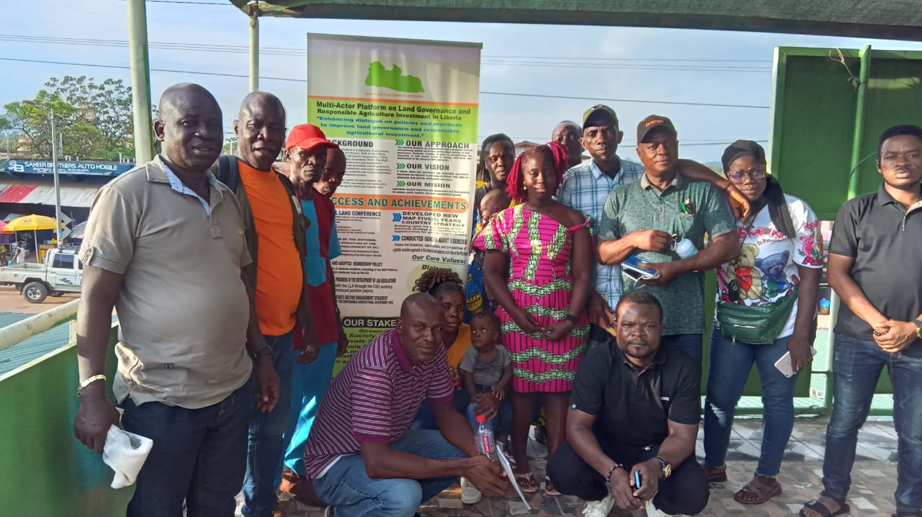
Monrovia- As part of ongoing efforts to enhance the capacity of community structures established to provide technical support to communities in managing of customary land, the Multi-Actor Platform on Land Governance and Responsible Agricultural Investment in Liberia (MAP Liberia Land Platform) with technical support from the Liberia Land Authority (LLA) has trained over twenty-seven Community Land Development Management Committee (CLDMC) members from six (6) counties in Liberia.
The CLDMC members were drawn from Grand Cape Mount, Bomi, Sinoe, River Cess, Maryland and Grand Gedeh Counties. The training provided the opportunity for CLDMC members to have a deeper understanding on organizational development, leadership, and relationship strengthening with their local leaders as they shoulder the role of leading the management of their communities’ lands.
Specifically, the training delved into the specific roles and responsibilities of the CLDMC; established a line of communications between the CLDMC and Community Acting Collectively (CAC) as well as acquired improved knowledge and skills in dealing with the meaningful participation of women in land governance and women’s land rights. The participants were also trained on the six (6) steps of the Customary Land Formulation process.
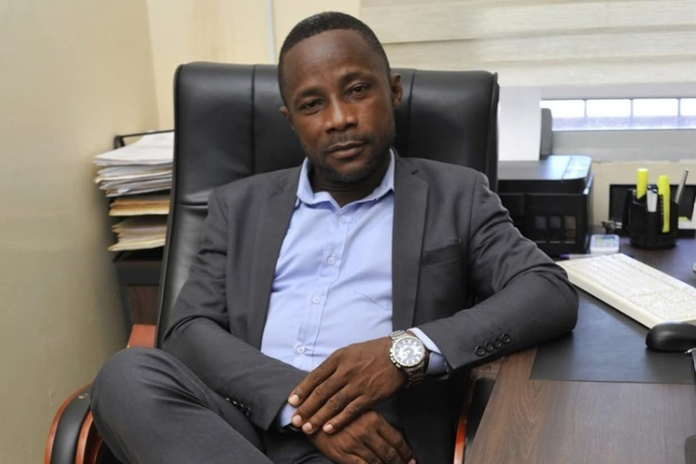
Given an overview of the training, the National Coordinator of the MAP Liberia Land Platform, Mr. John F. Kelvin said that the Platform works across to provide a forum for actors from Government, CSOs, private sector, academia and community representatives to dialogue on policies and practices to improve land governance and responsible agricultural investment. He added at the close of this exercise, the CLDMC members will have an understanding of the Land Rights Act which serves as a guiding tool for all types of land in Liberia.
Overview of the six(6) steps of the customary land formalization process
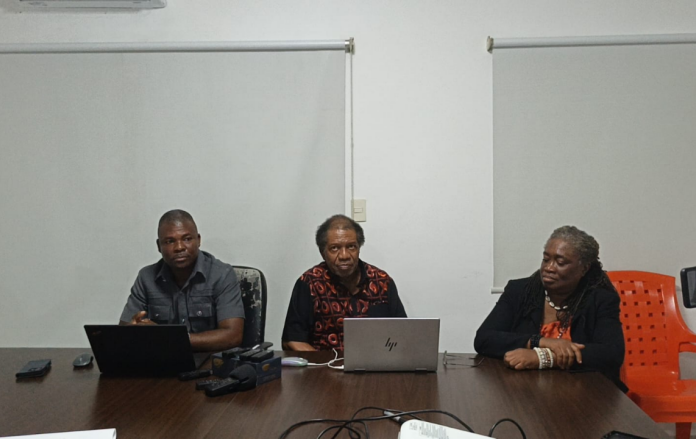
Mr. Morris Kormasu, Head, Division of Customary Land Regulation at the Liberia Land Authority, highlighted that the Land Rights Act (LRA) was developed by the LLA to provide guidance on every land ownership. He also mentioned that for communities to obtain statutory deeds they must follow the six (6) procedures provided by the LLA.
According to him, the six (6) procedures which includes: “Community Self-identification Procedure (CSI); presenting all relevant documents from the completed CSI process to the LLA for verification, validation and certification; submit to the LLA rules of gathering and by-laws procedures; and given an overview of the governance body of the CLDMC as well as overview of the boundary harmonization among others, are requirements that gives community rights to own customary land.”
“This training is intended to provide an overview of the Land Rights Act; it will enable them to know the rules that apply in governing their customary land,” he said. Mr. Kormasu also admonished communities to always connect the LLA whenever their issues of land dispute arise.
The CLDMC Chairman in Bomi County, Mr. Winston Far said the training has given them a broader knowledge on how to engage and educate communities in the formulating their customary land. “We the members of the CLDMC have been educated on the various types of land ownership. Most especially the customary land. We are also aware from this training that customary land is community land and no one family has ownership.”
About the MAP Liberia Land Platform
The MAP Liberia Land Platform is a nationally owned process initiated in February, 2018, by the Liberia Land Authority (LLA) and Civil Society Organizations (CSOs) spearheaded by Rights and Rice Foundation (RRF). The platform brings together various actors and stakeholders including land, environment and agriculture related agencies of government, private sector institutions, Civil Society Organizations, Community Based Organizations, Academia and Research Institutions; as well as international development partners.
Support Independent Journalism
Your support helps FrontPage Africa continue delivering independent, credible, and impactful journalism. Every contribution strengthens our ability to investigate, inform, and hold power accountable while keeping quality journalism accessible to our readers.
Support our journalism or subscribe to receive the latest FrontPage Africa stories and updates.