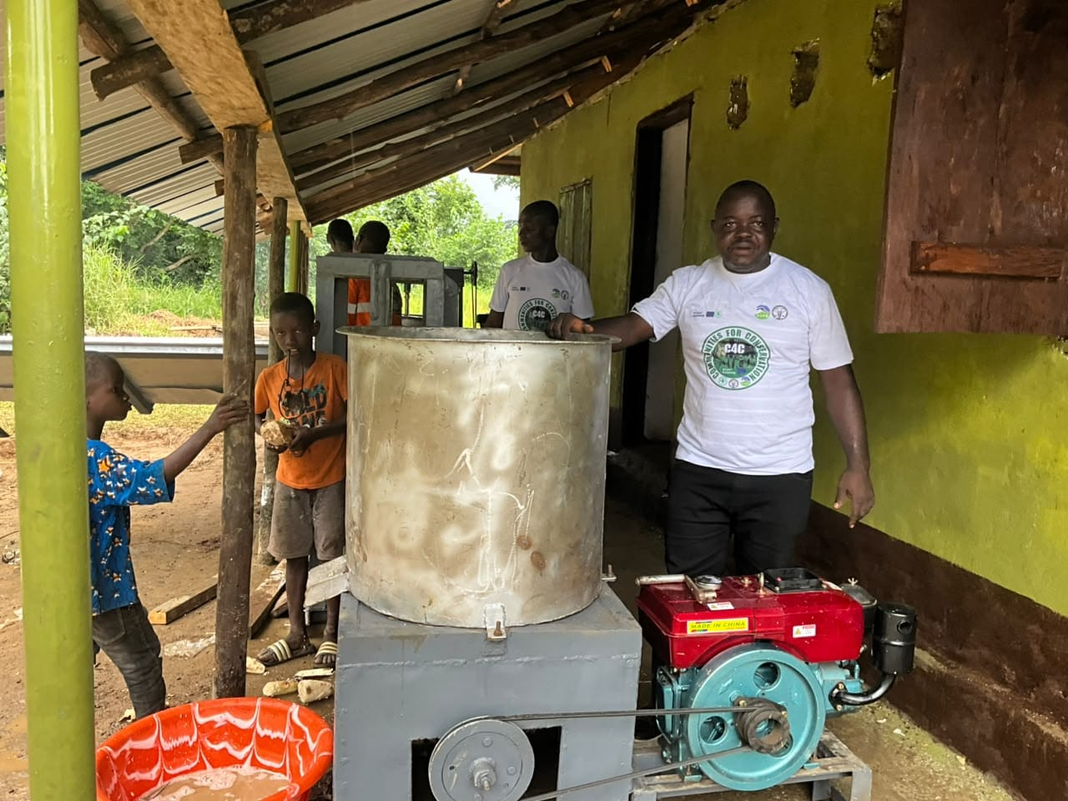

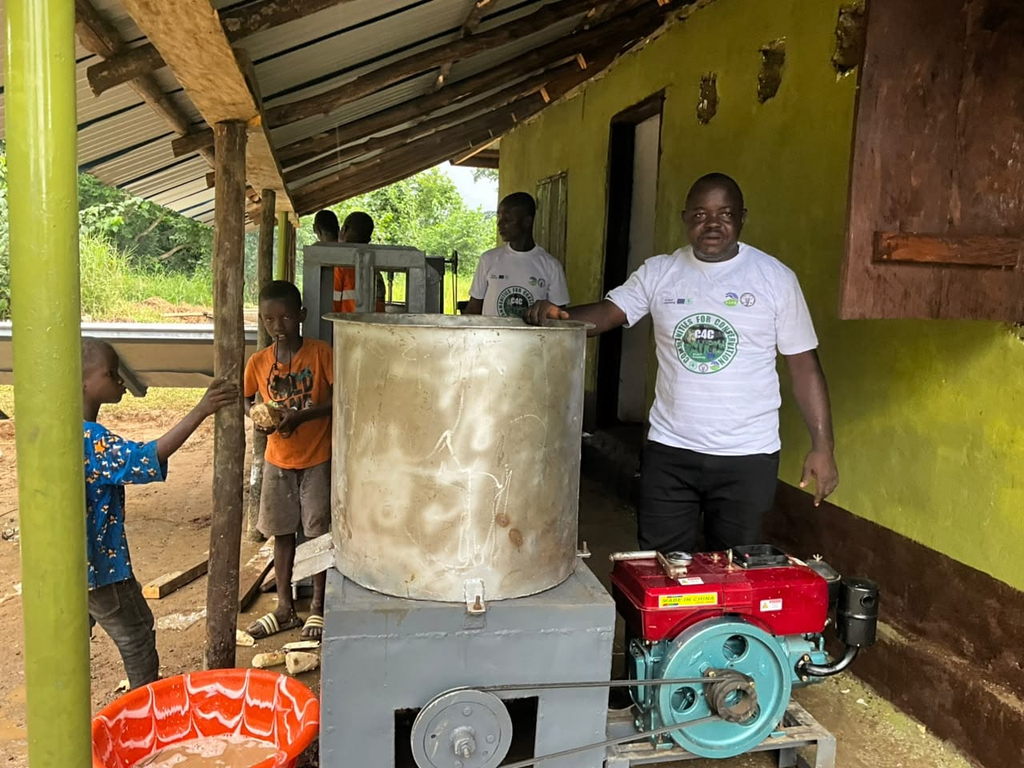
The Society for the Conservation of Nature has enhanced alternative livelihoods for local communities surrounding the Gola Forest National Park in Porkpa District, Grand Cape Mount County, by establishing a state-of-the-art cassava processing facility for local residents.
This facility is equipped with several modern machines, including cassava grinders, a peeling machine, a bagging machine, a filter, and a dryer. It aims to improve conservation outcomes in the Gola landscape. Valued at $15,000, this facility is the first of its kind designed specifically for commercial cassava processing.
During the ribbon-cutting ceremony, Lawrence Brown, the statutory superintendent of Porkpa District, encouraged residents to use the facility wisely for the benefit of everyone in the district. He emphasized that, if used properly, residents could generate income that would help develop Fornor town and other nearby areas.
“There are many cassava producers in this district; we urge you to utilize this facility without involving politics for the betterment of the community,” Superintendent Brown told the residents.
‘Don’t politicize this project’
He further emphasized that politicizing the facility for the benefit of a few politicians will discourage donors, ultimately leading to a lack of support for future initiatives. “I urge you to put aside politics regarding this facility in order to maximize its potential benefits. On behalf of the superintendent of this county, whom I represent today, I officially open this facility,” Mr. Brown declared while cutting the ribbon.
This facility, funded under the SCNL Communities for Conservation (C4C) program with support from the European Union (EU), will greatly benefit the citizens of the district, many of whom are cassava farmers. It will enable them to add value to their cassava for markets in Monrovia and nearby cities.
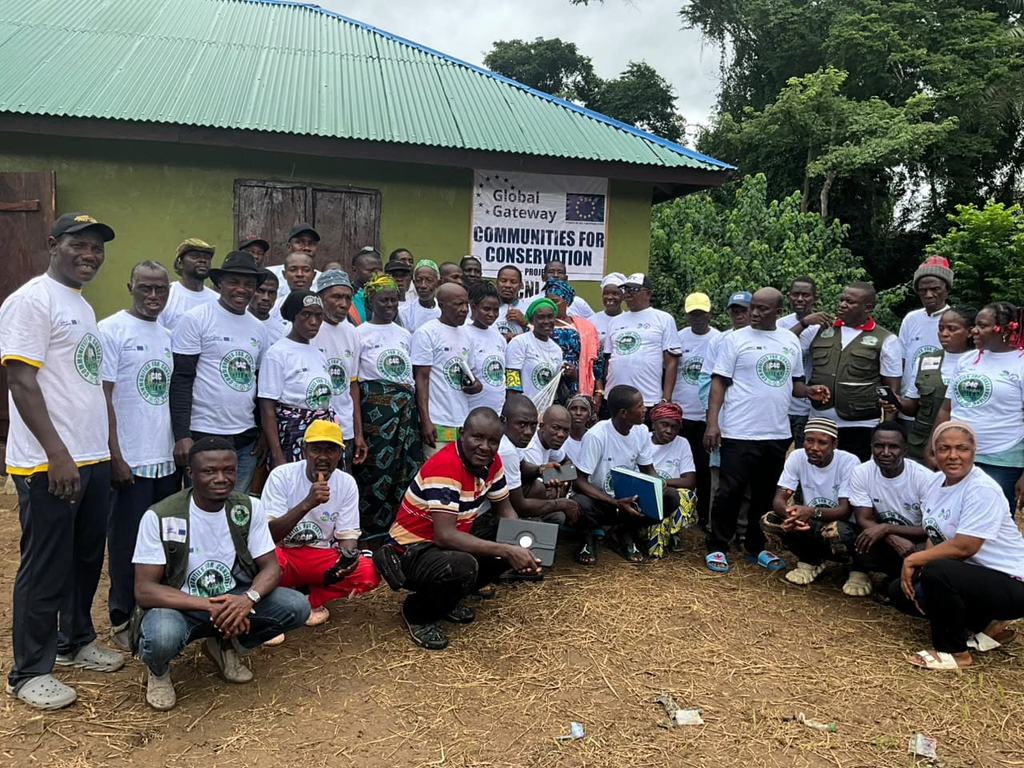
At the same time, Porkpa District Statutory Development Superintendent Lawrence Browne praised SCNL, the Forestry Development Authority (FDA), and other partners for making the facility possible. He also encouraged citizens to make the most of the resources available to them as part of their efforts to conserve the forest.
SCNL pledges more support to Porkpa District
During the dedication of the facility in Fornor town, SCNL Program Manager Michael E. Taire expressed the organization’s commitment to collaborating with residents of the Porkpa district on the proper management of their forest resources.
Reflecting on SCNL’s conservation efforts in the area, Mr. Taire noted that since 2010, the organization has worked to help the community manage their forest resources effectively to improve their livelihoods. Initially, many residents were not interested in conservation, but SCNL has remained dedicated to ensuring they understand the benefits of protecting their environment.
Mr. Taire also mentioned that additional efforts are in progress for another conservation program that will benefit both the residents of Fornor town and the broader Porkpa district. He urged the community to view forest conservation as a positive initiative, clarifying that SCNL does not have the authority to take control of any community forest or disrupt their livelihoods.
“Since 2010, we have been working with you to help conserve the forest for the future. We are not here to take your forest away; we don’t have that power. Our aim is to work with our partners to ensure that your forest is protected,” stated Mr. Taire.
C4C supports food security
The three-year Communities for Conservation (C4C) Project is supporting food security in the Porkpa District by empowering local farmers to cultivate over 25 hectares of degraded land with cassava. C4C project coordinator Madam Jamesetta C. Barquoi expressed that the initiative aims to improve food security for communities living on the edge of forests, thereby alleviating poverty and enhancing living conditions.
“Under this project, we have cultivated over 25 hectares of land with cassava, and we are now adding value by building a processing facility,” she stated. Simply cultivating cassava without adding value would not have a significant impact. Therefore, the project has deemed it essential to establish a facility where farmers can transform their cassava into various finished products for the market, generating income.
The cassava processing facility is designed to produce several kilograms of cassava into deep-fried cassava products, fufu, and gari, which can then be packaged for sale. To ensure the sustainability of the facility, the C4C project is assisting the community in establishing a cooperative, in addition to the existing Village Savings and Loans Association (VSLA) group.
“We want you to work together as a team to achieve your goals and maintain this facility. We don’t want farmers to work individually; it is because of your cooperation that we built this processing facility,” emphasized Jamesetta.
Farmers appreciate the facility
Boakai Korgbe, a leader of the C4C Farmer Cooperative, expressed his joy regarding the new cassava processing facility in a brief statement. He assured that the facility will be utilized for its intended purpose, adding value to their cassava products.
“We are very happy today to celebrate this facility. Although many farmers did not persist until the end of the process, some of us remained committed and are here today. We also want to thank SCNL for the support they have provided us,” Mr. Korgbe stated.
He acknowledged that at the beginning of the process, motivation was lacking among many farmers. However, SCNL and its partners continued to encourage them. Mr. Korgbe emphasized that the facility will significantly improve the livelihoods of farmers in the project communities.