MONROVIA – The Deputy Minister for Economic Management at the Ministry of Finance and Development Planning (MFDP), Dehpue Y. Zuo, has called for stronger coordination, transparency and accountability between the Government of Liberia(GoL) and the United Nations Country Team to ensure that development resources are aligned with national priorities and translated into measurable improvements in the lives of Liberians.
Deputy Minister Zuo made the call during a United Nations Country Team Partnership Dialogue focused on strengthening collaboration, shared accountability and the implementation of Liberia’s national development priorities.
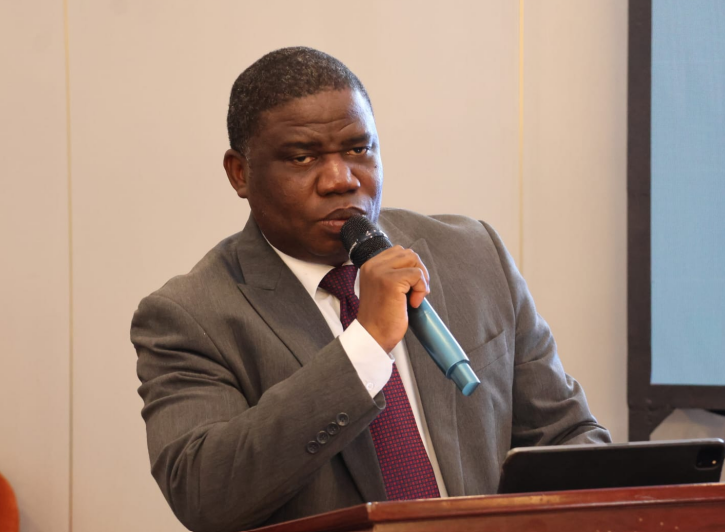
Speaking on behalf of the Ministry of Finance and Development Planning Minister Augustine Kpehe Ngafuan, Deputy Minister Zuo commended the United Nations for its longstanding partnership with Liberia, highlighting its contributions to peacekeeping, humanitarian assistance, post-conflict recovery and the country’s development process.
He noted that the partnership has evolved significantly over the years and expressed appreciation for the UN Country Team’s collaboration in supporting the Government’s development priorities under the ARREST Agenda for Inclusive Development (AAID) 2025–2029.
“Liberia values its long-standing relationship with the United Nations,” Deputy Minister Zuo said, stressing that the partnership must continue to evolve toward stronger development outcomes, national ownership and institutional sustainability.
He pointed out that the changing global development financing landscape, including reductions in traditional sources of development assistance, underscores the need for Liberia and its partners to strengthen coordination and pursue more predictable, diversified and sustainable financing mechanisms.
“The financing architecture in Liberia must be firmly anchored in national priorities, sector stability and mechanisms that minimize leakages as we mobilize more diverse resources to finance our development priorities,” he stated.
He emphasized that development financing should prioritize interventions that produce tangible benefits for Liberians, particularly women, children, persons with disabilities and other vulnerable groups.
He furthered that the success of development partnerships should not be measured by the number of programs or presentations delivered, but by the quality of decisions, implementation and measurable results that follow.
The Deputy Minister welcomed the alignment between the United Nations Sustainable Development Cooperation Framework (UNSDCF) 2026–2030 and Liberia’s AAID 2025–2029, describing it as a strong foundation for enhanced government-UN cooperation.
He urged UN agencies to strengthen national institutions and existing sector plans rather than create parallel structures. “We expect this conversation to reinforce our national institutions, sector plans, development priorities and public-sector investment framework—not to establish parallel institutions, but to strengthen complementary ownership and implementation,” he intimated.
Deputy Minister Zuo also highlighted the indicative US$874 million financing envelope associated with the UN development cooperation framework, calling for its strategic targeting toward programs capable of delivering significant and measurable development outcomes.
He said the MFDP, through its Aid Management and Coordination Unit, has an important role in tracking external resources and ensuring their alignment with national priorities.
He also encouraged continued collaboration with the UN Country Team on domestic resource mobilization.
The Deputy Minister called for improved monitoring, reporting and information-sharing, noting concerns about limited government visibility over some interventions implemented by UN agencies and partners.
He said stronger coordination would enable government to better account for development interventions and ensure that they are reflected in national planning, budgeting and investment processes.
While acknowledging UN contributions in health, education, agriculture, social protection, governance, youth employment, gender equality, climate resilience, peacebuilding and other sectors, Deputy Minister Zuo identified procurement bottlenecks, fragmented implementation, weak coordination, slow recruitment, limited reporting platforms and implementation delays as areas requiring joint attention.
As preparations begin for the 2027 National Budget, he urged the UN Country Team to clearly identify its priority programs for 2027 and the government coordination mechanisms required to accelerate implementation.
He intoned that closer alignment between UN-supported programs and Liberia’s national budget would strengthen accountability, improve resource coordination and ensure that development financing directly supports national priorities.
Deputy Minister Zuo concluded by reaffirming the Government of Liberia’s commitment to deepening its partnership with the United Nations and other development partners while ensuring that development resources are transparently managed, effectively coordinated and converted into measurable results and lasting improvements in the lives of Liberians.
Speaking earlier, Christian Mukosa, Representative of the United Nations Office of the High Commissioner for Human Rights and Acting UN Resident Coordinator in Liberia, emphasized that the development cooperation framework must go beyond being a policy document and serve as a practical instrument for delivering tangible results.
Mukosa cautioned against reducing the review process to another routine reporting exercise, urging the Government of Liberia, UN agencies and development partners to undertake an honest and constructive assessment of what is working, where gaps remain and what corrective measures are required to improve implementation.
He added that the ultimate measure of the fplan’s success will be its impact on the lives of Liberians, particularly whether agreed priorities translate into improved public services, expanded opportunities and meaningful, sustainable development outcomes for communities across the country.