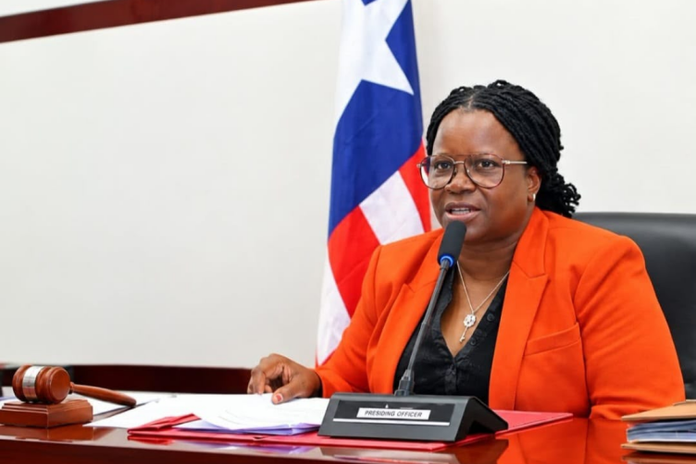
AS PRESIDENT JOSEPH Nyuma Boakai mounts the podium today to deliver his third State of the Nation Address (SONA), the mood across Liberia is a blend of cautious optimism and deep skepticism.
TWO YEARS INTO his six-year mandate, the President presides over an administration that can point to measurable gains on paper—stronger domestic revenue performance, renewed international credibility, and ambitious policy frameworks. Yet, for the average Liberian struggling to put food on the table, those gains still feel distant.
THIS IS THE CENTRAL tension framing today’s address: progress versus perception, macroeconomic indicators versus lived reality.
TO BE SURE, the Boakai administration has assembled an impressive portfolio of statistics. The passage of a US$1.2 billion national budget (now before the President for signature)—the largest in Liberia’s history—signals improved confidence in domestic revenue mobilization.
THE LIBERIA REVENUE Authority’s increase in collections, rising from US$612 million in 2023 to about US$825 million in 2025, reflects real institutional effort. Likewise, the launch of the US$8.38 billion ARREST Agenda for Inclusive Development provides a long-term vision that previous governments often promised but failed to fully articulate.
ON THE FOREIGN policy front, Liberia’s election to the United Nations Security Council as a Non-Permanent Member is a diplomatic milestone. It restores a sense of national pride and underscores that the country is once again taken seriously on the global stage.
INFRASTRUCTURE INVESTMENTS, ROAD paving, modest gains in electricity access, and expanded support to farmers further suggest a government attempting to lay foundations for growth rather than merely manage decline.
BUT EDITORIALS ARE not written to applaud spreadsheets alone.
FOR MOST LIBERIANS, daily life is still defined by rising food prices, punishing transportation costs, and limited job opportunities—especially for young people. Wages have not kept pace with the high prices of goods and services, and unemployment continues to threaten social stability. In this context, macroeconomic growth without tangible relief risks becoming politically hollow.
THE ARREST AGENDA, while ambitious, faces the same question that has haunted every national development plan since the war: implementation. Plans do not fail in Liberia because they are poorly written; they fail because institutions are weak, corruption persists, and accountability is uneven.
PRESIDENT BOAKAI’S PROMISE of “no business as usual” resonated strongly at his inauguration. Yet, two years later, many Liberians remain unconvinced that the culture of impunity has been fundamentally broken. Asset declaration enforcement and high-profile suspensions matter—but only if they lead to consistent prosecution and deterrence, not selective discipline.
TODAY’S SONA, THEREFORE, should not be an exercise in listing achievements. Liberians already know the numbers. What they want to hear is how those numbers will translate into cheaper rice, reliable transportation, decent jobs, and affordable electricity. They want timelines, not just targets; solutions, not just diagnoses.
PRESIDENT BOAKAI ALSO faces a test of tone. Empathy matters. Acknowledging hardship does not weaken leadership—it strengthens trust. A credible SONA must confront the gap between policy success and popular suffering, and explain, plainly, how and when that gap will narrow.
AT THE MIDPOINT of his term’s first half, the President stands at a crossroads. He can use this address to consolidate confidence by showing that economic reforms are beginning to touch ordinary lives—or risk reinforcing the perception that governance remains an elite conversation disconnected from the street.
LIBERIANS WILL BE listening closely. Not for applause lines, but for answers.
Support Independent Journalism
Your support helps FrontPage Africa continue delivering independent, credible, and impactful journalism. Every contribution strengthens our ability to investigate, inform, and hold power accountable while keeping quality journalism accessible to our readers.
Support our journalism or subscribe to receive the latest FrontPage Africa stories and updates.