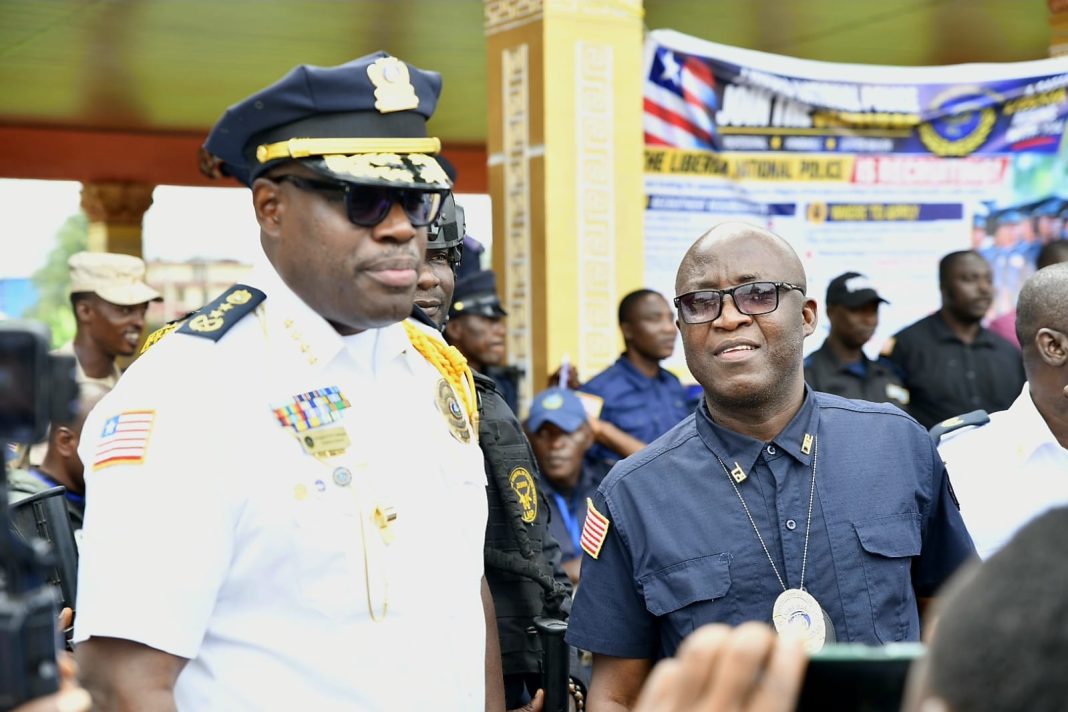

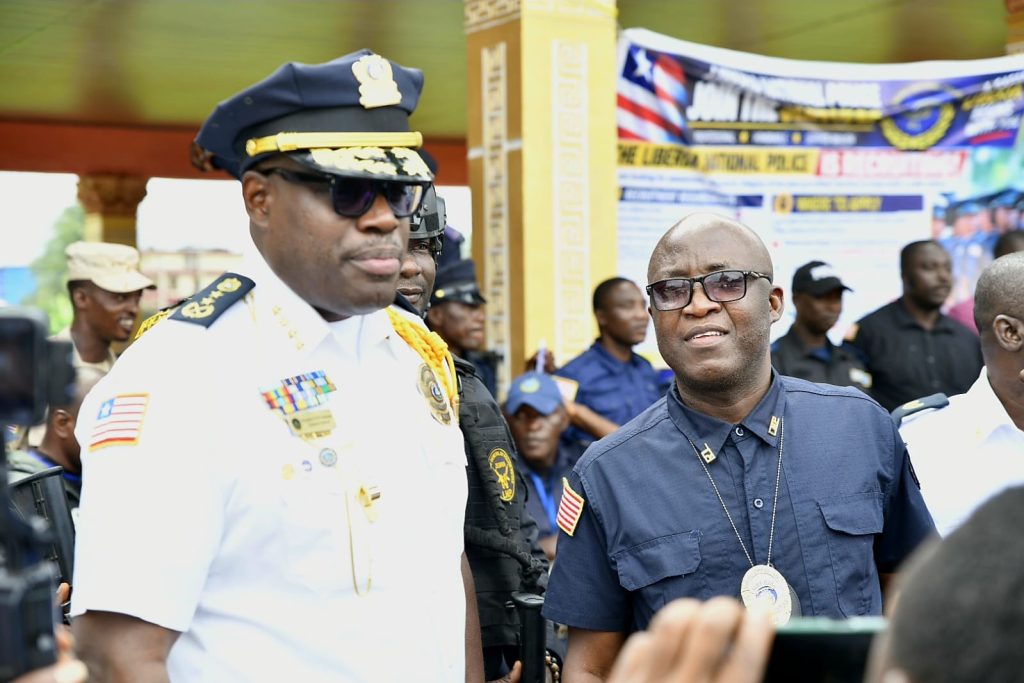
Inspector General Gregory O.W. Coleman has launched a new Liberia National Police recruitment exercise, framing it as central to nearly two decades of post-war security sector reform. The drive echoes past campaigns going back to a 2007 UNMIL-backed push for female recruits, and revives familiar goals: closing the police-to-population gap, replacing an aging workforce, and lifting women’s representation toward a 33 percent target from the current 21 percent. Coleman also pledged the process would be merit-based and free of bribery, as the force seeks roughly $12 million to add 1,500 officers ahead of the 2029 elections.
By Rodney D. Sieh, [email protected]
Monrovia- Liberia’s police force is opening its doors to a new generation of officers, with the Liberia National Police (LNP) launching a recruitment exercise this week that officials describe as central to consolidating nearly two decades of security sector reform.
Speaking at the launch, Inspector General of Police Gregory O.W. Coleman told an audience of government officials, international partners, security sector representatives and civil society leaders that the drive is not simply about growing headcount. “Our objective is not simply to increase the size of the police service,” he said. “It is to strengthen an institution that is already serving the Liberian people and make it more representative, inclusive, accessible, responsive and effective.”
A FORCE STILL REBUILDING
The LNP’s story is inseparable from Liberia’s post-war history. Formed in 1956, the force was gutted during back-to-back civil wars that ended in 2003, and much of its modern rebuilding took place under the United Nations Mission in Liberia (UNMIL), which helped restructure and retrain the LNP alongside Liberian authorities in the years that followed.
That rebuilding produced a string of recruitment drives. In 2007, UNMIL and the LNP relaunched a campaign specifically targeting female applicants, after the force fell short of a 3,500-officer recruitment goal. At the time, then-LNP Director Beatrice Munah Sieh — the first woman to head the force — pointed to a persistent obstacle: “The Police remain unattractive to the public due to low salary, incentives, and negative perceptions.” UN officials framed the push as part of a broader democratic transformation, with then-Deputy Special Representative Luiz Carlos da Costa arguing that “sustainable peace is founded on the bedrock of a genuinely democratic law enforcement agency.”
Nearly two decades on, the LNP has grown into a force of roughly 4,100 officers operating 151 stations nationwide, contributing personnel to UN peacekeeping missions in South Sudan and taking on a widening set of responsibilities — from gender-based violence response to counter-narcotics and, increasingly, cyber-enabled crime.
OLD PROBLEMS, NEW URGENCY
But many of the same pressures that drove earlier recruitment pushes remain. Coleman has told lawmakers the force needs roughly $12 million to recruit and train 1,500 additional officers, citing manpower shortages that officials want addressed before the 2029 general and presidential elections. In late 2024, Coleman also announced a shift in recruitment strategy — enlisting officers from within their own counties rather than assigning Monrovia-trained recruits to rural posts, a practice he said had proven ineffective because transferred officers “end up struggling to return to their families.”
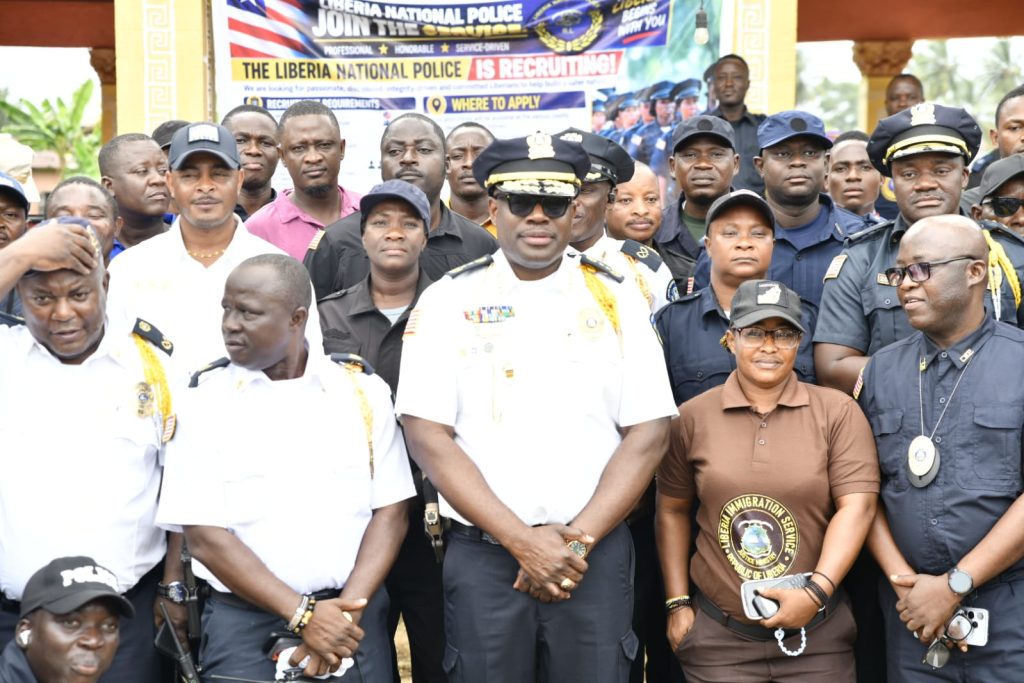
That county-based approach echoes through this week’s launch remarks, in which Coleman singled out Liberia’s police-to-population ratio as a priority. Rural and hard-to-reach communities, he said, stand to benefit most from a larger, more locally rooted workforce, while an aging cohort of veteran officers approaching retirement adds urgency to building a pipeline of new recruits who can absorb their institutional knowledge before it is lost.
GENDER AT THE CENTER
If the 2007 drive marked the LNP’s first major push for female recruits, this exercise sets a firmer benchmark. Coleman said the force is currently at a roughly 21-to-79 ratio of women to men and is targeting 33 percent female representation, framing the goal as part of the reform agenda under President Joseph Nyumah Boakai’s administration.
Coleman was careful to frame gender-responsive policing as more than a recruitment target. It means, he said, recognizing that “women, men, girls and boys may experience crime, violence and insecurity differently,” and removing the barriers — including harassment and discrimination within the ranks — that keep women from applying, staying and rising through leadership.
GUARDING AGAINST CORRUPTION
Coleman also used the launch to draw a hard line against a problem that has dogged public hiring processes in Liberia before: the buying and selling of positions. “No applicant should pay money to secure a place in the Liberia National Police,” he said, warning that anyone caught selling recruitment forms, exam results or job offers would be investigated. Candidates, he said, will be assessed strictly against published requirements — character, education, physical and medical fitness.
WHAT COMES NEXT
Officials are casting the recruitment drive as one piece of a larger institutional rebuild that also depends on training, logistics, welfare systems and accountability structures — pieces that outside donors have historically helped fund. Coleman thanked international partners for continued support and said Liberia is looking to deepen that cooperation on training, infrastructure and technology as the new recruits move through the pipeline.
Whether this drive succeeds where earlier ones fell short of their targets may hinge on the same issues officials flagged nearly twenty years ago: pay, working conditions and public perception of the job. For now, Coleman is appealing directly to the next generation of applicants, urging “qualified women and men of good character” from every county to come forward — a call that will be tested in the weeks ahead as recruitment offices open and the force works to convert launch-day rhetoric into filled positions.
Support Independent Journalism
Your support helps FrontPage Africa continue delivering independent, credible, and impactful journalism. Every contribution strengthens our ability to investigate, inform, and hold power accountable while keeping quality journalism accessible to our readers.
Support our journalism or subscribe to receive the latest FrontPage Africa stories and updates.