
Summary:
- 200 civil society leaders, funders, policymakers and others from almost 30 countries will gather in Ghana this week to design a new African-led approach to development.
- They say the existing model, designed by non-Africans in capitals of Europe and America, has failed to understand the communities where they work, fueling dependence, and failing to deliver lasting impact.
- The debate has particular significance for Liberia, where critics say billions of dollars of development aid has fueled corruption and dependency and had limited impact.
By Tetee Gebro, gender and health correspondent with New Narratives
In the four years to 2023 the European Union spent $16 million to boost the systems that would keep Liberians safe from gender-based violence. But in 2026 FrontPage Africa/New Narratives found a completely broken legal system in which victims had little chance of accessing justice. The head of the sexual and gender-based violence unit conceded just two perpetrators had been convicted in six years.
The outcome came as little surprise to a growing movement of people in the development sector. They have condemned an aid system designed largely in Western capitals and where the people who understand a problem best are rarely the people trusted to define it.
A major conference in Accra this week will bring together more than 200 African civil society organizations, including from Liberia, with plans to change that. Organizers say the answer is not simply more foreign aid. They want Africans themselves—from governments to communities—to have greater power to determine development priorities and how money is used.
“Let’s shift away from those of us who want to control communities to a situation where communities are in the driving seat,” said Charles Kojo Vandyck, of the West Africa Civil Society Institute, organizers of the Africa at the Center convening, in an interview.
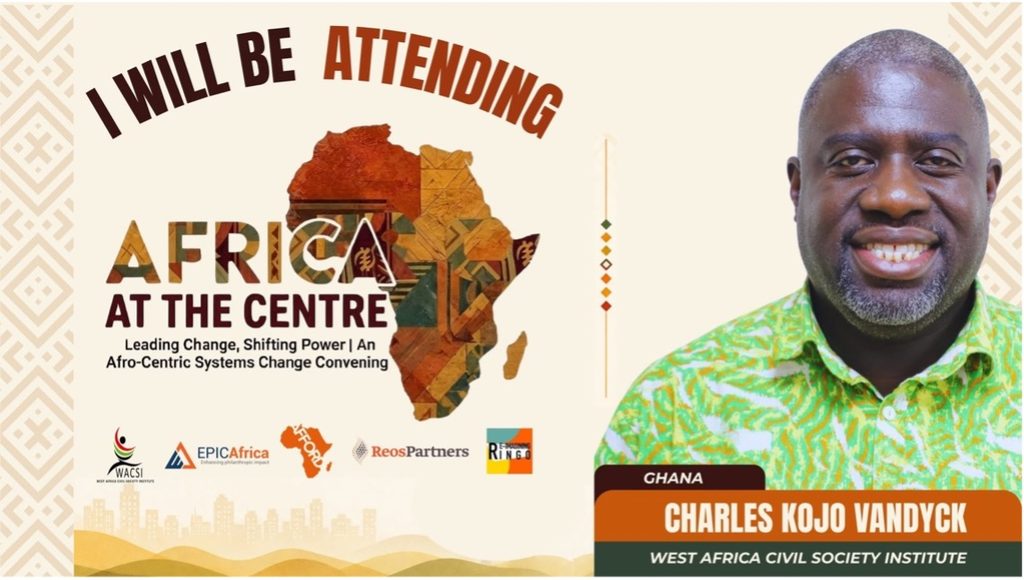
The idea for the Convening grew out of a WACSI project called RINGO — Reimagining the INGO — launched in 2021. More than 95 civil society leaders, funders and organizations were given one instruction: stop writing reports about what is broken and build something that works instead.
Jimm Chick Fomunjong and Gideon Ahenkorah of the West Africa Civil Society Institute, WACSI, described the assumption buried inside that system in a soon to be released opinion piece.
“The form is only the smallest expression of a much larger architecture: who controls resources, who sets the terms on which they move, and who gets to decide what counts as a legitimate priority,” the pair write. “The scale of what these prototypes are responding to is difficult to overstate, and African institutions have spent years documenting it themselves.
Africa received $74 billion in official aid in 2023. In the same year, according to the Mo Ibrahim Foundation, the continent lost an estimated $90 billion to illicit financial flows, largely through trade mis-invoicing and tax avoidance. It paid a further $103 billion servicing external debt in 2024.
At the International Monetary Fund, where decisions of consequence require an 85 percent majority, the 46 nations of sub-Saharan Africa, a region with a combined economy larger than India’s, shared just two seats on the 24 member executive board until 2024. A third was added only after a decade of advocacy. Africa’s collective vote today stands at roughly 5 per cent. None of these figures, taken together, simply describe a system that malfunctioned. They point instead to an architecture in which the rules governing money, risk and decision-making have too often been set elsewhere, with African countries carrying consequences without possessing an equivalent share of power over the system itself.”
Organizers want the Accra gathering to advance three broad goals: an African-led development financing system, development in which communities are in the driving seat, and stronger institutions that work for Africa. The conference will also showcase practical approaches already being tested rather than simply producing speeches about problems in the existing system.
One model already being tested is what the organization calls a “reverse call for proposals.” Traditionally, donors determine what they want to fund, issue a call for proposals and African organizations compete for the money. Under the reverse model, communities identify their own development priorities, develop proposals and then invite donors to apply to support them.
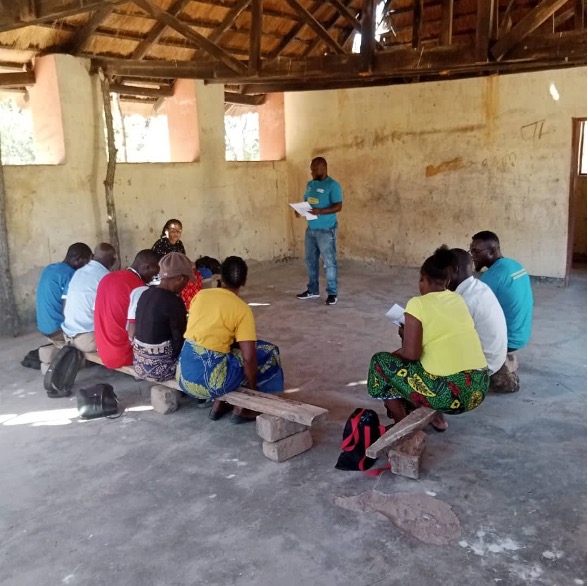
The approach has already been tested in the Nyankanga community in Zambia. Working with the Zambian Governance Foundation, community members identified their own development priorities and issued a proposal. Potential partners applied and the community assessed the applications and selected Plan International Zambia.
When Plan arrived with its normal due-diligence requirements, Vandyck said the community turned the process around. Community members first asked Plan to provide its annual reports, explain where it had previously invested in Zambia and demonstrate that it would remain committed to the community.
“You do not send the call, we send the call,” the community told Plan, according to Vandyck.
The amount involved, about $17,000, was small. But Fomunjong and Ahenkorah wrote that the reversal it represents is much bigger than the dollar figure suggests. The Zambian Governance Foundation has since repeated the process in nine more communities. Groups in Malawi and Ghana are testing early versions of the same approach.
Critics of existing aid model say Liberia has more to gain from a new approach than most
In Liberia the failure of the existing development model has been acute. Critics say billions of dollars spent in the country since 2003 has little to show for it with half the population in poverty and extreme poverty rising.
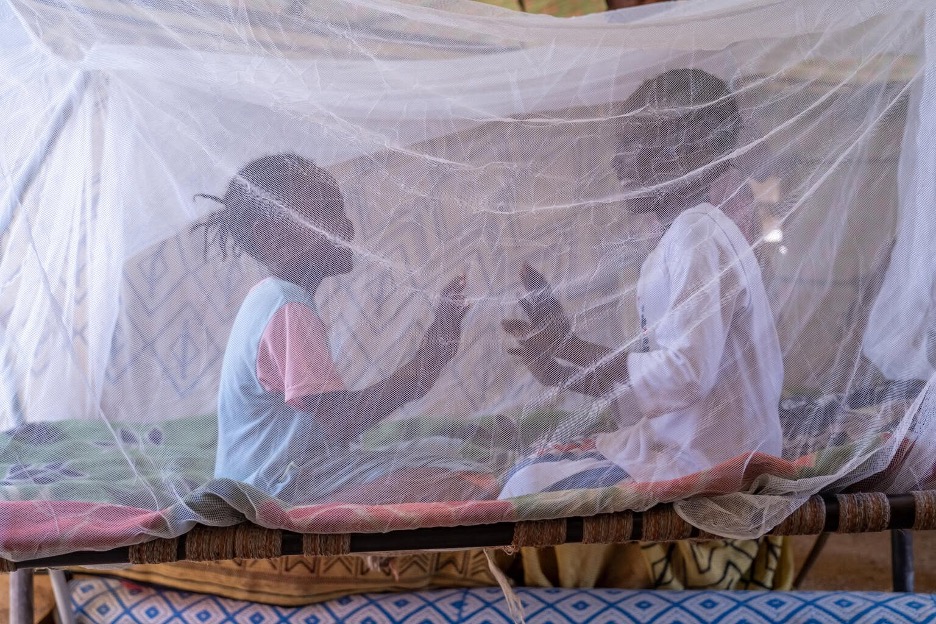
Wonderful Logan is on the frontline. In 2022 she heard good news that free mosquito nets were being handed out across Liberia. The Ministry of Health had received millions in funding from the $5 billion annual donor pool known as the Global Fund to supply nets to people in five counties. So she waited for her net.
“I didn’t receive any,” Logan said. “I got children, I got grandchildren.”
She ended up spending her own money to buy a net instead. Since then, she has watched some of the nets that were supposed to protect families end up somewhere else entirely — used for fishing, draped over chicken coops, or cut into pieces and sold in the market.
“I don’t really see mosquito nets in people’s houses,” Logan said. “I see it in the marketplaces.”
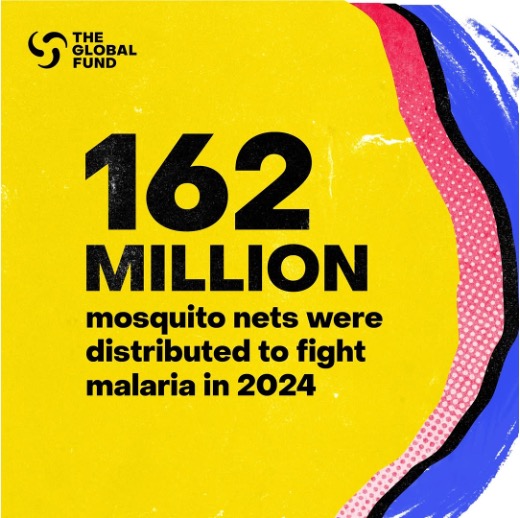
Nets, medicines and other supplies that are meant to be free are routinely stolen and reappear in markets to be bought by the very people they were intended for. Even if they are not stolen, Logan says most of her friends don’t believe the nets work to prevent malaria. Some believe misinformation that they constrain their spirits from leaving their bodies while they sleep.It’s difficult to trust data showing malaria incidence has decreased in Liberia. The 2022 Malaria Indicator Survey found that half the population had access to an insecticide-treated net in their household. Half of children under five and 53 percent of pregnant women — the people malaria threatens most — slept under a net the night before the survey.
But a 2022 investigation by its Office of the Inspector General found systemic fraud. Investigators found problems with 91 percent of expenditures reviewed, totaling $1.1 million – citing fraudulent vehicle contracts, inflated bills and almost no internal controls. For 75 percent of field activities checked, they couldn’t confirm programs had even happened. The Malaria Indicator Survey was one of the activities undertaken with Fund money.
It is exactly the kind of failure Charles Kojo Vandyck, WACSI’s head of capacity building, says has to end on both sides. Secretive decision making without clear explanations, reporting and community buy-in leaves communities powerless to hold leaders accountable.
“There’s very little attention on when the funds are disbursed and where the funds actually go,” Vandyck said.
Vandyck says that African ownership and greater transparency with populations will ensure greater accountability. He said citizens and civil society organizations must follow public money and hold governments accountable for how it is actually spent. The Africa at the Centre gathering comes at a pivotal moment. Foreign aid is being cut while African governments and civil society organizations are increasingly questioning a decades-old development model. Ghana turned down a new health funding agreement with the US Trump administration this year after officials decided the data-sharing terms it demanded cost more than the funding was worth. Zimbabwe had already rejected a similar deal. Kenya’s version of the same fight is now in its own courts.
Organizers of the Accra conference, running from September 1 to 3, say the gathering will produce a formal commitment to build what they call an African-owned architecture for development — one with African priorities, African resources and African agency at its center.
This story was a collaboration with New Narratives as part of the Investigating Liberia project.
Support Independent Journalism
Your support helps FrontPage Africa continue delivering independent, credible, and impactful journalism. Every contribution strengthens our ability to investigate, inform, and hold power accountable while keeping quality journalism accessible to our readers.
Support our journalism or subscribe to receive the latest FrontPage Africa stories and updates.