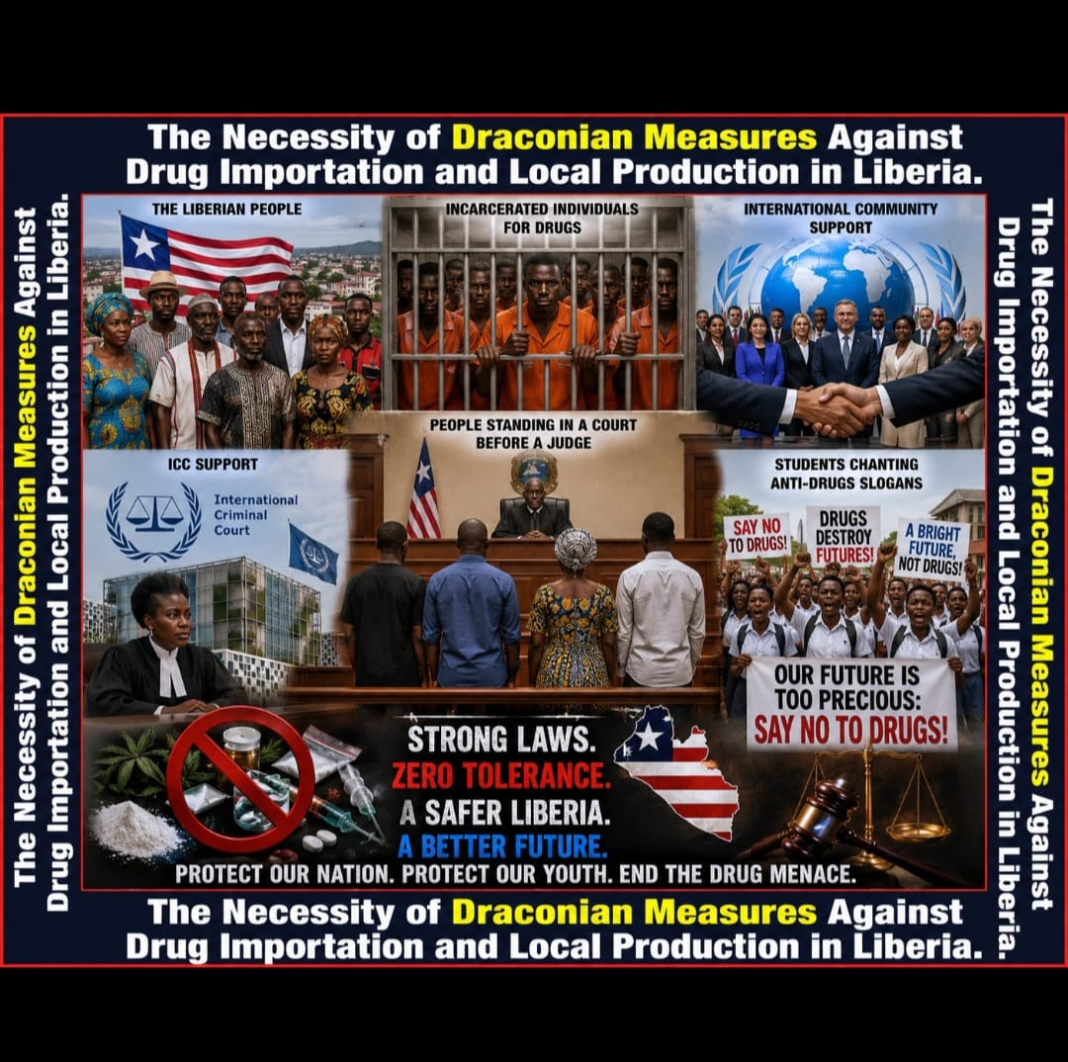

Current and former Liberian leaders have united with international organizations and global figures in declaring war on illicit drug trafficking, condemning the influx of substances like Kush into the country as an existential national security crisis requiring severe measures.
President Joseph Boakai: Declaring drug abuse a public health emergency, Boakai championed unyielding enforcement, stating: “Whether a street peddler or a high-ranking official, the law will reach and teach you. Liberia will not lose another generation to drugs. Not on my watch.” He also stressed accountability by warning, “All those engaged in the importation of drugs across the country have no place for such harmful attitudes.”
Former President George Weah: Echoing the need for aggressive prevention, Weah stated: “Whenever I reflect on the issue of disadvantaged youth, I feel disappointed… I urge every Liberian to stand tall against this illicit drug. Liberia’s future is at a crossroads. He also warned that drugs are destroying their future.”
Former President Ellen Johnson Sirleaf: Calling for stringent border controls and interdiction: President Sirleaf stressed the need to dismantle trafficking networks: “The Drugs Enforcement Agency must first be financially and logistically capacitated to vigorously and uncompromisingly pursue drug traffickers, facilitators and dealers wherever or whoever they may be.”
Information Minister Jerolinmek Piah: Advocated for harsh, necessary interventions to curb addiction, referring to President Boakai’s tough stance as “that Bad Road Medicine.”
Liberian Civil Society Advocates: Local campaigners and advocacy groups demanding uncompromising justice have loudly protested the flow of narcotics, declaring: “We cannot allow the spread of illicit drugs to turn our children into victims, our communities into ghettos. The fight against drugs is not a PR campaign; it’s a matter of national survival.”
Global Organizations and International Leaders United Nations (UN): The UN Office on Drugs and Crime (UNODC) has repeatedly condemned illicit supply networks, urging international partners to target the machinery of production aggressively: “Target the machinery of production by eliminating illicit laboratories, and sever trafficking networks by strengthening global trade routes and choking the financial flows of criminal networks.”
European Union (EU): Emphasizing collective security against criminal cartels, the EU affirmed: “The EU will not tolerate criminal networks flooding our streets with cheap drugs, fuelling violent crime, and undermining health and security.” They remain firmly committed to “restricting supply” and “tackling emerging challenges with stronger controls for customs.”
African Union (AU): Addressing the rise of synthetic drugs and illegal importation, AU representatives called for hardline, cross-border cooperation: “Our Plan of Action must be multi-sectoral and balanced – addressing both drug supply and demand reduction with equal vigor.”
Global Leaders (Middle East & Asia-Pacific): Worldwide leaders, particularly across parts of the Middle East and the Asia-Pacific region, maintain some of the strictest anti-narcotics frameworks in the world, frequently invoking maximum penalties and the death penalty for large-scale drug trafficking, based on the legal consensus that narcotics production and large importation are acts of treason against a nation’s youth.
The International Criminal Court (ICC): In addressing global organized crime, the ICC views the funding of illicit drug and arms trades, often inextricably linked with insurgencies and regional destabilization, as drivers of severe human rights violations, making the prosecution of transnational drug lords paramount to preserving international peace.
By: Austin S Fallah – A True Son of the Planet Earth Soil: [email protected].
In the heart of the Mano River Union Basin, Liberia stands at a critical juncture in its development, yet it faces challenges that threaten its future.
Chief among these challenges is the proliferation of drug trafficking and local production-assembly.
This scourge not only undermines the social fabric of the nation but also cripples its economic potential.
The pervasive influence of drugs has reduced many young Liberians to a state of despair, characterized by the derogatory term “Zogos,” a label that signifies the transformation of a hopeful generation into a marginalized group defined by their substance abuse.
As the government grapples with these issues, it must take decisive action to enact and enforce stricter laws against drug trafficking and production.
Individuals who import and produce drugs should face severe penalties, including life imprisonment or even execution in extreme cases, as a means to safeguard the future of Liberia.
To grasp the gravity of the situation, it’s essential to consider the scale of the drug problem in Liberia.
Reports of the seizure of over $19 million USD worth of drugs serve as a stark reminder of the extensive drug trade that permeates the country.
Such figures are not merely numbers; they represent lives destroyed, families shattered, and communities in decline.
When state security captures such quantities, it becomes a clarion call for action, an urgent need for the Liberian Legislature and the Presidency to introduce tougher laws and penalties.
Countries worldwide have implemented strict measures to combat drug trafficking and protect their youth-young people, setting precedents that Liberia can follow.
For instance, in Singapore, drug trafficking is met with severe consequences, including the death penalty.
The Central Narcotics Bureau of Singapore notes that anyone caught with more than 15 grams of heroin or 30 grams of cocaine is liable for execution.
This zero-tolerance policy has made Singapore one of the most effective models in controlling drug-related crimes.
The stringent nature of these laws reflects a national commitment to preserving societal order and protecting future generations from the destructive potential of drugs.
Additionally, in the Philippines, former President Rodrigo Duterte instituted a controversial but vigorous anti-drug campaign that resulted in thousands of extrajudicial killings, all aimed at eradicating the drug problem.
While human rights organizations have widely criticized the methods, the underlying idea was to send a strong message to drug traffickers that the government would not tolerate any actions that jeopardize the well-being of its citizens.
The Philippines’ stark approach has stirred ongoing debate; however, the motivation was clear: a nation can only prosper if its youth are safeguarded from the clutches of drug addiction.
Furthermore, in Indonesia, the legal framework dictates that individuals found guilty of drug trafficking face severe penalties, including the death penalty.
The regulations are so strict that even those caught with small amounts of drugs can be prosecuted under the nation’s harsh drug laws.
Indonesia’s position on drug trafficking is rooted in a belief that society has the right to be protected from the destructive impacts of drug abuse, thereby prioritizing the collective well-being over individual freedoms when it comes to drug offenses.
These examples highlight a global trend towards rigorous punitive measures against drug offenses, reflecting the dire need for countries to protect their citizens, particularly the youth and young people.
In Liberia, the current tolerance for drug trafficking and local production has devastating effects.
Instead of fostering a generation of innovators and leaders, the country risks cultivating despair and dependency.
Consequently, the nation’s youth, young people, are not just victims of circumstance; they are shaped by an environment that allows for drug-related behavior to flourish without accountability.
To combat this rampant issue, the Liberian government must take decisive steps.
Stop telling the presidency that you are doing something; the situation is under control, which is a complete fallacy
The creation of a legal framework that mandates severe penalties for those found guilty of drug trafficking and production will send a powerful message: the government is committed to protecting its citizens and ensuring a brighter future for the nation.
By instituting life imprisonment for serious offenses, or in the most heinous cases, implementing the death penalty, the government can cultivate a climate of fear for drug traffickers and discourage the normalization of drug culture within society.
Moreover, the judiciary system in Liberia must be fortified to uphold these laws.
There should be no soft approaches or leniency towards those who exploit the vulnerable, such as children and teenagers who have found themselves ensnared in drug addiction.
Judges should be empowered to enforce these laws rigorously, ensuring that justice serves both as a deterrent to potential offenders and as a means of restoring faith in the rule of law.
However, it is essential to approach this policy shift with a clear strategy that balances punishment with rehabilitation.
While stiffer penalties are crucial, they must be accompanied by comprehensive treatment programs for those already affected by drug addiction.
The nation must invest in educational programs, mental health services, and community awareness initiatives to heal and empower young people.
Supporting those trapped in addiction and providing them with pathways to recovery should be a key component of Liberia’s anti-drug agenda.
Additionally, the government needs to engage with community leaders and organizations working on the ground to develop holistic solutions tailored to the unique needs of Liberian youths and young people.
Cooperation between law enforcement and local organizations can create a more robust network of support for individuals facing drug-related challenges.
Education should be prioritized, not only to warn young people about the dangers of drugs but also to equip them with the tools they need to make better life choices.
The challenges that drug trafficking and local production present to Liberia cannot be understated.
As the country seeks to reclaim its place in the 21st century, it must address these issues head-on with the seriousness they deserve.
Enacting and enforcing stricter laws against drug offenses will serve to hold accountable those who threaten the future of Liberia’s young people.
If Liberians aspire to create a nation that offers hope, prosperity, and progress, stiffer penalties grounded in accountability must be complemented by rehabilitation efforts and community support.
The fate of Liberia’s youth, young people, and the future generation lies in the hands of its leaders.
It is time for the Liberian government to act decisively to improve the well-being of its people and strengthen the resilience of its society.
Support Independent Journalism
Your support helps FrontPage Africa continue delivering independent, credible, and impactful journalism. Every contribution strengthens our ability to investigate, inform, and hold power accountable while keeping quality journalism accessible to our readers.
Support our journalism or subscribe to receive the latest FrontPage Africa stories and updates.