Summary
- Experts warn Liberia could miss out on millions in global climate funding unless it strengthens environmental governance and systems to manage climate projects.
- Past failures to meet donor requirements delayed major climate projects, including coastal protection and weather warning systems, leaving vulnerable communities exposed to climate impacts.
- The warnings come as the Liberian government gathers stakeholders together to chart a way forward.
By Nemenlah Cyrus Harmon, climate change correspondent with New Narratives
Liberia risks missing out on millions of dollars in international climate financing unless it strengthens its environmental governance systems, a Liberian climate expert has warned.
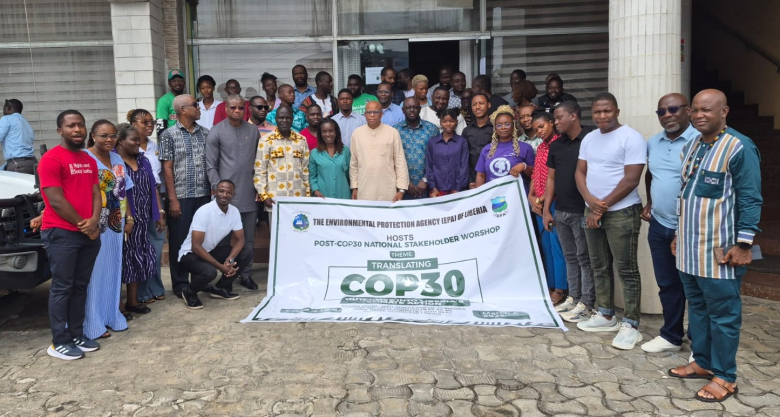
Isaac Nyaneyon Kannah Teah, a Liberian climate expert with a master’s degree in geoscience from Cadi Ayyad University in Morocco, delivered the warning as government officials, environmental experts, civil society groups and international partners met in Monrovia over the weekend to examine what last year’s thirtieth global climate summit, known as COP30, means for Liberia.
Kannah said countries seeking climate funding must prove they can properly manage environmental programs; track emissions and report results to international partners – systems Liberia is still struggling to build.
“Liberia has a fragmented climate governance system,” Teah said in an interview a day before the workshop organized by Liberia’s Environmental Protection Agency. “Without strong regulations and transparency, we will remain on the surface and not attract anything substantial.”
The meeting aimed to help Liberia translate decisions made at COP30, held in Belém, Brazil in November 2025, into policies and projects that can bring real benefits to the country. For Liberia, one of West Africa’s most forest-rich nations but also one highly vulnerable to climate change, those global decisions could determine whether the country gains access to significant new climate funding.
Previous New Narratives/FrontPage Africa reporting has shown that even when funding was made available failures to meet donor requirements by the Weah administration meant funding didn’t arrive. Internationally funded climate adaptation projects were stalled including the $27 million West Point Coastal Defense Project, and the $10 million Climate Information System, designed to provide early warnings for extreme weather. The CIS project was held up for nearly five years by “lack of competent staff, inflated salary claims, and refusal to follow donor rules,” according to the African Development Bank, leaving farmers across the country without weather forecasts. Over those years hundreds of thousands of Liberians lost homes and livelihoods to flooding and farmers lost crops because they had no warning of temperature rises and rainfall.
But, current EPA director Emmanuel Urey Yarkpawolo has condemned the failures of the past administration and pledged to work to meet donor requirements. Multiple stalled projects have resumed. But experts said the delays show the limitations of the current climate funding mechanisms and the consequences for communities facing worsening climate impacts.
Across Liberia, the effects of climate change are already visible. Coastal communities are losing land to rising seas, while unpredictable rainfall is affecting farmers and food production.
“Climate change is not a distant threat for Liberia,” said Yarkpawolo, “It is already affecting our coastal communities, our farmers, our fisheries and our economy.”
Global Climate Promises
COP30 brought together world leaders to discuss reducing greenhouse gas emissions and supporting countries most vulnerable to climate change.
For developing countries like Liberia, the most important discussions often center on climate finance – international funding designed to help countries protect forests, build renewable energy systems and strengthen climate resilience.
Several global initiatives now being discussed could provide significant financial support to countries that protect tropical forests.
One proposal, known as the Tropical Forest Forever Facility, aims to provide long-term funding to countries that conserve rainforest ecosystems like Liberia’s.
But experts say accessing that money will require strong national systems capable of managing projects and ensuring transparency. Without those safeguards, funding often goes to countries with stronger environmental governance structures.
Aliou Mamadou Dia, the United Nations Development Programme’s resident representative in Liberia and an environmental and climate expert, acknowledged the challenges many African countries face in accessing those funds.
“There is a lot of money out there for climate mitigation,” Dia told participants. “But we are still not, as Africans, tapping into that potential.”
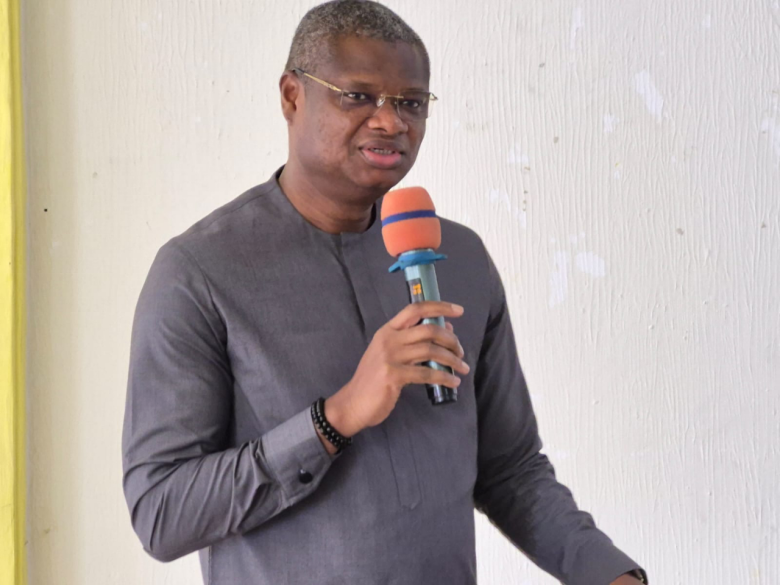
Yarkpawolo said once Liberia strengthens its climate finance readiness by developing “strong bankable projects that can attract international investment,” the country will position itself for climate finance.
Experts Say Liberia’s Forest Wealth Offers Rich Opportunities
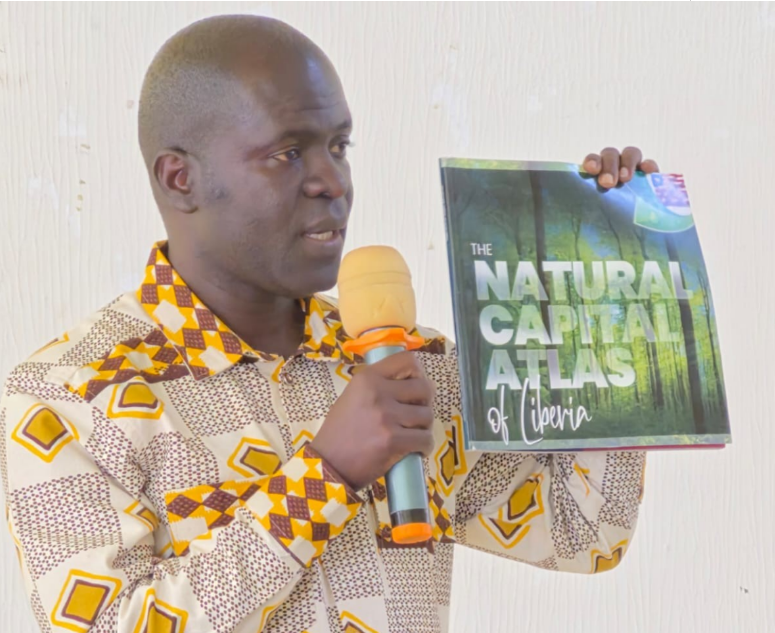
At COP30, Liberia also launched its Natural Capital Atlas, a new tool designed to measure the economic value of the country’s forests, rivers and biodiversity.
The atlas is intended to help policymakers and international partners better understand the importance of Liberia’s natural resources and how they contribute to the country’s economy.
The UN’s Dia said protecting those natural resources is essential for the country’s future.
“The biggest wealth we have is our natural capital,” Dia said during the workshop. “If we destroy our natural capital, we destroy everything we have.”
Dia said he was struck by the similarities between Liberia’s forests and the Amazon rainforest he visited while attending COP30. The Amazon has attracted global recognition and investment for its importance it reducing carbon emissions that are causing global warming.
“Liberia’s forests are just as valuable and worth protecting.”
Turning Global Talks Into Local Action
Participants at the workshop said international climate agreements can create opportunities, but turning those commitments into real programs requires coordination among many institutions. Government ministries, environmental agencies, civil society groups and international partners must all work together to design projects that meet international standards for climate funding.
“Nobody is safe from climate change,” Dia said. “We all have a role to play.”
Ansu V. S. Dulleh, the executive director of the National Disaster Management Agency, the government agency responsible for coordinating risk management and emergency response called for investment in disaster preparedness, early warning systems, community-based resilience, preparedness, and a safe life.
Dulleh said climate change should not be seen only as an environmental problem.
“It is a development, security and humanitarian issue,” he told participants. “When communities are informed and equipped, disasters become a marginal risk.”
Participants also emphasized the need for better climate data, stronger research and improved monitoring systems to help Liberia track environmental changes and measure the impact of climate projects.

The Work Ahead
For many participants, the meeting was only a starting point.
International climate summits often produce ambitious commitments, but experts say the real challenge is turning those promises into policies and investments that improve lives on the ground. For Liberia, that means strengthening environmental governance, protecting forests and building systems capable of managing international climate financing.
If those steps are taken, experts say, Liberia could become a leader in protecting West Africa’s remaining tropical forests while attracting investment to support climate resilience. But if the systems are not strengthened, the country risks missing opportunities for funding while communities continue to face rising seas, flooding and unpredictable weather.
As experts warned, the decisions made now could determine whether global climate promises translate into real protection for Liberia’s people and environment.
This story was a collaboration with New Narratives as part of the Investigating Liberia Project. Funding was provided by the American Jewish World Service and Swedish Embassy in Liberia. The funders had no say in the story’s content.
Support Independent Journalism
Your support helps FrontPage Africa continue delivering independent, credible, and impactful journalism. Every contribution strengthens our ability to investigate, inform, and hold power accountable while keeping quality journalism accessible to our readers.
Support our journalism or subscribe to receive the latest FrontPage Africa stories and updates.