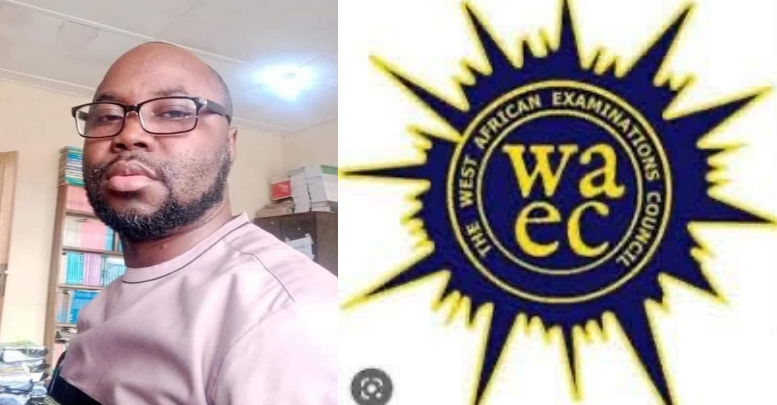
Monrovia – Criminal Court “C” at the Temple of Justice has found Augustine S. Saysay, a former Examination Officer with the West African Examinations Council (WAEC), guilty of aiding the leak of the 2024 WASSCE Mathematics exam, along with multiple related charges, a ruling that sends a message on the protection of academic integrity in Liberia.
By Willie N. Tokpah
The Court, presided over by a trial judge, ruled on Wednesday, October 15, after months of testimony, forensic analysis, and witness examination.
Saysay was convicted on counts of Aiding the Consummation of a Crime, Theft of Property, Misapplication of Entrusted Property, and Criminal Conspiracy, in violation of Sections 12.5, 15.56, 15.51, and 10.4 of the New Penal Law of Liberia.
The case stems from the widely reported leakage of the WASSCE Mathematics paper, which was to be administered nationwide on May 30, 2024.
The breach occurred in Tappita, Nimba County, where the defendant had been assigned as a WAEC depot officer.
The “Mess” Continues, Education System on Trial
The Court referenced former President Ellen Johnson Sirleaf’s infamous description of Liberia’s educational system as a “mess”, asserting that examination malpractice is among the key drivers of that dysfunction.
“This matter highlights one of the persistent threats to the integrity of Liberia’s education system,” the Court stated in its final ruling. “To tamper with public examination materials is not just a breach of trust, it is an attack on national development.”
Evidence Unsealed, Bags, Phones, and Money Transfers
The prosecution, led by Solicitor Alfred F. Bandiyo and supported by WAEC as a private prosecutor, presented a compelling case built on forensic digital evidence, financial transactions, and testimony from both WAEC and police officials.
Saysay’s WAEC-issued security examination bag was found unsealed, with two entire packages, 10 essay and 10 objective booklets for the Mathematics paper, missing upon his return to Monrovia.
Mobile money transactions totalling LRD 100,000 were traced to the defendant from co-defendants Amos Bowah and Hamid Alhassan Bangura.
Incriminating text messages were uncovered in Saysay’s phone, including one stating: “When will you send the Chemistry?”
Co-defendant Bowah, in a voluntary statement, admitted sending LRD 50,000 to Saysay “to aid with WAEC test information which he did.”
WAEC’s Head of Testing, Wynna George-Soper, testified that Saysay violated protocol by opening exam bags outside supervision and admitted to tampering with the bag before being turned over to the Liberia National Police.
Defence Cries Foul, Claims of Coercion, Brutality Rejected
Saysay, represented by Atty. Emmanuel Bleh, pleaded not guilty and claimed that he was framed, coerced, and physically abused during police interrogation.
He testified that he was denied access to his reading glasses, slapped, and forced to sign a false confession.
Two relatives, Francis F. Sesay and Samuel M. Saysay, also testified that they saw signs of physical abuse and were denied access to the defendant during his time in custody.
However, the Court dismissed these claims as unsubstantiated, citing a lack of independent medical records and the consistent rebuttal by LNP investigator Dennis N. Weah, who maintained that a lawyer was present, though declined to sign the statement.
Though four individuals were charged in the original indictment, Saysay, Bowah, Bangura, and Lewis A.A. Leeco, the defendant successfully petitioned for severance, and the Court proceeded only with his trial.
The other three are still pending adjudication.
Public Funds, Private Gain
WAEC’s Finance Director, Samuel W. David, testified that Saysay received LRD 331,200 for his official duties in Tapita.
Yet, the Court concluded that he violated the public trust by trading exam materials for private gain. With the verdict now on record, the Court is expected to deliver sentencing in the coming days.
Legal analysts suggest a possible custodial sentence, given the seriousness of the offence and its implications for Liberia’s fragile education system.
WAEC has not yet issued an official statement following the ruling, but education stakeholders and civil society groups are expected to weigh in.
The ruling is likely to renew national debate on education reform, examination security, and public sector accountability.
As Liberia continues to rebuild its academic institutions, the Court’s strong stance may be a deterrent for others seeking to profit at the expense of the nation’s future.
Support Independent Journalism
Your support helps FrontPage Africa continue delivering independent, credible, and impactful journalism. Every contribution strengthens our ability to investigate, inform, and hold power accountable while keeping quality journalism accessible to our readers.
Support our journalism or subscribe to receive the latest FrontPage Africa stories and updates.