Monrovia – The Central Bank of Liberia (CBL) has launched a nationwide Clean Note Campaign, urging citizens to treat the Liberian dollar with respect and care, stressing that careless handling of banknotes is costing the country millions of dollars in replacement expenses.
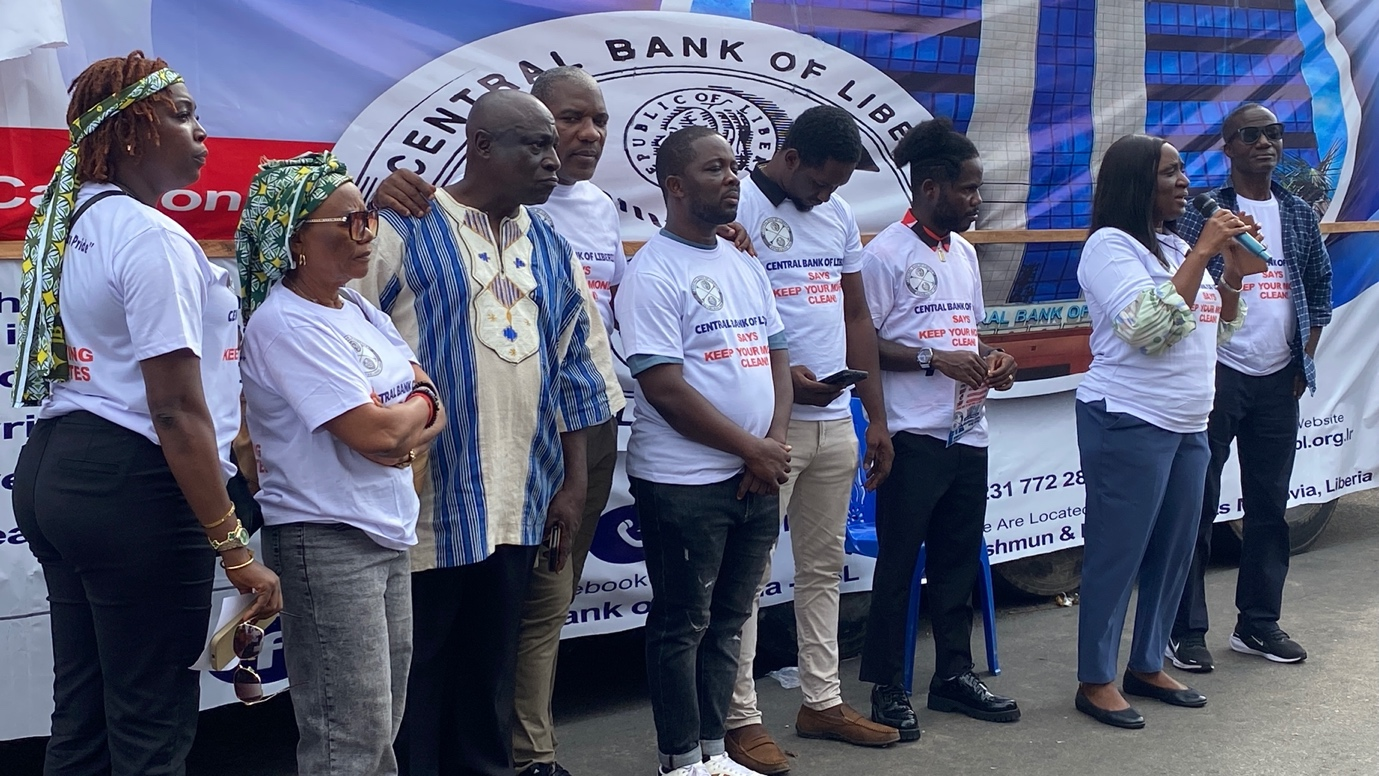
The campaign was officially launched on Saturday, September 19, at the Rally Time Market on UN Drive, Monrovia, bringing together market women, motorcyclists, money exchangers, and members of the Liberia Marketing Association.
Speaking at the event, Madam Juah K. Feika, Deputy Director of the CBL’s Banking Department, said the campaign seeks to raise awareness about the importance of preserving the nation’s currency.
“In 2022, the government printed new Liberian banknotes at a huge cost. But the way the money is being handled—the rate at which it is being damaged—is alarming,” she said.
According to Madam Feika, the rate of mutilated banknotes is so high that the CBL is forced to divert resources away from national development toward printing replacement notes.
“When you squeeze money, write on it, wrap it, or put oil on it, you are disrespecting your national currency. This money is our national symbol—just like the Liberian flag. If we disrespect our money, foreigners will also disrespect it,” she cautioned.
She reminded citizens that damaged notes can be exchanged at commercial banks and urged the public to stop rejecting them. “This is your national currency. If you reject it, what do you expect foreigners to do?”
Madam Feika also condemned the illegal melting of coins for scrap, stressing that coins must be used for transactions, not destruction.
High Cost to the Economy
Highlighting the financial strain, she disclosed that Liberia recently printed L$48.74 billion in new notes, but already L$1 billion has been spoiled.
“Printing money is costly. The last exercise cost this country US$25 million. If the notes spoil too quickly, we will have to go back to the Legislature to request more printing. That means money meant for roads, teachers’ salaries, and other development priorities will be diverted,” she warned.
Legal Consequences
The CBL further reminded the public that damaging currency is punishable by law.
“If you are caught willfully destroying money, you can be fined L$500,000 or sentenced to two years in prison. We don’t want anyone to get into trouble, so please, keep your money clean,” she emphasized.
Outreach and Awareness Drive
Earlier, Mr. P. Alphonsus Zeon, Head of Corporate Communications at CBL, outlined a broad awareness strategy. He said the Bank is partnering with the Liberia Marketing Association, motorcyclists, banks, and other groups to spread the campaign across the country’s 900 markets, starting with the largest ones.
The campaign will also include jingles, dramas, radio talk shows, flyers, and village-to-village outreach teams. “When visitors come to Liberia and touch our money, let them see that we respect our national currency. This is not the end—it is a continuous process,” Zeon added.
Shared Responsibility
Closing the launch, Madam Feika urged Liberians to see the campaign as a joint duty.
“Our currency is not just a means of exchange. It is our national symbol and pride. If we keep it clean, we reduce costs and increase confidence in the Liberian dollar. Don’t write on your money, don’t squeeze it, don’t pour oil on it, and accept torn notes with pride and dignity,” she said.
Launched under the theme “Our Money, Our Pride,” the Clean Note Campaign is part of the CBL’s renewed effort to preserve the quality of Liberian currency while safeguarding scarce national resources from being wasted on unnecessary reprints.
Support Independent Journalism
Your support helps FrontPage Africa continue delivering independent, credible, and impactful journalism. Every contribution strengthens our ability to investigate, inform, and hold power accountable while keeping quality journalism accessible to our readers.
Support our journalism or subscribe to receive the latest FrontPage Africa stories and updates.