Lofa County – In the hills of Lofa, the scars of war linger not only on the land but in the hearts and minds of its people.
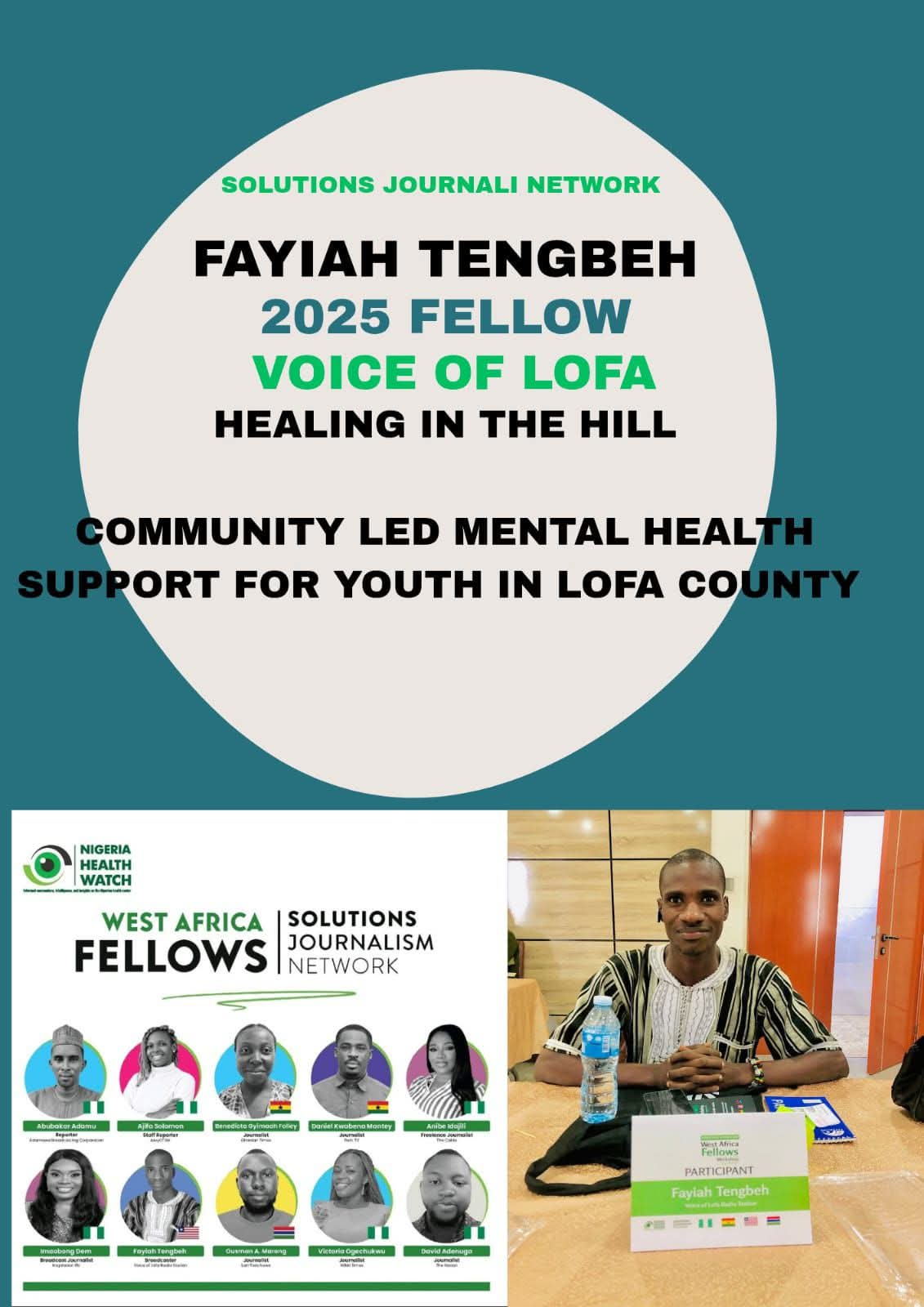
By Voice of Lofa Solutions Journalist Fellow Fayiah Tengbeh
Years after Liberia’s civil conflict, many young people here still struggle with the invisible wounds of trauma, poverty, and loss. Anxiety, depression, and post-traumatic stress are common, yet mental health services remain scarce. Across the entire county, only a handful of trained mental health clinicians are available, leaving young people without adequate care. Cultural stigma makes matters worse.
In many communities, mental illness is often misunderstood as witchcraft or a curse, driving those affected into silence. The consequences have been devastating, school dropouts drug abuse, and in the most painful cases, suicide.
But amidst this silent crisis, a new story is being written, one of courage, resilience, and community innovation.
A Community-Led Solution
In Voinjama and Foya districts, local organizations and youth groups are pioneering a new approach, community-based mental health circles. These are safe spaces where young people meet regularly to share their struggles, support one another, and engage in healing activities such as sports, educational activities, youth empowerment, and storytelling.
The circles are inspired by Liberia’s traditional “palava hut” system of dialogue and reconciliation. By combining cultural practices with elements of modern psychological first aid, they offer young people a platform for healing in a way that feels familiar and accessible.
Building Trust Through Dialogue
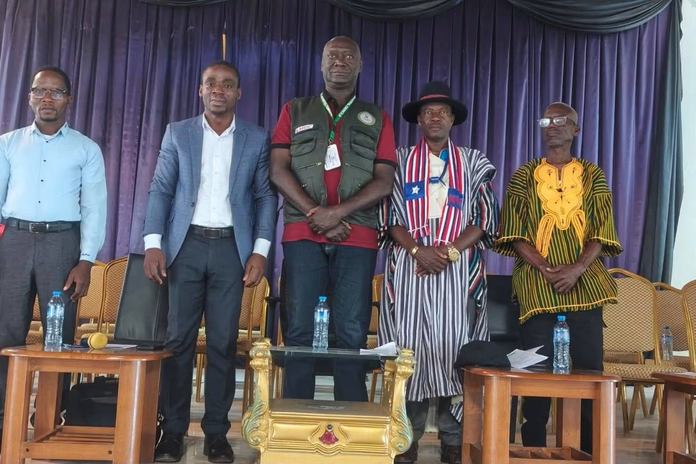
The initiative began with a series of community meetings in both Foya and Voinjama districts. Youth leaders, students, traditional council members, and religious leaders gathered to discuss how to address the rising mental health challenges among young people.
Those conversations helped break long-standing taboos. Elders who once saw mental illness as a curse began to listen to the testimonies of their children and grandchildren. Religious leaders, too, joined in, offering their churches and mosques as safe spaces for group activities.
According to F. Tengbeh Foundation, one of the local organizations spearheading the program, these early dialogues were critical in building community ownership of the initiative.
Voices from the Circles
For Sarah, a 17-year-old student in Voinjama, the circles have been life-changing: “Before, I felt alone with my sadness. Now, I sit with my friends and we talk. It helps me breathe easier.”
A youth leader in Foya echoes her sentiment, “We may not be doctors, but we are saving lives. Sometimes just listening can give hope to someone who was ready to give up.” Tengbeh said.
Alongside Sarah, many more young people and elders have shared their voices James, 19 year, motorbike rider, voinjama said: “I was drinking every night to forget. The circle gave me brothers who helped me stop. Now I save money instead of wasting it on alcohol.”
Martha, 16 year, a student, Foya noted: “I almost dropped out of school. After the circle, my teachers noticed I was smiling again. I now attend class every day.”
For Daniel, 21, a youth facilitator, Voinjama he also explained: “I used to feel powerless, but now I guide others through the sessions. It gives me purpose.”
At the same time, Rebecca, 23, years old, apprentice hairdresser, Royal said she lost her mother and felt empty. The circle became her family. They helped her find strength, while James 20 years, a farmer in Foya said before, he fought with everyone, the circle taught him to calm down and talk instead of fighting.
Similarly, among others, Hawa, 15, a student, Foya said: “I stopped going to school because of shame. Now, after the circle encouraged me, I returned to class and Joseph, 22 years, a church youth leader, Voinjama noted, “We opened our church hall for meetings. Faith and healing can go hand in hand.”
Early Signs of Impact
Though still in its early stages, evidence suggests the circles are making a difference.
Schools in Foya have reported improved classroom behavior and fewer cases of violence. Peer facilitators have noticed reduced incidents of attempted self-harm among participants. Community elders have observed more respectful and hopeful behavior from youth.
According to preliminary surveys, students in the program are building stronger peer relationships, showing more confidence, and turning away from substance abuse.
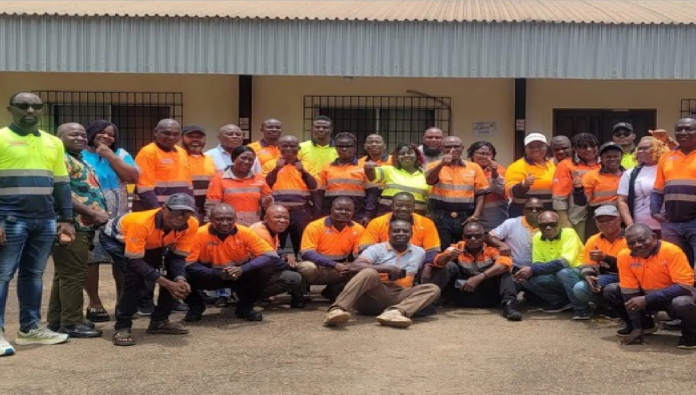
The program is supported by community health workers and psychosocial staff trained by the Ministry of Health and WHO-supported programs. These professionals provide technical guidance and help facilitators recognize warning signs that may require referral to clinical care.
Yet, the heart of the response lies with the young people themselves. By creating low-cost, culturally adapted systems of care, they are filling a gap that formal health structures have long neglected.
Challenges and Limitations
Despite the early success, challenges remain:
Limited trained facilitators mean circles cannot reach all districts in Lofa. Stigma persists, especially among older generations who still associate mental illness with curses.
Funding is scarce, making it difficult to sustain and scale the model. The circles cannot yet replace professional psychiatric care, which remains unavailable to most rural communities.
A Model of Hope
What makes this initiative unique is not only its effectiveness but also its symbolism. In a region where formal mental health services are almost nonexistent, youth are creating their own system of support, rooted in culture, strengthened by community, and guided by compassion.
A local elder captured the shift best:
“We used to think mental problems were a curse. But now, we see these youth improving. They have hope again.”
The pilot programs in Foya and Voinjama have been running for just over six months. Organizers now hope to expand the model to other districts, while continuing to collect data on its impact.
Planned activities include more community meetings, school-based surveys, and training for additional facilitators. If successful, this grassroots approach could inspire similar community-led mental health initiatives across rural Liberia.
For now, in the quiet hills of Lofa, circles of young people are proving a powerful truth: even without hospitals or specialized clinics, healing can begin when a community chooses compassion over stigma and unity over silence. Their courage is lighting a path of hope, one that could inspire a new model of mental health support across Liberia.
This story was made possible by Nigeria Health Watch with support from the Solutions Journalism Network, a nonprofit organization dedicated to rigorous and compelling reporting about responses to social problems.
Credit: Nigeria Health Watch
Support Independent Journalism
Your support helps FrontPage Africa continue delivering independent, credible, and impactful journalism. Every contribution strengthens our ability to investigate, inform, and hold power accountable while keeping quality journalism accessible to our readers.
Support our journalism or subscribe to receive the latest FrontPage Africa stories and updates.