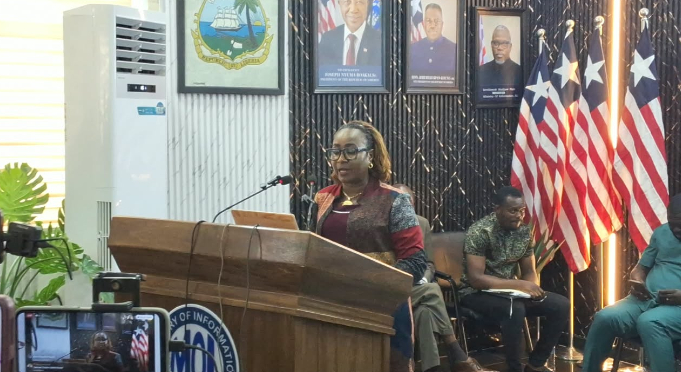
Monrovia – A performance audit conducted by the General Auditing Commission (GAC) on the management of community forests in Liberia from fiscal years 2018 to 2023 has revealed widespread mismanagement and misappropriation of community forest resources by the Forestry Development Authority (FDA) and community forest management leaderships.
Liberia currently has 53 community forest areas covering approximately 1,227,231 hectares, representing 18.5% of the country’s total 6.6 million hectares of forest. The Government of Liberia introduced the Community Forest Management Agreement (CFMA) in 2001 to empower communities and promote sustainable forest management through the direct involvement of local leadership and residents.
However, the GAC found that the FDA’s regional offices lack the necessary resources and delegated authority to effectively monitor and implement CFMA programs. As a result, communities are reportedly losing significant forest resources to illegal pit-sawing and unregulated forest farming.
The audit also revealed that community forest lands—particularly in Region 4 counties Grand Gedeh and Sinoe—have been encroached upon by Burkinabe cocoa farmers. Notably, approximately 19,018 hectares of the 42,484-hectare Neezonnie Community Forest have been damaged, affecting multiple forests including Mambo-1, Mambo-2, Putu, and Neezonnie.
In addition, the GAC highlighted poor financial accountability at FDA checkpoints across the country. Funds collected at these points were not reported to regional foresters, nor were they deposited into the Government of Liberia’s Consolidated Account. The disbursement of these funds lacked guidelines. Of the estimated US$3 million generated during the audit period, 56.5% was spent on domestic travel, fuel, lubricants, and checkpoint operations. The GAC could not find supporting documentation for 35.8% of the total expenditures.
The audit further noted inconsistencies between community forest management plans and the Code of Forest Harvesting, which undermines national efforts toward sustainable forest management. Community forests are the most sought-after among forest management contracts, but the continued practice of selective logging threatens wildlife and biodiversity.
The GAC also criticized the FDA for failing to conduct proper due diligence before approving third-party agreements, resulting in contracts awarded to logging operators incapable of fulfilling their obligations. As of December 2023, 53 CFMAs had been approved, of which 32 involved third-party commercial use contracts. However, only 14 of these contracts were active, with the remaining 18 inactive due to operators defaulting on loans or failing to meet market demands.
The report noted that community forest management agreements involving third-party commercial use are the least regulated. For instance, the requirement to post annual performance bonds, as stipulated in the National Forest Reform Law, is rarely enforced. Poor evaluation and weak enforcement mechanisms have allowed some operators to abandon logging operations without notice, leaving large quantities of abandoned logs in forests, log yards, and ports—such as those left behind by Sing Africa Company in Lofa County.
Additionally, the GAC found that cubic meter fees for logs harvested from community forests were often not paid on time. From January 1, 2018, to December 31, 2023, 87,812 round logs totaling 559,681.32 cubic meters were harvested, amounting to US$935,999.12 in cubic meter fees. These funds were to be distributed among 28 CFMAs; however, only four received partial payments totaling just US$82,610.
The report attributed the misappropriation of funds to the limited capacity of community assembly officials and the weak control systems governing expenditures. Many community leaders responsible for approving forestry budgets are illiterate, making them susceptible to financial mismanagement by more literate members of the Community Forest Management Body who oversee spending.
Finally, the report condemned the FDA for failing to enforce timely submission of quarterly financial reports from community forest leaderships. The financial reports submitted lacked required details and verification from the FDA, further contributing to the poor oversight and accountability in the management of Liberia’s community forests.
Support Independent Journalism
Your support helps FrontPage Africa continue delivering independent, credible, and impactful journalism. Every contribution strengthens our ability to investigate, inform, and hold power accountable while keeping quality journalism accessible to our readers.
Support our journalism or subscribe to receive the latest FrontPage Africa stories and updates.