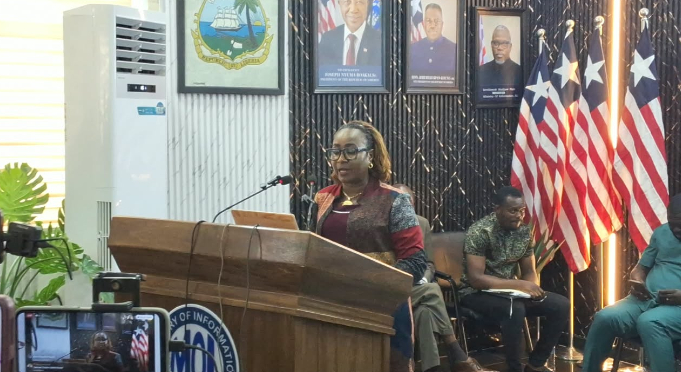
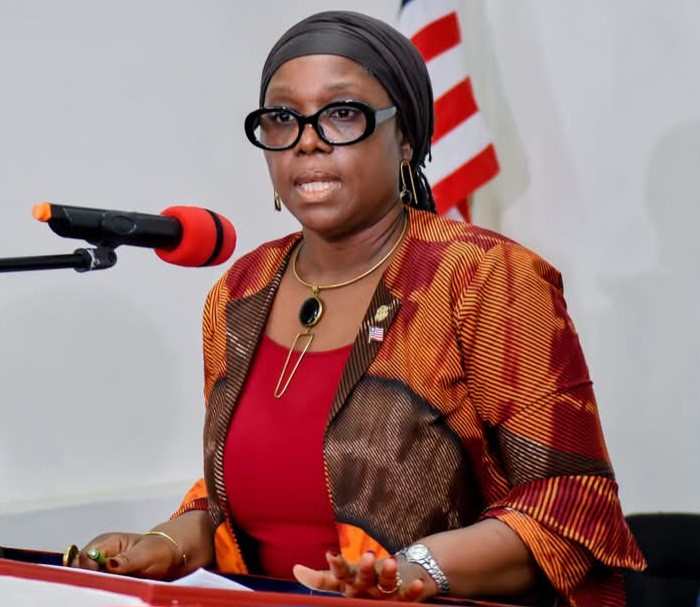
MONROVIA – The Minister of Foreign Affairs, Sara Beysolow Nyanti, has linked the growing trend of mob justice in the country to deep-rooted national trauma, worsened by years of civil conflict.
By Jahiem Tumu, [email protected]
Speaking during the “National Anti-Mob Justice Dialogue,” Nyanti described Liberians as a “traumatized people,” noting that while mob justice predates the war, the scale and brutality have escalated since.
Recounting a personal memory from her childhood, Nyanti shared, “At age 11, I saw a man being beaten by a mob after someone shouted ‘rogue.’ That was 46 years ago, long before the war began. This is not new.”
However, she emphasized that Liberia’s 14-year civil war intensified the issue. “The war made it worse. We went from beating to killing people—not only out of anger but because we are a deeply traumatized people,” Nyanti said. “Our communities are traumatized. Our homes are traumatized. We have not even healed.”
She stressed that addressing mob justice must go beyond repairing the justice system. According to Nyanti, the root causes are tied to long-standing social breakdowns—such as child-headed households, overburdened women, and fragmented communities—resulting in a society where people have lost faith in legal processes.
“We’re now at a place where it’s so bad that we’re killing our own brothers and sisters, taking the law into our own hands,” she said.
Nyanti called for the integration of anti-mob justice messaging into every sector of national development, particularly within the government’s ARREST Agenda for Inclusive Development.
“There should be core messages that cut across every sector,” she said. “‘All children must go to school.’ ‘There must be no gender-based violence.’ ‘There must be no mob justice.’ We all must be saying the same thing.”
The national dialogue, organized to curb rising cases of vigilante violence, has brought together policymakers, civil society actors, and community leaders in a bid to restore public trust in the rule of law and promote national healing.
Support Independent Journalism
Your support helps FrontPage Africa continue delivering independent, credible, and impactful journalism. Every contribution strengthens our ability to investigate, inform, and hold power accountable while keeping quality journalism accessible to our readers.
Support our journalism or subscribe to receive the latest FrontPage Africa stories and updates.