Jackson Kolako’s Account Does Not Prove a Conspiracy. But Liberia’s Cocaine Scandal Has Reached the Point Where the Government Should No Longer Be Asked to Investigate Itself Alone.
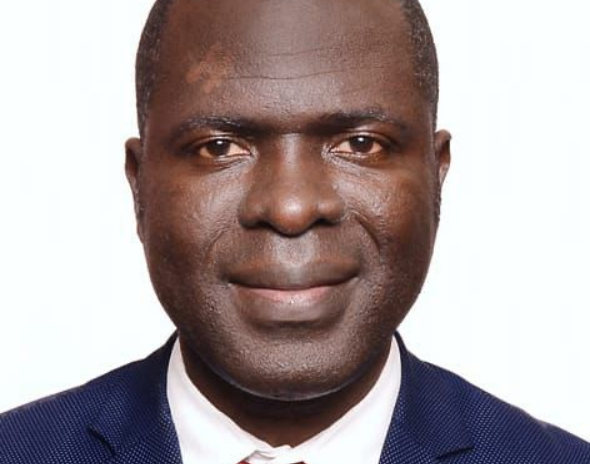
By Dr. Clarence R. Pearson, Sr.
The most disturbing development in Liberia’s expanding cocaine scandal may no longer be the extraordinary quantity of drugs seized.
It may be the growing number of public institutions whose own officials have become entangled in the investigation.
In less than two months, Liberia has confronted two extraordinary cocaine seizures: 237.6 kilograms valued at more than US$19 million at Roberts International Airport in June, followed by 3,971 kilograms valued at roughly US$317 million in Duazon in July. Reuters reported that the latter consignment was believed to be destined for Europe, while authorities have said they have not established that the two seizures originated from the same trafficking network.
But the investigation has steadily moved beyond foreign traffickers.
The Liberian government itself has acknowledged serious penetration of state institutions.
On July 31, President Joseph Boakai dismissed or ordered action against officials from the Liberia National Police, National Security Agency, Liberia Drug Enforcement Agency, Roberts International Airport and another government ministry in connection with the narcotics investigations. The Executive Mansion named, among others, Mark Egon Kuiah, deputy director for operations at RIA; Johnny Bolar Dean, commissioner of police for Criminal Investigation, Intelligence and INTERPOL; Patrick Doe, deputy director for administration at the NSA; RIA security director Mohammed O. Gbowrah; LDEA deputy commander Moses Jallah; police officers Anthony T. Blaye and Wadell W. Kwarbo; NSA agents Jammel V. Jallah, Christian L. Nyantee and Albenigo Janior; and Gender Ministry procurement director Caycee Nelson.
The Associated Press reported that the chief of Liberia’s highway patrol and the head of its major-crimes unit had been charged, while another senior police official stationed at the airport was under investigation.
These are not opposition allegations.
They are actions announced by the government itself.
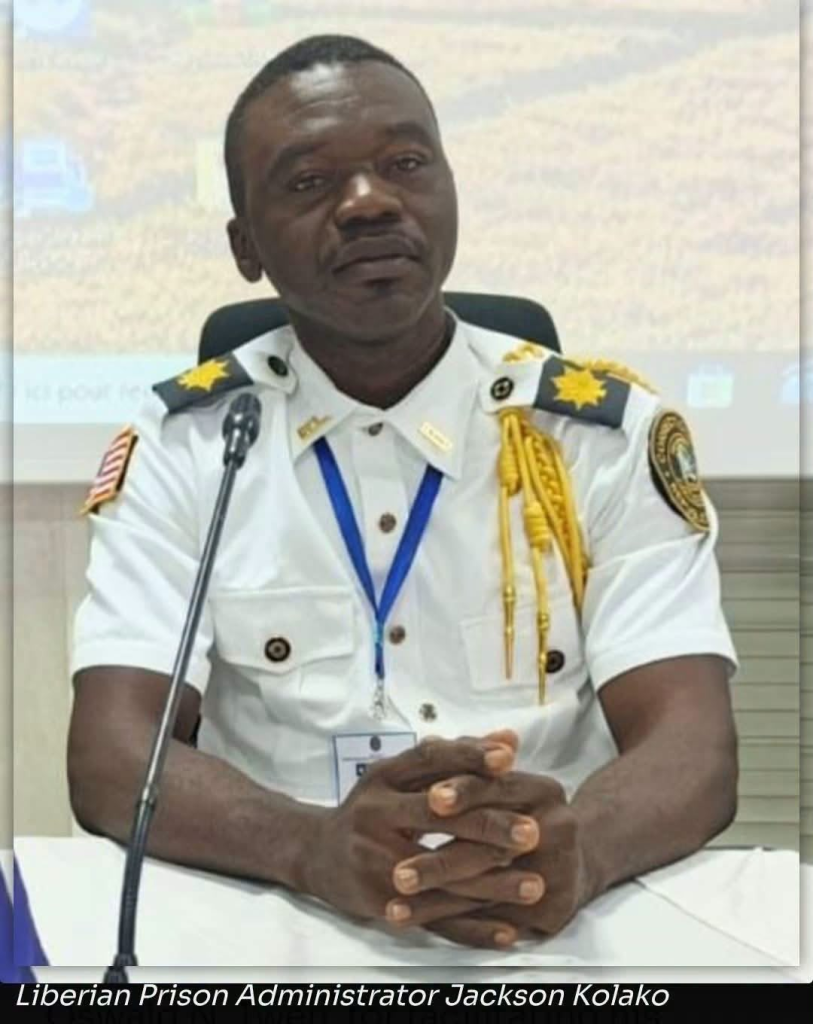
That fact fundamentally changes how Liberia should evaluate the extraordinary account now offered by Jackson K. Kolako, the deputy superintendent for operations at Monrovia Central Prison.
Kolako’s claims remain unproven.
But in the present environment, dismissing them without an independent investigation would be almost as irresponsible as accepting them unquestioningly.
A Prison Officer Makes an Extraordinary Accusation
Kolako says that on August 1 he was serving as the operational commander at Monrovia Central Prison when two men identifying themselves as National Security Agency officers arrived seeking access to an inmate connected to the multimillion-dollar cocaine investigation.
According to his public statement, the men did not follow normal visitor procedures, declined to record their names and purpose in the prison log, and sought access on the ground that their mission was covert.
Kolako says senior correctional officials subsequently intervened and attempted to override normal prison procedures.
He says he contacted the chief superintendent of Monrovia Central Prison and the assistant minister responsible for corrections, both of whom, according to him, said they had no advance knowledge of the proposed visit.
He further alleges that a senior official told him that the visitation authority came from above the corrections hierarchy.
What happened next is the part that deserves immediate scrutiny.
Kolako says he was arrested on the order of Justice Ministry official Siafa Bahn Kemokai after being accused of obstructing a lawful security operation.
He says he remained in police custody from August 1 until August 7, that no investigative statement was taken from him during that period, and that on August 3 he was compelled to surrender his mobile telephones and their passwords to security personnel.
He says investigators accused him of cartel membership and receiving substantial drug-related financial deposits.
He denies those allegations.
He says he was ultimately released with his phones and given a suspension letter alleging that he had interfered with an external security agency’s interview of a prisoner.
Parts of the broader controversy are independently corroborated.
FrontPageAfrica reported, through AllAfrica, that Kolako had been detained after investigators alleged that drug suspects at Monrovia Central Prison had used his telephone to communicate with associates outside the facility and that financial transactions linked to the network had reached his account. That report relied significantly on unnamed security sources.
Verity Online News likewise reported allegations that Kolako had aided Colombian traffickers. But its short report did not publicly present documentary evidence establishing the alleged transfers or communications.
Kolako’s own statement, meanwhile, has circulated publicly and can be authenticated as a statement attributed to him. What cannot yet be independently established is whether every factual assertion within it is true.
That distinction is essential.
His statement is evidence that an allegation has been made.
It is not yet evidence that the allegation is correct.
But some allegations are serious enough that the state has an obligation to answer them with documents rather than denials.
The Simplest Questions Should Have Simple Answers
If investigators possess evidence that Kolako was working with an international cocaine network, producing it should not require political rhetoric.
There should be records.
If money was deposited into his mobile-money or bank accounts, those transactions should exist.
If cartel members communicated through his telephone, forensic extraction should show the communications, metadata, contact history or other digital traces.
If he unlawfully obstructed an official prison interview, there should be an operational order identifying who authorized that interview.
If NSA officers entered Monrovia Central Prison, there should be records establishing who they were, what legal authority they possessed and why ordinary prison procedures were bypassed.
If Kolako was arrested legally, there should be an arrest record, an offense identified and an account of his treatment consistent with the Constitution.
If his phones were searched under judicial authority, a court order or warrant should be producible.
These questions do not require speculation.
They require evidence.
And Kolako has inadvertently offered investigators something unusually valuable: a detailed chronology containing facts that are independently testable.
The prison visitor log can be examined.
CCTV footage can be preserved.
Duty rosters can establish who was present.
Telephone records can establish who called whom.
The phones can be forensically imaged.
Mobile-money providers can verify transfers.
Police detention logs can establish exactly when Kolako entered and left custody.
The alleged NSA officers can be identified.
The prison officials whom Kolako named can be interviewed separately.
The chief superintendent and assistant minister can confirm or deny whether Kolako contacted them.
The case is therefore not primarily a contest between Kolako’s credibility and that of Inspector General Gregory Coleman, Justice Minister Oswald Tweh or any other government official.
It is a contest between two competing narratives that can be tested against objective evidence.
That is exactly what an investigation should do.
Six Days Raises a Constitutional Question
One allegation deserves particularly urgent clarification.
Liberia’s Constitution provides that an arrested or detained person must be formally charged and brought before a court of competent jurisdiction within 48 hours.
Kolako says he was detained from August 1 until August 7.
If that account is correct and he was neither charged nor brought before a court during that period, the issue extends beyond internal prison discipline.
It raises a constitutional question.
His allegation that security officials demanded access to his mobile telephones also deserves scrutiny. Article 16 of Liberia’s Constitution protects privacy of the person, family, home and correspondence from interference except by order of a competent court. Liberia’s Criminal Procedure Law likewise establishes a judicial warrant framework for searches and seizures of evidence.
None of this establishes that the search was illegal. Investigators may possess legal authority, consent, emergency justification or judicial authorization not presently available in the public record.
But that is precisely why the government should produce the legal basis.
In a national-security investigation involving hundreds of millions of dollars in cocaine, constitutional procedure is not an inconvenience.
It is what distinguishes an investigation from an abuse of power.
Why This Case Cannot Be Viewed in Isolation
Were Kolako making these accusations in an ordinary criminal investigation, the government might reasonably be expected to examine the matter internally.
This is not an ordinary investigation.
The government has already removed senior officials from multiple institutions involved in airport security, intelligence and law enforcement.
That creates what lawyers and auditors would recognize as an institutional conflict problem.
It does not mean that every police officer is compromised.
It does not mean that the NSA is institutionally corrupt.
It does not establish misconduct by Inspector General Coleman, Minister Tweh or other senior officials who have not been charged.
And nothing presently available establishes that those officials personally participated in narcotics trafficking or in any attempt to frame Kolako.
But once members of the institutions conducting an investigation have themselves been accused, dismissed, suspended or prosecuted in connection with the underlying criminal network, independent scrutiny stops being an insult to government.
It becomes a protection for government.
The honest investigator has as much to gain from independent verification as the accused.
The Credibility Problem Is Now Structural
The Boakai administration has itself recognized the seriousness of the infiltration problem.
Its July 31 statement said the president had ordered dismissals, suspensions, investigations and prosecutions involving public employees across multiple agencies and instructed security institutions to identify everyone connected to the trafficking cases regardless of status.
That response deserves recognition.
But it also creates an unavoidable question:
Who independently verifies the investigators when the alleged trafficking network has already reached the institutions conducting the investigation?
This is not an argument for foreign control of Liberia’s justice system.
It is an argument for independent technical verification.
Liberian police should continue investigating.
Liberian prosecutors should continue prosecuting.
Liberian courts should retain jurisdiction.
But forensic examination of the most sensitive evidence should include international experts who are institutionally removed from the relationships now under scrutiny.
The government has already said it is cooperating with international law-enforcement partners in the broader narcotics investigation.
The next step should be to formalize that cooperation around the Kolako matter and the allegations of security-sector compromise.
What an Independent Investigation Should Examine
A credible inquiry need not begin by assuming that Kolako is truthful.
It should begin by assuming nothing.
International forensic specialists working alongside Liberian prosecutors could independently verify the essential evidence: prison CCTV and entry records; visitor logs; communications between corrections headquarters and Monrovia Central Prison; Kolako’s phones; call-detail records; mobile-money and banking records; the phones of relevant drug suspects where legally accessible; written orders authorizing inmate interviews; arrest and detention records; and any judicial authorization used to search digital devices.
Investigators should separately interview Kolako, Janet K. Siryee, Roosevelt Varney, Gabriel Fayiah Ndupellar, Siafa Bahn Kemokai, Lawrence G. Bohlen, Samuel Lance Jasper, Raymond A. Messan and the purported NSA officers.
Naming those individuals for interview should not be interpreted as accusing them of wrongdoing.
Kolako named them as participants or witnesses to events he described.
Due process requires obtaining their accounts too.
Independent investigators should then reconcile those statements with documentary and digital evidence.
There is another reason for international participation.
The cocaine cases are inherently transnational. Reuters reported that the June airport shipment originated through Sierra Leone and was destined for Britain, while the Duazon shipment was believed headed toward Europe. Authorities also linked the earlier shipment to networks associated with one of Europe’s most wanted cocaine fugitives, although Inspector General Coleman said the two Liberian seizures had not been proven connected.
No serious investigation of such a network can end at Liberia’s borders.
Kolako May Be Guilty. He May Also Be Telling the Truth.
Both propositions must remain possible until evidence determines otherwise.
That is what makes this case so important.
If investigators possess compelling proof that Kolako helped traffickers communicate from prison, received cartel money or deliberately interfered with a lawful national-security operation, he should face the full weight of Liberian law.
His rank should not protect him.
His years of service should not immunize him.
His public statement should not transform him automatically into a whistleblower.
But the opposite principle is equally important.
If a corrections officer enforced established prison-security procedures, questioned unidentified visitors seeking private access to an international drug suspect, notified his commanders and was then arrested, detained for days, compelled to surrender digital devices and publicly branded as cartel-affiliated without credible evidence, that would represent an institutional scandal of enormous significance.
A democracy cannot determine which version is true through loyalty.
It must determine it through evidence.
The Government Should Welcome the Test
President Boakai has repeatedly declared that Liberia’s narcotics fight will proceed according to law and without fear or favor. His administration has demonstrated willingness to dismiss officials once investigative findings warranted action.
This case presents an opportunity to prove that principle applies in every direction.
Independent international investigators would not weaken the presidency.
They could vindicate it.
If the government’s case against Kolako is solid, independent forensic examination will strengthen that conclusion and discredit claims of retaliation or cover-up.
If his allegations reveal procedural misconduct, unauthorized prison access, unlawful detention or interference with evidence, uncovering it quickly could prevent far greater institutional damage later.
Either way, Liberia wins.
The only outcome that does not serve Liberia is allowing mutually contradictory allegations to circulate while the same institutions implicated in the broader scandal retain exclusive control over determining which story the public should believe.
The country has already learned that transnational cocaine networks do not merely transport narcotics.
They search for institutional vulnerabilities.
They cultivate access.
They exploit corruption.
They depend upon silence.
Liberia’s response must therefore be larger than arresting foreigners beside piles of cocaine.
It must be capable of investigating its own security architecture without fear of what that examination may uncover.
Jackson Kolako has made grave allegations.
He has not proved them.
But given what Liberia’s own government has already disclosed about the penetration of its security institutions, his claims have crossed the threshold where dismissal is no longer sufficient.
They deserve evidence.
They deserve independence.
And they deserve investigators whose credibility is not itself part of the controversy.
Support Independent Journalism
Your support helps FrontPage Africa continue delivering independent, credible, and impactful journalism. Every contribution strengthens our ability to investigate, inform, and hold power accountable while keeping quality journalism accessible to our readers.
Support our journalism or subscribe to receive the latest FrontPage Africa stories and updates.