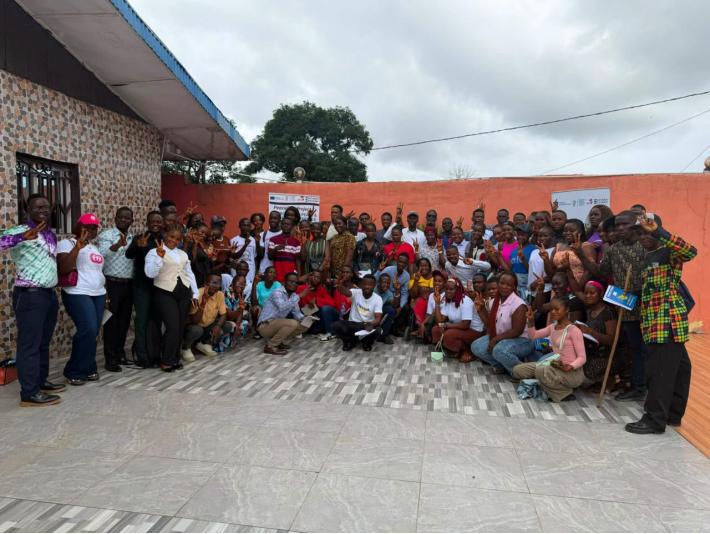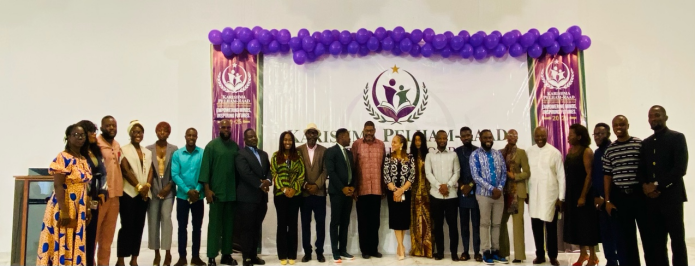
PAYNESVILLE, Liberia — For 500 young Liberians gathered at the Paynesville City Hall, Wednesday was more than the launch of another youth program.
By Patience M. Jones
It was presented as the beginning of a journey one that organizers hope will help young people discover their purpose, build confidence, develop leadership skills and create pathways toward careers in diplomacy, entrepreneurship, public service and other professions.
The occasion marked the launch of the first cohort of the Karishma Pelham-Raad Mentorship Program, a two-day initiative held under the theme “Empowering Minds, Inspiring Future.”
The program brought together young people from different academic and professional backgrounds, alongside mentors, government officials, professionals and other guests.
For many of the young women and men in the room, the presence and story of the program’s founder, Karishma Pelham-Raad, appeared to offer a practical example of what mentorship can mean.
Pelham-Raad, a diplomat and public servant, told participants that the initiative was born from her own experiences of hardship, uncertainty and the people who helped her along the way.
“I came here as a woman who has lived through adversity,” she said, reflecting on her journey.
“I know what it means to dream while life is difficult. I know what it means to experience loss, and still have the strength to wake up the next morning and continue.”
She said her journey from telecommunications and technology into international relations, diplomacy, public service and international development taught her the importance of having people who believe in others.
“People believe in me. People open doors. People share knowledge. People correct me. People encourage me,” Pelham-Raad said.
“And sometimes someone simply says, ‘Keep going, Karishma. Do not stop.’ These two words can change your life.”
That experience, she said, inspired the creation of the mentorship program.
‘I Am Not Looking for Followers’
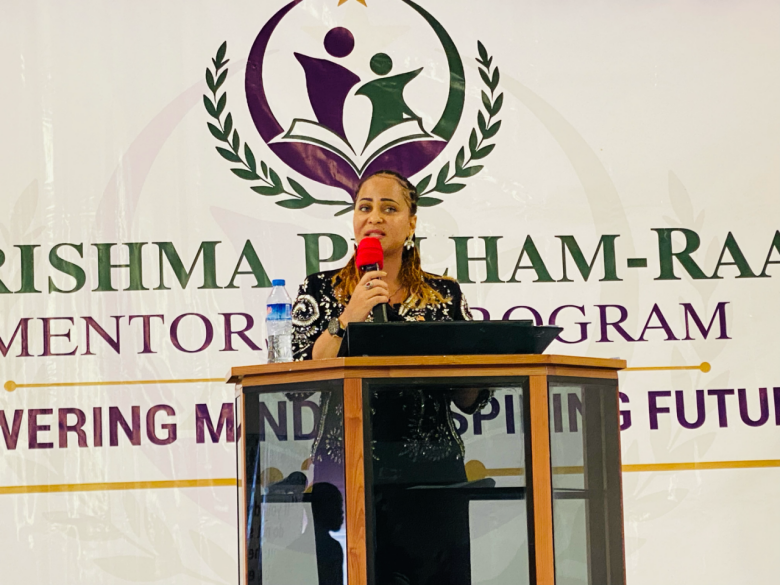
Pelham-Raad said the program is not designed to create followers but to prepare young people for leadership.
“Mentorship is not about creating followers. I am not looking for followers. I am looking to build leaders,” she said.
She challenged participants to use the two-day program to learn, ask questions, build relationships and develop themselves.
The program’s objectives include personal development, leadership development, career development, mentorship and networking.
Pelham-Raad said young people need more than encouragement to succeed.
“Telling young people to work hard is not enough,” she said. “We must also give them tools, information, network and exposure.”
She urged the participants to develop confidence while maintaining character, emphasizing that leadership should be rooted in integrity, accountability and service.
“Leadership is not about having a title,” she said. “Leadership begins with how you treat people when no one is watching.”
Her message also focused on resilience.
She told participants that rejection, disappointment and failure are part of life, but should not become definitions of who they are.
“When you fail, and you will fail sometimes, do not allow failure to convince you that you are a failure,” she said. “Failure is just an event. It is not your identity.”
Findley: ‘Set Your Goal and Work Towards It’
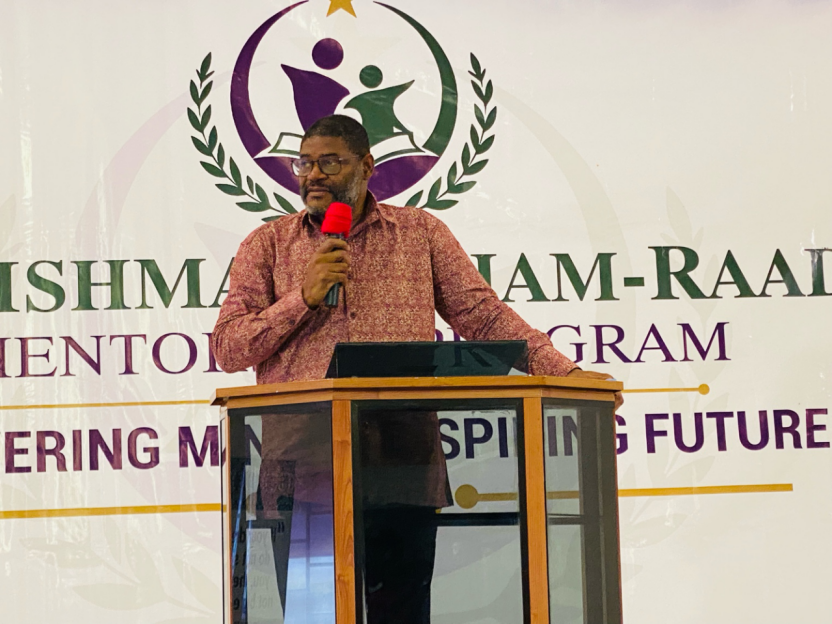
Delivering the keynote address, Senator Gbehzohngar Milton Findley of Grand Bassa County drew from his own life experiences to encourage the young participants to pursue their ambitions regardless of their circumstances.
Findley recalled deciding at an early age that he wanted to become a senator.
He said that ambition remained with him through school, college and his time abroad, even though his parents wanted him to pursue engineering.
“I was good in physics, mathematics and chemistry,” he recalled. “My parents decided, ‘You’re going to be the engineer in the family.’ But I always wanted to be what? A senator.”
He eventually earned an engineering degree and later pursued graduate studies, while his professional journey took him through business and public service before he entered the Liberian Senate.
His story, he said, was intended to demonstrate that young people should have goals but must also remain open to opportunities and lessons along the way.
“Set a goal, work towards it, and you will be able to achieve your goals,” Findley told the participants.
He urged them not to allow family expectations or societal pressure to dictate their careers.
“Don’t be pressured to become a doctor. Don’t be pressured to become a lawyer,” he said.
Findley said his own experience of following his parents’ wishes to become an engineer taught him that being successful in a profession is different from being passionate about it.
“There’s nothing wrong with being a bus driver,” he said. “There’s nothing wrong with being a doctor. Whatever goal you set for yourself, make sure that you do it well.”
“Be passionate about it,” he added.
From a Young Assistant to a Public Servant
One of Findley’s stories focused on a young man he encountered after becoming a senator.
He recalled meeting a young student who had performed well academically but had limited his own ambitions because of his circumstances.
The young man initially told Findley that he wanted to become a nurse’s assistant.
Findley encouraged him to aim higher and apply to universities.
According to Findley, the young man subsequently passed entrance examinations at several universities and pursued his education.
Findley later described how the young man became a development superintendent and eventually moved into government service.
The senator said the young man demonstrated an important lesson when he stopped a project he believed was not being properly implemented, despite the fact that Findley had helped him with his education and career.
“That was the right thing to do,” Findley said, stressing that mentorship should not mean creating people who simply follow their mentors.
“It is your duty and responsibility to correct it,” he added.
For Findley, the story demonstrated the kind of independence and integrity that young people should develop.
‘Do Not Be Afraid to Ask for Help’
Findley encouraged the participants to use the mentorship program to identify people who can guide them toward their goals.
“Do not be afraid to ask for help,” he said. “Do not be afraid to ask questions that you need answers.”
He also urged young people to prepare themselves for emerging opportunities, particularly in technology and artificial intelligence.
“We have to be prepared for that,” he said, noting the growing importance of artificial intelligence and the need for young Liberians to develop skills that can enable them to compete in a changing global environment.
Macdonald M. Metzger, Deputy Chief of Staff for Administration in the Office of the Vice President, who delivered a message on behalf of the Vice President, also encouraged the young people to take the mentorship experience seriously.
He challenged participants to build relationships beyond names and titles.
“When you sit with people, get to know them beyond their titles,” Metzger said. “See what you guys have in common and how you can leverage that for the rest of your life.”
Drawing from his own experience growing up during Liberia’s civil war, Metzger recalled participating in youth development and skills-training programs while living in a displaced camp.
He said those early experiences, and the people he met throughout his journey, contributed to shaping his career.
He reminded the participants that mentors can provide direction, but the responsibility for pursuing their goals ultimately rests with them.
“A mentor can help you find a path, but you yourself must be willing to walk it,” he said.
‘Reach Back’
As the two-day program gets underway, Pelham-Raad challenged the participants to think beyond their individual success.
She urged them to remember others when they eventually achieve their goals.
“When you become a professional, reach back,” she said. “When you become an entrepreneur, create opportunities. When you become a leader, develop other people.”
Her vision, she said, is for young people who benefit from the program today to eventually become mentors themselves.
She imagined a young woman entering the program uncertain about her future, becoming an engineer five years later, leading a company years after that, and eventually meeting another young girl who reminds her of herself.
“And she says, ‘Let me help you,’” Pelham-Raad said.
“That is how a woman grows. One person, one opportunity, one conversation. One open door, one lifetime at a time.”
For the 500 young participants gathered at Paynesville City Hall, the challenge now extends beyond listening to inspirational speeches.
The program calls on them to ask questions, build relationships, acquire skills, discover their purpose and begin walking the paths they envision for themselves.
As Findley put it: “Set your goal. Set your future. And anything you want to do within that bound is achievable.”
Support Independent Journalism
Your support helps FrontPage Africa continue delivering independent, credible, and impactful journalism. Every contribution strengthens our ability to investigate, inform, and hold power accountable while keeping quality journalism accessible to our readers.
Support our journalism or subscribe to receive the latest FrontPage Africa stories and updates.