Liberia should welcome stronger revenue collection—but celebrating taxation without transforming the economy risks mistaking the government’s growing wallet for the prosperity of its people.
By Dr. Clarence R. Pearson, Sr.
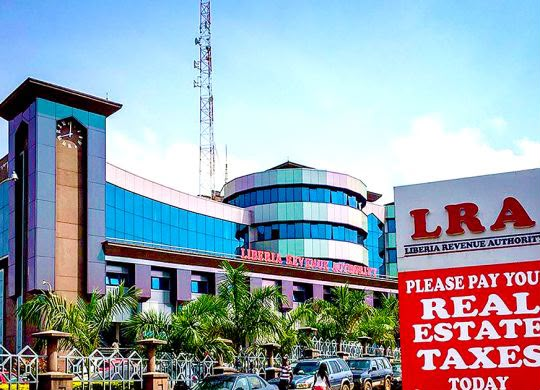
President Joseph Boakai is entitled to acknowledge an important fiscal achievement. Liberia’s domestic revenue collection has crossed the symbolic billion-dollar threshold, after rising from roughly $612 million in 2023 to $699 million in 2024 and about $848 million in 2025. The 2026 budget itself was originally submitted at about $1.21 billion, with domestic resources expected to finance the overwhelming majority.
But Liberia should be careful what it celebrates.
A government collecting more money is not necessarily evidence that the people from whom it is collecting are becoming substantially richer.
That distinction matters because the administration’s revenue success has arrived amid widespread complaints from traders, small businesses and ordinary households about taxes, fees, operating costs and persistent economic hardship. The danger is that Monrovia may begin mistaking a larger public treasury for a transformed national economy.
They are not the same thing.
The Economy Has Grown — But Not Enough to Explain the Celebration
It would be inaccurate to say Liberia’s economy has not grown at all. The International Monetary Fund projects real economic growth of about 5.5 percent in 2026, following growth driven heavily by mining, construction and manufacturing.
But that is precisely where the government should exercise restraint.
Liberia’s revenue collections have increased much faster than the broad transformation experienced by many households and locally owned businesses. IMF data show tax revenue rising from about 13.4 percent of GDP in 2023 to 15.9 percent in 2025. In other words, part of the fiscal breakthrough reflects the state becoming significantly more effective at extracting revenue from the economy.
The 2026 budget also contains exceptional revenue items, including a $200 million mining sign-on bonus, meaning the leap cannot be understood simply as evidence of a dramatically enlarged productive base.
That does not make the achievement illegitimate.
It makes the interpretation important.
If a farmer owns one malnourished cow and learns to extract more milk from it every morning, he has improved collection. He has not necessarily improved the health of the cow.
Liberia must not confuse the two.
Listen to the People Paying the Bill
This is where the billion-dollar celebration collides with the lived economy.
For the market woman facing higher operating costs, the retailer struggling with electricity and transportation expenses, the Liberian entrepreneur competing against better-capitalized foreign firms, or the salaried household whose purchasing power remains fragile, the national budget is not an abstract statistic.
It is money taken from an economy in which many people remain economically vulnerable.
Tax compliance is necessary. Customs enforcement is necessary. Reducing leakages is necessary.
But taxation becomes development only when the state converts revenue into the conditions that enable citizens to produce more wealth tomorrow than they produced yesterday.
Roads.
Electricity.
Affordable credit.
Reliable ports.
Agricultural processing.
Industrial capacity.
Digital infrastructure.
Technical education.
Liberian-owned enterprises capable of expanding beyond subsistence commerce.
Without that transformation, government can become excellent at collecting from an economy it has not yet learned to enlarge.
Look Across the Border
Regional comparison should also temper the triumphalism.
Côte d’Ivoire’s 2026 budget stands at 17.35 trillion CFA francs, with its government explicitly emphasizing structural investment, social spending and economic growth projected around 6.7 percent.
Guinea’s 2026 expenditure budget is 64.18 trillion Guinean francs, with approximately 45.7 percent of spending classified as investment expenditure and enormous emphasis placed on infrastructure and the Simandou development strategy.
Ghana plans approximately GH¢302.5 billion in 2026 expenditure, while directing significant resources toward infrastructure, human capital and its “Big Push” investment program.
These countries have different populations, currencies, debt structures and economies, so raw budget figures should never be compared carelessly.
But they provide perspective.
Liberia crossing $1 billion is historically significant for Liberia. It is not evidence that Liberia has suddenly joined the region’s major economic powers.
Treating the threshold as a destination rather than a starting point risks institutionalizing mediocrity.
The More Important Number Is What Liberia Invests
Liberia’s own budget history demonstrates the deeper problem.
In 2025, approximately 87.9 percent of the national budget went to recurrent expenditure, while only 12.1 percent was allocated to public investment.
The 2026 draft represented improvement, allocating about $280 million to the Public Sector Investment Plan.
That shift must accelerate.
A poor country cannot consume its way into prosperity.
Government salaries matter. Hospitals must operate. Teachers must be paid. Security forces need resources.
But a development budget must do more than finance government.
It must change the economy that finances government.
President Boakai’s proposal to dedicate resources through a special vehicle for affordable financing to Liberian-owned businesses is therefore potentially more consequential than the billion-dollar headline itself.
If properly designed, independently governed and protected from political patronage, such financing could begin moving Liberians from taxpayers at the margins of commerce into producers, manufacturers, exporters and equity owners.
That is where the celebration should eventually come from.
Grow the Cow Before Demanding More Milk
Liberia needs a different ambition.
Not simply How much can government collect?
But How large can the Liberian economy become?
How many Liberians can own scalable businesses?
How much rice can Liberia produce rather than import?
How many agricultural products can be processed domestically?
How many foreign concessions can develop Liberian suppliers?
How many young people can become technicians, engineers, manufacturers and entrepreneurs?
The billion-dollar revenue milestone deserves acknowledgment.
But it should provoke humility, not complacency.
Liberia remains desperately underdeveloped. Its infrastructure deficit is enormous. Its productive private sector remains thin. Its citizens still struggle for affordable electricity, financing, employment and basic public services.
A government should not become proud merely because it has learned how to milk the cow more efficiently.
Its historic responsibility is to make the cow healthy enough to feed the nation.
Support Independent Journalism
Your support helps FrontPage Africa continue delivering independent, credible, and impactful journalism. Every contribution strengthens our ability to investigate, inform, and hold power accountable while keeping quality journalism accessible to our readers.
Support our journalism or subscribe to receive the latest FrontPage Africa stories and updates.