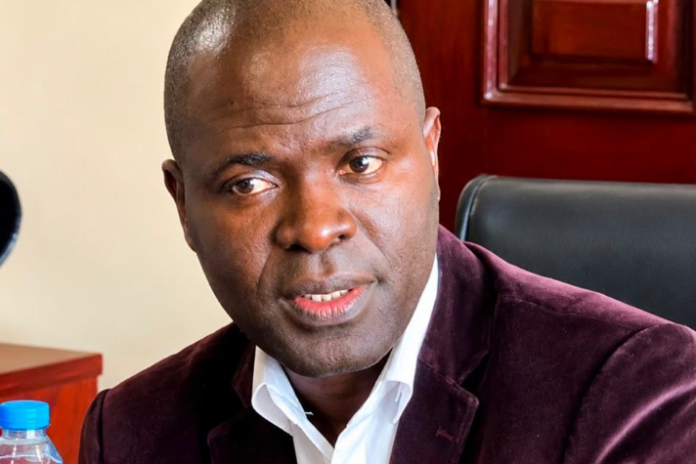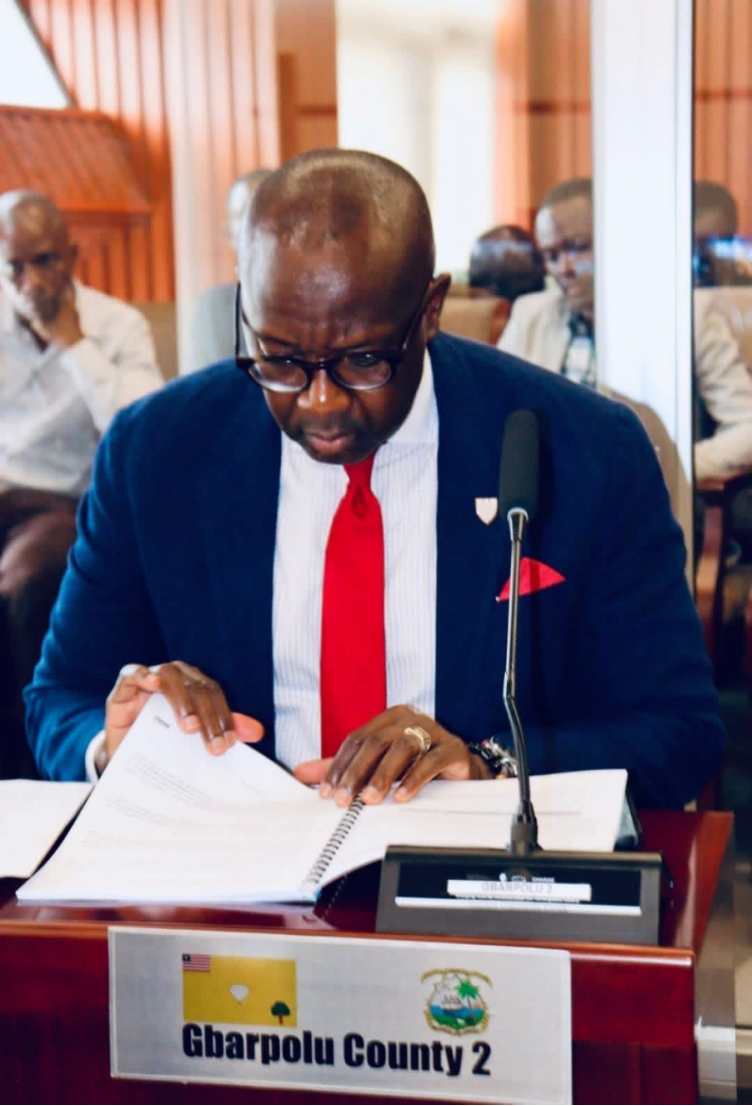
Monrovia – Gbarpolu County Senator Amara M. Konneh has voiced cautious support for the Concession and Access Agreement (CAA) signed between the Government of Liberia (GoL) and Ivanhoe Liberia Ltd., while warning that several “structural risks” in the deal require close legislative scrutiny to ensure Liberia’s long-term interests are protected.
The CAA, signed on July 5, 2025, and recently transmitted to the Liberian Senate by President Joseph Nyuma Boakai, Sr., grants Ivanhoe Atlantic Inc., an American mining company, the right to rehabilitate and operate sections of Liberia’s railway infrastructure in Nimba, Bong, and Grand Bassa Counties, as well as upgrade port facilities in Buchanan. The agreement aims to facilitate the export of Guinean iron ore through Liberia, leveraging the country’s strategic rail corridor.
In a statement, Senator Konneh said he supports the investment for its potential to deliver “substantial economic benefits” to Liberia, including over US$1.4 billion in projected rail user fees, taxes, and job creation during both the construction and operational phases.
“I support this proposed investment in Liberia, recognizing its potential to lead the way in new commercial diplomacy advanced by President Donald Trump between Liberia and the United States and deliver substantial economic benefits,” Konneh said.
He added that the initiative aligns with regional goals under ECOWAS and the Mano River Union (MRU) to strengthen cross-border economic cooperation and private sector involvement.
Key Benefits Outlined in the Agreement
According to Konneh, Liberia stands to gain significantly from the deal, contingent upon transparent implementation and effective government oversight. Among the major financial and operational gains he cited are upfront and staged payments: Approximately US$35 million in initial and milestone-based payments, including two upfront payments made under the previous Weah administration, recurring fees: Liberia will earn between US$1.95 and US$1.55 per ton in Product Access Fees, alongside smaller cross-border and goods access fees, amounting to roughly US$2.05 per ton at full capacity, community development fund: Rising to US$5 million annually after five years, distributed among Nimba (40%), Grand Bassa (35%), and Bong (25%).
He said localization targets: 50% Liberian management representation within five years and 70% within ten years, with penalties for non-compliance, institutional reforms: establishment of a National Railway Authority (NRA) and introduction of a Multi-User Regime to manage access and competition and infrastructure commitments: Rehabilitation of the Buchanan Port Quay, handling facilities, and Tokadeh haul road, which will revert to government ownership after construction.
Risks and Concerns Highlighted
Despite his broad support, Senator Konneh warned that several provisions could expose Liberia to financial and operational disadvantages if not properly managed. He identified seven key risk areas that the Senate’s Joint Committee on Investment, Lands, Mines, Energy, and Judiciary should address corridor dominance by Guinean exports: High-volume Guinean shipments (up to 30 million tons per year) could crowd out Liberian producers and domestic users.
Underpriced strategic capacity: The per-ton fees are “low to moderate” compared to other African mining corridors, potentially undervaluing Liberia’s infrastructure.
Fiscal stabilization lock: A 15-year “Preservation Period” limits Liberia’s ability to adjust taxes or renegotiate fees, even amid commodity price surges.
Weak localization enforcement: Penalties for failing to meet Liberian employment and procurement targets are minimal compared to the project’s scale.
Limited recourse for third-party obstruction: Slow arbitration and limited termination rights could weaken Liberia’s leverage in disputes.
Environmental oversight challenges: Environmental and social safeguards exist but lack strong performance guarantees or enforcement mechanisms.
Flat customs fee: A fixed US$500,000 annual transit fee replaces per-ton customs duties, which could cap revenue growth despite increasing exports.
“Our goal is not a choice between development and protection, but to craft an agreement that genuinely benefits Liberia,” Konneh emphasized. “We must ensure the deal fosters infrastructure improvements while safeguarding Liberian jobs, supporting local producers, and protecting our fiscal interests.”
Call for Transparency and Legislative Oversight
Senator Konneh pledged to formally submit his concerns and recommendations to the Senate’s Joint Committee, even though he is not a member. He stressed that public transparency is crucial for accountability and urged that all related investment instruments be made public.
“Our citizens deserve transparency, and our institutions must negotiate from a position of strength,” he said. “I hope we can publish all the investment instruments before the Senate to help the public understand them.”
Konneh’s statement adds to the growing legislative interest in the Ivanhoe deal, which is considered one of Liberia’s most significant post-war infrastructure and mining partnerships.
The Senate is expected to begin formal hearings on the agreement in the coming weeks.
Support Independent Journalism
Your support helps FrontPage Africa continue delivering independent, credible, and impactful journalism. Every contribution strengthens our ability to investigate, inform, and hold power accountable while keeping quality journalism accessible to our readers.
Support our journalism or subscribe to receive the latest FrontPage Africa stories and updates.