Country pushes for equitable maritime decarbonization framework, citing risks to trade, food and energy security
NEW YORK — Liberia has renewed its call for a fair and equitable approach to decarbonizing international shipping, warning that the transition to net-zero emissions must not impose disproportionate economic costs on developing countries.
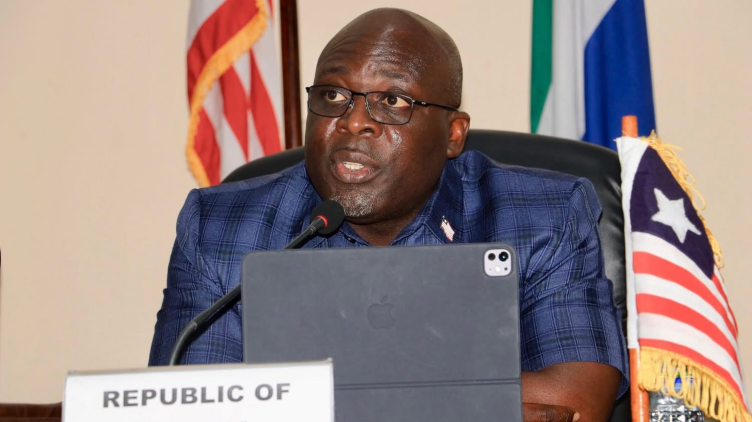
The call was made on September 23, 2026, during a high-level engagement with United Nations Member States in New York, where Liberia presented its proposed alternative approach to the International Maritime Organization’s (IMO) Net-Zero Framework.
According to a press release, Liberia’s proposal seeks to advance the objectives of the IMO’s 2023 Strategy on Reduction of Greenhouse Gas Emissions from Ships while ensuring that developing countries are not unfairly disadvantaged by the global transition to cleaner maritime transport.
Liberia, a major global flag State and a climate-vulnerable developing country with deep economic and historical ties to the sea, said ambitious climate action must go hand in hand with protecting developing economies.
The country maintains that maritime decarbonization should be pragmatic, affordable, scalable, performance-based and legally coherent within the IMO’s mandate.
“Net zero must not become a new burden on developing countries,” Liberia’s position emphasizes.
Concerns Over Trade, Food and Energy Security
Liberia cautioned that significantly higher maritime transportation costs could have consequences far beyond the shipping industry, potentially driving up the prices of essential commodities and undermining food security, energy security, trade competitiveness and sustainable development.
International shipping is central to the movement of food, fuel, medicines, machinery, construction materials and other essential goods, making the cost of maritime transport a critical concern for developing economies.
Liberia argued that the economic implications of maritime decarbonization must be considered alongside its environmental objectives, particularly for countries heavily dependent on maritime trade.
The country is also calling for economic impact assessments tailored to individual developing countries, noting that nations differ in their economic structures, trade profiles, technological capabilities, infrastructure and access to finance.
It said a comprehensive global assessment should be complemented by country-specific evaluations that adequately capture the vulnerabilities and circumstances of individual states.
Push for Practical and Affordable Transition
Liberia’s proposed alternative approach emphasizes commercially viable alternative fuels, operational and technological efficiencies, infrastructure development and capacity-building as practical pathways to reducing emissions from international shipping.
The country is also advocating predictable, transparent and equitable support mechanisms that respond to the needs of developing countries.
Liberia maintains that developing economies should not be required to absorb significant economic and trade costs upfront, with the expectation that subsequent financial support or redistribution will fully compensate for the impacts.
Instead, it argues that the framework should be designed from the outset to minimize disproportionate economic consequences.
The country further stressed the need for evidence-based decision-making before implementing measures with potentially significant economic implications.
Among the issues it wants considered are the affordability, technical credibility, legal coherence and administrative feasibility of proposed measures, as well as the availability and scalability of alternative fuels across different regions, ports and shipping routes.
Liberia Reaffirms Support for Climate Action
Despite its concerns, Liberia reaffirmed that its proposal is not intended to weaken global climate ambitions.
Rather, the country said it seeks a framework that allows environmental protection and sustainable development to advance together, while ensuring meaningful participation by all IMO Member States, regardless of their size, economic status or maritime interests.
Liberia said a fair transition could create opportunities for investment, innovation, technology transfer, infrastructure development and capacity-building, while protecting trade and economic security.
The country pledged to continue working with IMO Member States and other stakeholders toward a maritime decarbonization framework that balances climate objectives with economic realities.
Next Steps
The IMO and its Member States are expected to continue deliberations on the Net-Zero Framework at the next session of the Marine Environment Protection Committee (MEPC), scheduled for November 2026.
Liberia said it would remain actively engaged in consultations leading up to and during the session, seeking an outcome that is environmentally ambitious, economically responsible and equitable for all Member State
Support Independent Journalism
Your support helps FrontPage Africa continue delivering independent, credible, and impactful journalism. Every contribution strengthens our ability to investigate, inform, and hold power accountable while keeping quality journalism accessible to our readers.
Support our journalism or subscribe to receive the latest FrontPage Africa stories and updates.