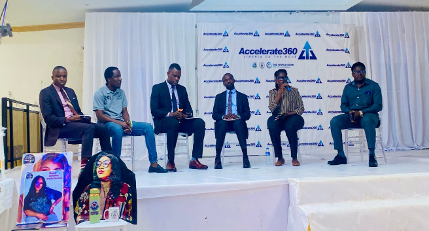
Paynesville — Access to finance, business readiness and stronger partnerships between entrepreneurs and financial institutions dominated discussions on the second day of a national dialogue aimed at strengthening Liberia’s small and medium-sized enterprises (SMEs).
Patience M. Jones, [email protected]
The dialogue brought together government officials, the Central Bank of Liberia (CBL), financial institutions, development partners and business owners to discuss practical ways of addressing one of the most persistent challenges facing Liberian entrepreneurs: access to affordable financing.
Atty. Andrew A. Tellewoyan, Officer-in-Charge of the Development Finance Section at the Central Bank of Liberia, provided participants with an overview of the Line of Credit (LOC) initiative, explaining how the financing mechanism is intended to support businesses, stimulate investment and create jobs.
According to Tellewoyan, the initiative is designed to expand sustainable access to finance, particularly for micro, small and medium-sized enterprises (MSMEs), while encouraging long-term investment and private-sector growth.
He stressed that the financing is not free money but credit intended for viable businesses that meet established requirements.
“The objective is to improve investment, expand sustainable access to finance for businesses and facilitate trade,” Tellewoyan explained, emphasizing that access to capital must translate into economic growth and job creation.
Women-Owned Businesses Take Major Share
A major feature of the initiative is its focus on women-owned and women-managed businesses.
Tellewoyan said the programme seeks to ensure that at least 50 percent of supported businesses are owned or managed by women, as part of broader efforts to close existing gaps in access to economic opportunities.
He disclosed that women have already accounted for a significant share of beneficiaries under the programme.
Of the more than 350 MSMEs that had reportedly accessed financing under the initiative, approximately 64 percent were businesses owned or managed by women.
Tellewoyan said the result demonstrates progress toward expanding women’s participation in the country’s formal economy.
He noted that women play a critical role in supporting households and communities and stressed the importance of ensuring that they have greater access to financial opportunities.
CBL Launches Collateral Registry to Ease Credit Access
The CBL official also highlighted the recent introduction of a collateral registry system, which is expected to make it easier for businesses to obtain loans.
Previously, many entrepreneurs struggled to access credit because banks required high-value fixed assets as collateral.
Under the new system, businesses may be able to use certain movable assets, including vehicles and other eligible property, as collateral when seeking financing.
Tellewoyan said the initiative is intended to reduce barriers and expand access to credit for businesses that may not possess traditional forms of collateral.
“The goal is to create greater access to finance in the country,” he said.
The CBL, he explained, plays a regulatory and supervisory role in the implementation of the financing programme, ensuring that participating financial institutions comply with banking regulations and agreed financing requirements.
Call for Financing Beyond Monrovia
Tellewoyan also expressed concern over the concentration of financing beneficiaries in Montserrado County.
While businesses in several counties have accessed support, he said more needs to be done to ensure that entrepreneurs in rural communities, including farmers and small businesses, benefit from available financing opportunities.
He emphasized that the programme is open to businesses across Liberia and is not restricted to only the counties that have so far recorded loan disbursements.
“We want the money to go beyond Montserrado,” he stressed, noting that businesses in rural Liberia also need capital to expand their operations and create employment.
The CBL official said financing has supported businesses operating in several sectors, including agriculture, trade, education, real estate, services and hospitality.
Eligible businesses can access financing based on established criteria, their business capacity and the potential of their investment.
The maximum amount available to a single business, according to the presentation, can reach up to US$100,000, depending on the nature and capacity of the enterprise.
Interest rates, however, are determined based on factors including the level of risk associated with the business and the loan.
Commerce Ministry: Finance Must Follow Market Access
Delivering remarks on behalf of the Minister of Commerce and Industry, Deputy Minister for Administration Tarnue Jekeh said the dialogue was part of a broader effort to help Liberian SMEs gain access not only to financing but also to markets.
Jekeh recalled that discussions during the first day of the engagement focused on expanding market opportunities for SMEs, particularly their participation in public procurement processes.
He said access to markets and access to finance must work together if businesses are to grow.
“Once you have the market, the next thing is how do you finance your product?” he said.
According to him, providing businesses with funding without helping entrepreneurs understand how to manage and invest the resources could undermine sustainability.
“If you have the funding or grant and you don’t know what to do with it, it’s just a waste of time,” Jekeh warned.
The Deputy Minister said the government is prioritizing the development of agriculture and manufacturing as key sectors for strengthening Liberia’s economy.
He argued that expanding domestic production and exports could help address challenges relating to foreign exchange, trade and the country’s broader economic development.
“The government of Liberia recognizes that access to finance remains a major constraint to SME growth,” Jekeh said.
“For many businesses, limited capital restricts expansion, investment, innovation and job creation.”
He said the government’s financing interventions are intended not simply to make money available, but to help businesses improve productivity, respond to market demands and become more competitive.
SMEs Urged to Improve Their Readiness
Jekeh challenged entrepreneurs to strengthen their businesses by maintaining proper financial records, improving internal systems, developing clear business strategies and demonstrating responsible use of financing.
“Access to finance must be matched by readiness,” he said.
He encouraged business owners not to assume that financing opportunities are reserved for large enterprises but to seek information, ask questions and understand the requirements of participating financial institutions.
The Deputy Minister also called on banks and other financial institutions to clearly communicate their lending requirements and explore practical ways of expanding financing opportunities while maintaining sound lending practices.
Accelerate360 Identifies Finance as Major SME Challenge
Providing an overview of the second day of the dialogue, Prosper Doe Melomey, Chief of Party of Accelerate360 Liberia, said the programme is working to strengthen Liberia’s SME ecosystem, with a particular focus on improving the capacity and competitiveness of 165 SMEs.
The Accelerate360 SME Technical Assistance Programme was launched late last year and has since undertaken several interventions aimed at supporting entrepreneurs and institutions working within Liberia’s business environment.
Melomey said the programme recruited and trained business development specialists while also working with relevant government institutions to strengthen their capacity to support SMEs.
He disclosed that a national SME survey conducted under the programme received responses from approximately 1,500 SMEs across Liberia, representing roughly 100 businesses from each county.
The survey, he said, identified access to finance as one of the biggest challenges facing entrepreneurs.
According to Melomey, the findings are consistent with broader research indicating that a significant number of Liberian businesses consider access to finance a major obstacle to growth.
He said major barriers include high collateral requirements, interest rates, limited financial knowledge, weak financial infrastructure, lack of information and poor record-keeping.
“Poor record-keeping is another major gap in accessing finance,” he noted, stressing that many SMEs struggle to present reliable financial records when approaching banks and other lenders.
Melomey said the dialogue was designed to help entrepreneurs better understand available financing opportunities, including the Line of Credit programme, while creating direct engagement between SMEs and financial institutions.
He emphasized that financing programmes are not designed as handouts and that entrepreneurs must meet established requirements and demonstrate that their businesses are capable of using credit responsibly.
Building a Stronger SME Ecosystem
The second-day discussions underscored a growing consensus among government institutions and development partners that Liberia’s private sector cannot expand without addressing the persistent financing gap confronting small businesses.
For many entrepreneurs, access to capital remains the difference between remaining a small informal enterprise and expanding into a competitive business capable of employing more Liberians.
But officials stressed that money alone will not solve the problem.
They argued that sustainable SME growth will require a combination of market access, financing, improved financial literacy, stronger business management and closer relationships between lenders and entrepreneurs.
As Liberia seeks to strengthen its private sector and create more jobs, participants were encouraged to use the dialogue as an opportunity to ask questions, build relationships with financial institutions and prepare their businesses for future investment.
The message from the second day of the engagement was clear: Liberian SMEs need more than access to money they need the knowledge, systems and market opportunities to turn financing into sustainable growth, jobs and prosperity.
Support Independent Journalism
Your support helps FrontPage Africa continue delivering independent, credible, and impactful journalism. Every contribution strengthens our ability to investigate, inform, and hold power accountable while keeping quality journalism accessible to our readers.
Support our journalism or subscribe to receive the latest FrontPage Africa stories and updates.